

Many salon owners in India find themselves stuck between traditional manual booking and newer AI receptionist solutions. The confusion usually begins when a client calls late at night or when double bookings create awkward situations — and honestly? You might wonder why the old method of using a notebook or a basic call log is suddenly feeling unreliable. The truth is that salon operations have changed. Clients expect faster responses and fewer errors. Manual booking often cannot keep up with this demand. This comparison will help you understand what each system offers and which one matches your salon’s reality better. Or at least I hope so.
What an AI Receptionist Actually Does in a Salon
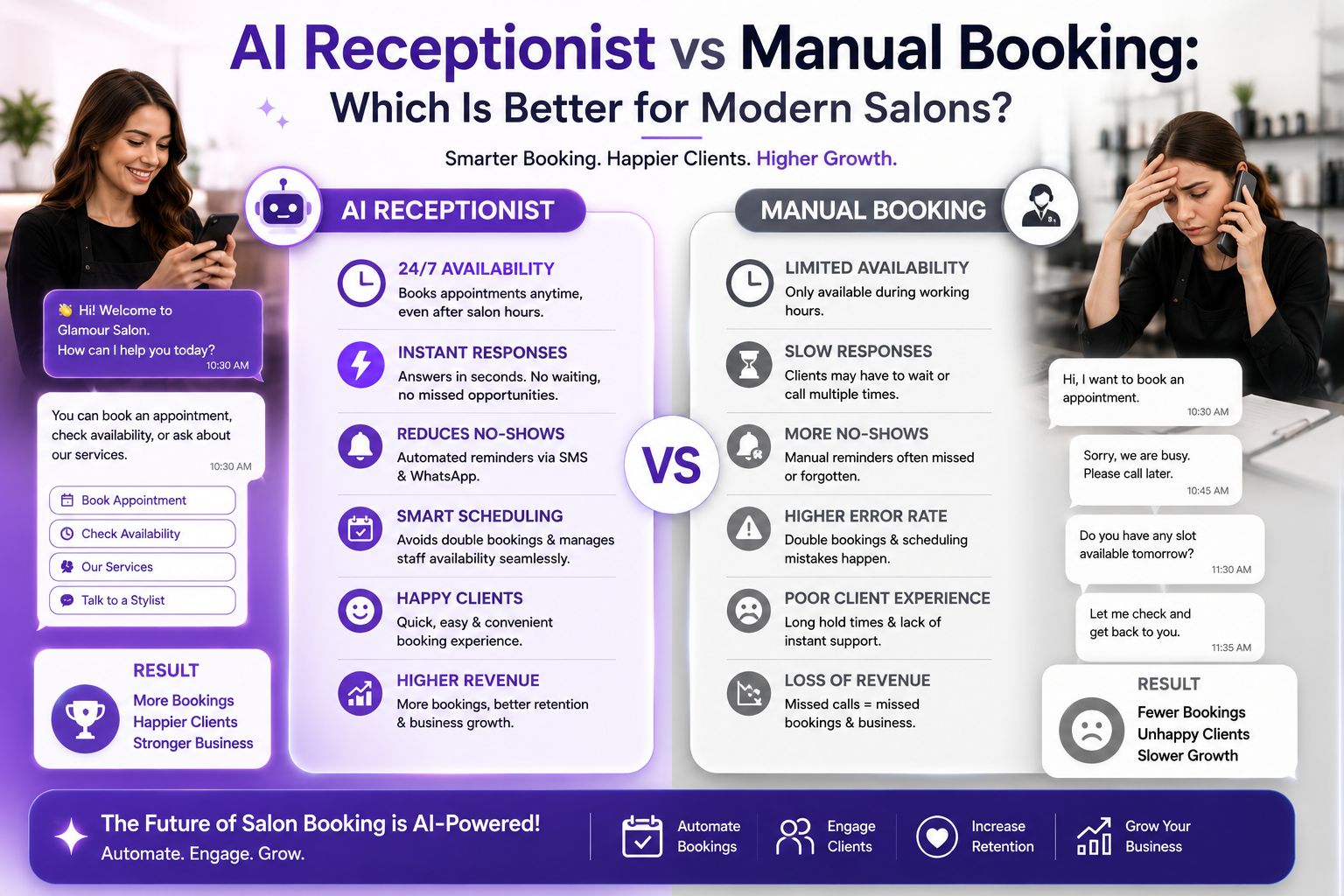
An AI receptionist is not a robot sitting at your front desk, like some people imagine. It is a software system that handles incoming calls, appointment scheduling, reminders, and client queries automatically. Many modern systems use voice recognition and natural language processing to understand what the client wants. When a client calls to book a haircut or a facial, the AI asks relevant questions like preferred time, stylist choice, and service duration. It then checks real-time availability and confirms the appointment without any human involvement. This system runs 24 hours a day. It never misses a call. It does not need breaks. For salons with high call volumes or limited front desk staff, this can be a significant operational improvement. The system also sends automated reminders to clients, which reduces no-shows. Many salon owners report that their booking errors drop noticeably after switching to an AI-based system — but is that really enough?
How Manual Booking Still Works for Many Salons
Manual booking relies on human staff to answer calls, take down details, and update the appointment book. Many small salons in India still prefer this method because it feels personal. The receptionist can upsell services, ask about client preferences, and build rapport. A familiar voice on the phone makes regular clients feel valued, and that matters a lot. Manual booking also gives the salon owner complete control. If a special request comes in, the receptionist can handle it flexibly — like adjusting timing or squeezing someone in. However, this method has clear limitations. The receptionist can only work during salon hours. Missed calls after closing time often turn into lost business. Human error is common. A wrong entry in the booking book can lead to double bookings or forgotten appointments. When the receptionist is busy with a walk-in client, incoming calls may be ignored. For growing salons, manual booking eventually becomes a bottleneck. It slows down operations and creates frustration for both staff and clients. I've seen that happen.
Key Differences Between AI Receptionist and Manual Booking
Availability and Response Time
An AI receptionist is available at all times. It answers calls instantly, even at midnight or during holidays. Manual booking depends on staff availability. If the receptionist is on break or busy, calls go unanswered — and you lose money. This difference matters most during peak hours and late-night inquiries.
Error Rate
AI systems make fewer booking errors. They check real-time availability and update the schedule instantly. Manual booking depends on handwriting accuracy and memory — which, let's be honest, can fail sometimes. A missed entry or a misunderstood time slot can cause conflicts that upset clients. Nobody wants that.
Personal Touch
Manual booking wins on personal connection. A receptionist can remember a client's name, favourite stylist, and past preferences. AI systems are improving but still lack the warmth of a human voice. Some clients prefer the efficiency of AI over small talk, but others feel disconnected — like they're just a number.
Cost Over Time
An AI system costs upfront or monthly but eliminates the need for a full-time receptionist. Manual booking requires salary, training, and supervision. For busy salons, AI often becomes cheaper in the long run. For small salons with low call volume, manual booking is more affordable. It depends on your math.
Scalability
AI scales easily. It handles hundreds of calls daily without extra cost. Manual booking requires more staff as the salon grows. Training new receptionists takes time and mistakes are common during transitions. Not everyone thinks about that until it's too late.
Common Blind Spots Salon Owners Overlook
Many salon owners assume that manual booking is always better for small salons. This is not true. Even a single-chair salon can benefit from an AI receptionist if the owner spends too much time on the phone instead of serving clients. I've seen owners stuck on calls during busy hours. Another blind spot is ignoring client expectations. Younger clients prefer booking through voice or text without waiting. They may avoid calling altogether if they expect long hold times. Some owners also underestimate how much staff time goes into missed calls and rescheduling. Manual booking feels free, but the hidden cost of lost business and scheduling errors adds up quickly — it's sneaky. Another overlooked factor is consistency. Human receptionists vary in mood and accuracy. One receptionist might be excellent, while another makes frequent mistakes. AI delivers the same quality every time. That reliability is something you can't always get from people.
When Manual Booking Is Still the Better Choice
Manual booking remains suitable for salons with very low call volume, strong client relationships, and limited budget. If your salon receives fewer than ten booking calls per day and your receptionist can handle them comfortably, manual booking may be sufficient. Also, if your clients prefer speaking to a familiar voice and resist automated systems, forcing AI might reduce satisfaction — and that's risky. Some older clients feel uncomfortable talking to a machine. In these cases, manual booking preserves the personal experience that keeps clients loyal. However, even in these situations, a hybrid approach often works better. You can keep manual booking during peak hours and use AI for after-hours calls. This gives you the best of both worlds. It's something to think about.
Making the Decision for Your Salon
The right choice depends on your current pain points. If missed calls and double bookings are frequent, AI is likely the better option. If your clients love your receptionist and call volume is manageable, manual booking may still serve you well. Consider your growth plans. A system that works today may fail next year if your salon expands — I've heard that story before. Talk to other salon owners in your city about their experiences. Many have already made the switch and can share practical insights. You can also read salon FAQs to understand common questions about booking systems. Ultimately, the best system is the one that reduces your stress and keeps your clients happy. Both options have strengths. The key is matching them to your salon's actual operations. Don't rush it.