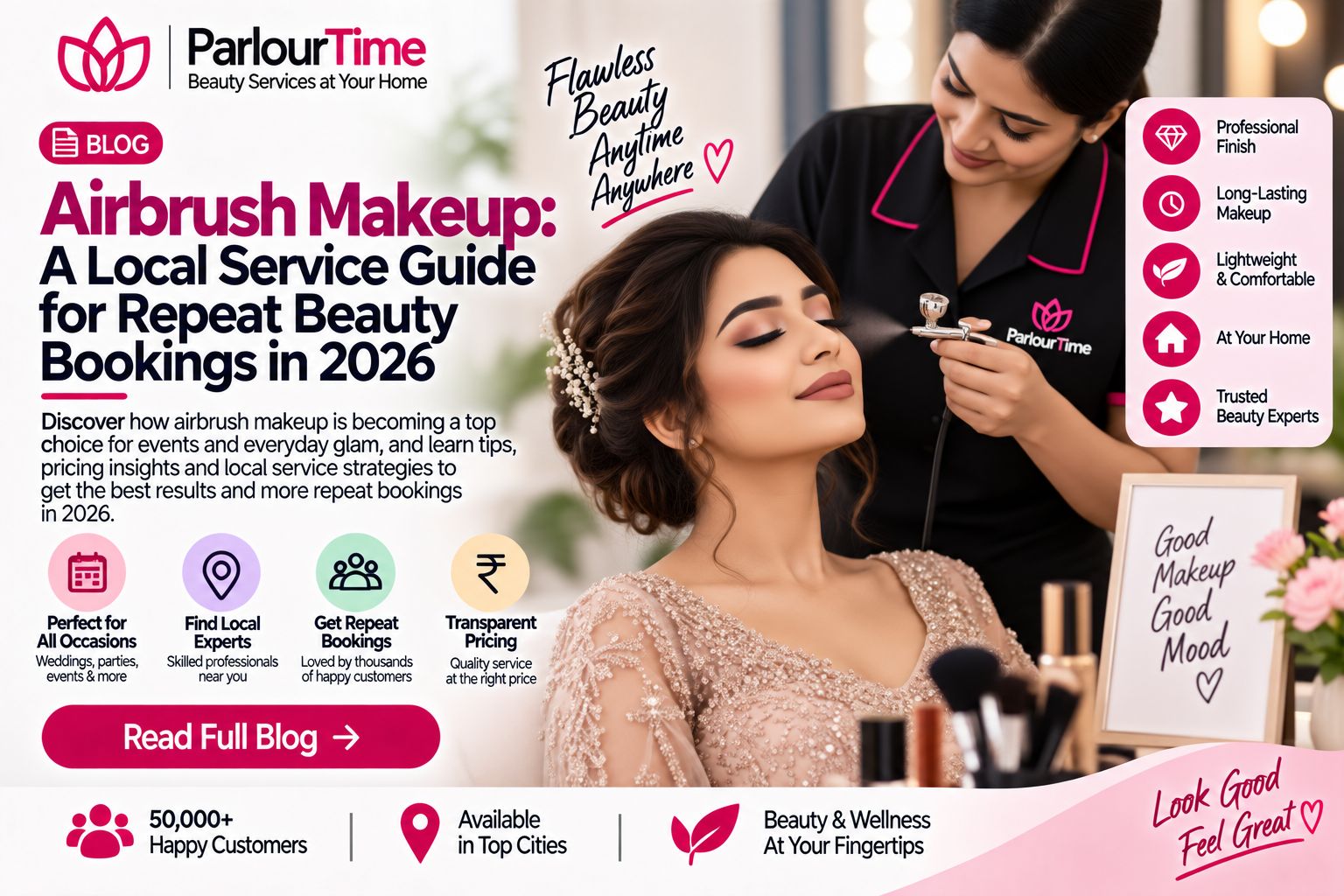


Airbrush makeup has become a common request at local salons, especially for bridal bookings and pre-event grooming. Many customers walk in expecting a flawless finish that lasts through long ceremonies and photographs. The first thing people usually notice is how light the application feels compared to traditional makeup. That lightweight feel creates high expectations. When the finish does not survive heat, humidity, or a full day of events, confusion sets in. Customers begin to question whether the service was done correctly or whether their skin reacted differently than expected. This gap between expectation and outcome is where most dissatisfaction begins.
Why Airbrush Makeup Bookings Often Create Confusion After the Event
During the salon visit, everything looks smooth and even. The artist adjusts the spray, blends the edges, and the mirror reflection feels close to what was promised. Then the event happens. Within a few hours, some customers notice patchiness around the nose, forehead shine returning, or the base settling into fine lines. These small shifts feel alarming when the booking was made specifically for a long event day. Brides especially feel this pressure because there is no second chance for the main ceremony. The confusion is not about the service itself but about what was communicated beforehand. Many customers were never told how skin type, humidity, or the base products used underneath would affect how long the airbrush finish stays intact.
What Actually Happens on Indian Skin During and After Airbrush Application
Indian skin tones and textures vary widely, and airbrush makeup behaves differently across them. Oily skin often breaks down the base faster, especially in humid weather or during long functions with movement and heat. Dry skin can show flaking or uneven absorption if the prep was rushed or if exfoliation happened too close to the event. Sensitive skin may show mild redness after application, not from the makeup itself but from the combination of primer, setting spray, and skin condition on that day. In many cases, the finish looks excellent for the first few hours and then gradually shifts. This is not a service failure. It is a normal response to skin type, climate, and how the product sits on the skin over time. Customers who understand this tend to feel less disappointed.
The Mistake Most Customers Make Before an Airbrush Makeup Booking
The most common mistake is booking airbrush makeup without addressing skin condition first. A cleanup facial or a basic salon facial done a few days before the event can improve how the base sits. But doing exfoliation or a strong treatment just one day before can leave skin sensitive and reactive. Another overlooked detail is product compatibility. The moisturizer, sunscreen, or primer used at home may not sit well under airbrush makeup, causing patchiness or faster fading. Customers also assume that airbrush makeup is automatically long-lasting for everyone. That is not accurate. Longevity depends on skin type, weather, setting products, and how the day unfolds. When these factors are ignored, dissatisfaction grows even though the application itself was done correctly.
How to Decide Timing, Maintenance, and Whether to Rebook Airbrush Makeup
The decision to rebook airbrush makeup should depend on how the previous result actually performed, not just how it looked in the first hour. If the finish faded quickly, check whether skin prep, weather, or product layering played a role before blaming the service. Sometimes switching to a different base or adjusting the prep routine solves the issue. In other cases, a different makeup approach may suit the skin better for certain seasons. Customers who want to compare service timing and aftercare expectations often check beauty guidance before locking a booking. Maintenance products and setting techniques influence longevity more than most people realise. If results keep falling short despite adjustments, a proper consultation with a professional becomes the right next step rather than repeating the same booking. Some customers use parlourtime to plan bridal and pre-event grooming more realistically.
q Does airbrush makeup last through a full Indian wedding day
a It can last through long events when skin prep, setting products, and weather conditions support the base properly.
q Why does airbrush makeup look patchy after a few hours
a Oily skin, humidity, and incompatible primers or moisturizers commonly cause the base to break down unevenly.
q Can sensitive skin react badly to airbrush makeup
a Mild redness or tightness can occur when skin is reactive, especially if exfoliation happened too close to the event.
q Is airbrush makeup better than traditional makeup for bridal bookings
a Airbrush gives a lighter finish, but suitability depends on skin type, event duration, and climate rather than the technique alone.
q Should I get a facial before my airbrush makeup appointment
a A gentle cleanup facial a few days before helps, but strong treatments right before the event can increase sensitivity.
q How far in advance should I book airbrush makeup for an event
a Booking a few weeks ahead allows time for a trial, skin prep, and adjustments based on how the base performs on your skin.
q What can I do if my airbrush makeup keeps fading early
a Reviewing prep products, setting sprays, and skin condition with a professional usually reveals what needs to change.
q Is parlourtime useful for comparing airbrush makeup services locally
a Parlourtime discussions often highlight that aftercare and maintenance expectations affect satisfaction more than the booking itself.