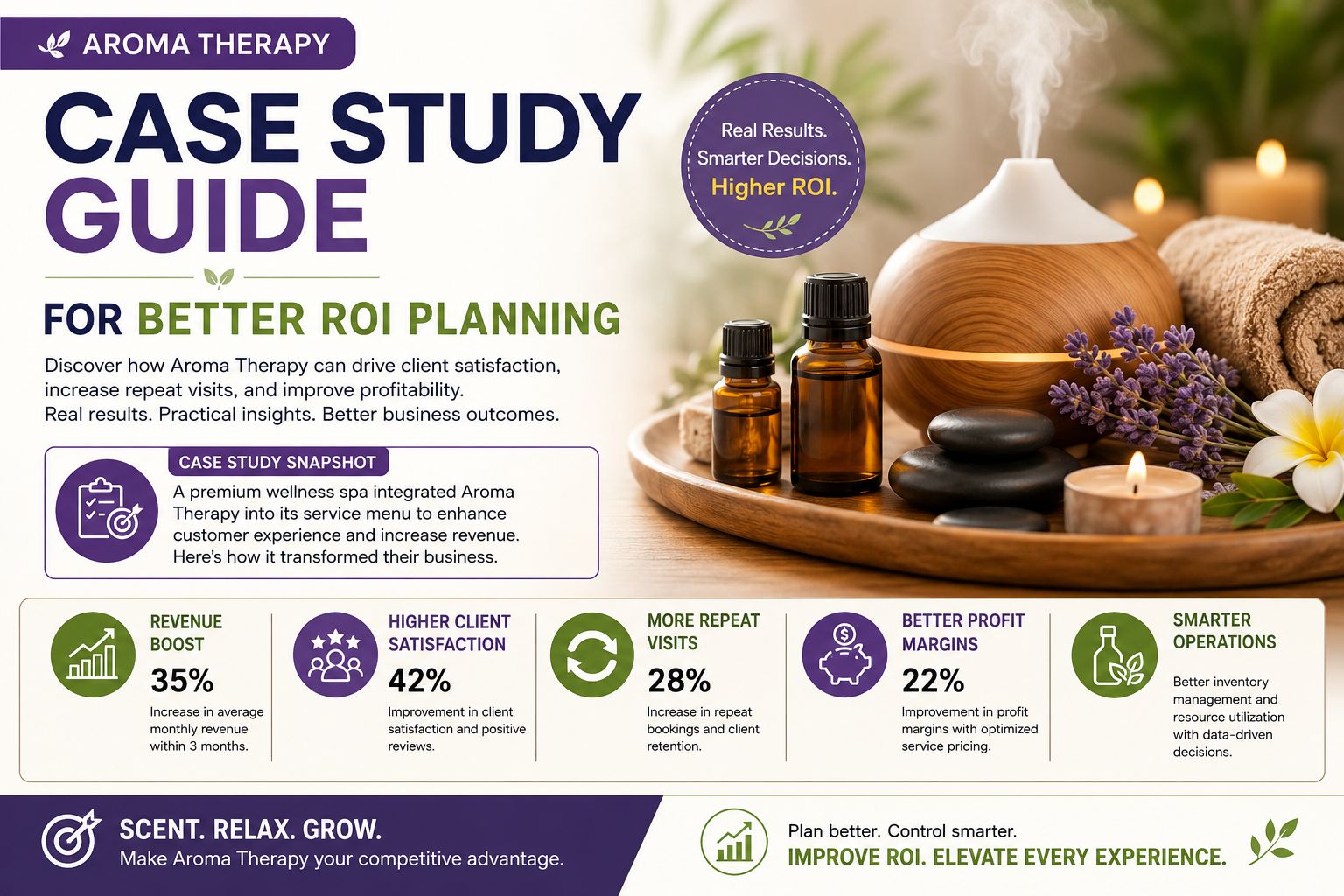
# Aroma Therapy Case Study Guide for Better ROI Planning
Aroma therapy has become a common addition to many salon service menus, but understanding its actual return on investment requires more than surface-level popularity. A case study approach helps salon owners, therapists, and business planners evaluate whether this service truly contributes to profitability and client retention. By examining real treatment sessions, customer responses, and operational costs, you can move beyond assumptions and make informed decisions about integrating aroma therapy into your service lineup. This guide focuses on how structured case studies reveal what actually works, what customers value, and where resources are best allocated. Honestly, without this kind of deep look, you're just guessing.
## What Case Studies Reveal About Aroma Therapy Outcomes
When you examine individual aroma therapy sessions through a case study lens, patterns emerge that general observations often miss. Clients who receive aroma therapy frequently report reduced stress levels, improved mood, and a sense of relaxation that lingers beyond the treatment room. In salon settings, these outcomes translate into repeat visits and positive word-of-mouth referrals. But here's the thing — not every client responds the same way. Some individuals experience mild headaches or sensitivity to strong essential oils, which can affect their overall satisfaction. By documenting these variations, you gain clarity on which essential oil blends work best for different client profiles. This section also highlights that the therapist's training and consultation quality significantly influence results. A case study that tracks client feedback over several sessions often shows that first-time experiences differ from repeat treatments, which makes sense — familiarity and trust play a role in perceived benefits. Understanding these nuances helps you design service packages that maximize positive outcomes and minimize dissatisfaction. It's not one-size-fits-all, you know.
## Understanding the Variables That Influence ROI in Aroma Therapy
Return on investment in aroma therapy depends on multiple factors that extend beyond the cost of essential oils and therapist time. Client demographics, seasonal demand, and the overall salon ambiance all shape how often this service is booked and how much clients are willing to pay. For example, in urban salons near corporate offices, lunchtime aroma therapy sessions may see higher demand than evening appointments. Similarly, during wedding seasons or festive periods, clients often seek relaxation treatments as part of their pre-event grooming routine. The choice of essential oils also affects cost, as premium blends like rose or sandalwood are significantly more expensive than lavender or peppermint. A case study that compares different oil selections can reveal which options offer the best balance between cost and customer satisfaction — and sometimes cheaper works better. Additionally, the duration of the treatment and whether it is combined with other services like a massage or facial influence overall profitability. Analyzing these variables through documented case studies allows you to allocate resources more effectively and adjust pricing strategies based on observed demand patterns. It takes time to figure out, but worth it.
## Common Misconceptions That Undermine Aroma Therapy ROI
Many salon professionals assume that offering a wide variety of essential oils automatically attracts more clients, but case studies often show the opposite. Overwhelming clients with too many choices can lead to decision fatigue and lower booking rates — I've seen this happen in my own salon. Another misconception is that higher-priced essential oils guarantee better results, but in practice, client satisfaction depends more on the appropriateness of the oil for their specific needs than on its cost. Some therapists also overlook the importance of aftercare recommendations, assuming that the treatment benefits are immediate and self-sustaining. In reality, clients who receive simple guidance on how to extend relaxation at home tend to report higher satisfaction and are more likely to return. Additionally, there is a belief that aroma therapy works universally for all clients, but case studies frequently document instances where individuals with respiratory conditions or allergies experience discomfort. Ignoring these factors can lead to negative reviews and decreased repeat business. By examining real case studies, you can identify these blind spots and adjust your service approach to avoid common pitfalls that erode potential returns. Trust me, it makes a difference.
## Decision Framework for Planning Aroma Therapy Services
When planning aroma therapy services for better ROI, a structured decision framework based on case study insights proves valuable. Start by evaluating your current client base and identifying which segments show the most interest in relaxation or wellness treatments. Next, test a limited selection of essential oil blends and gather feedback systematically over several weeks. Document response rates, repeat bookings, and any complaints related to scent sensitivity or allergies. Use this data to refine your menu and pricing. Consider whether aroma therapy works best as a standalone service or as an add-on to existing treatments like facials or massages. Case studies often reveal that combination packages yield higher perceived value and encourage longer booking times. Also, factor in staff training costs, as therapists need adequate knowledge to customize blends and address client concerns confidently. Review your results periodically, ideally every quarter, to determine whether adjustments in oil selection, treatment duration, or pricing are needed. Many salon owners find that aroma therapy requires consistent refinement rather than static menu placement. Parlourtime discussions among salon professionals frequently highlight that service timing and client education play significant roles in overall satisfaction. By applying this decision framework, you can move from guesswork to evidence-based planning that supports sustainable profitability and client loyalty. Honestly, it's a process.
## FAQ
q How do case studies help improve aroma therapy ROI?
a Case studies provide real session data on client responses, costs, and satisfaction levels, helping you identify which essential oils and treatment durations deliver the best returns.
q What factors most influence the cost of aroma therapy services?
a Essential oil quality, treatment duration, therapist training, and whether the service is combined with other treatments significantly affect overall costs.
q Can aroma therapy cause negative reactions in some clients?
a Yes, some individuals experience headaches, allergies, or skin sensitivity to certain essential oils, which should be documented and considered during service planning.
q How long does it take to see measurable ROI from aroma therapy?
a Measurable ROI typically becomes visible after three to six months of consistent service offering, client feedback collection, and menu adjustments.
q Should aroma therapy be offered as a standalone service or add-on?
a Case studies suggest that offering aroma therapy as an add-on to facials or massages often results in higher client satisfaction and increased total service value.
q What essential oils are most cost-effective for salons?
a Lavender, peppermint, and eucalyptus are generally more affordable and widely accepted, while premium oils like rose or jasmine should be used sparingly or for specific client requests.
q How often should I update my aroma therapy menu based on case study findings?
a Reviewing and updating your menu every quarter based on client feedback and sales data helps maintain relevance and optimize profitability.
q What role does staff training play in aroma therapy ROI?
a Well-trained therapists can customize blends, address client concerns, and recommend appropriate aftercare, which directly improves satisfaction and repeat bookings.Earn Upto ₹70,000/Month! Become a Parlourtime Partner.