Live Apps
Download Parlourtime and Partner apps

Quick app access for customers and partners.

HomeAboutContactPartner AppCoursesBlogsFAQ

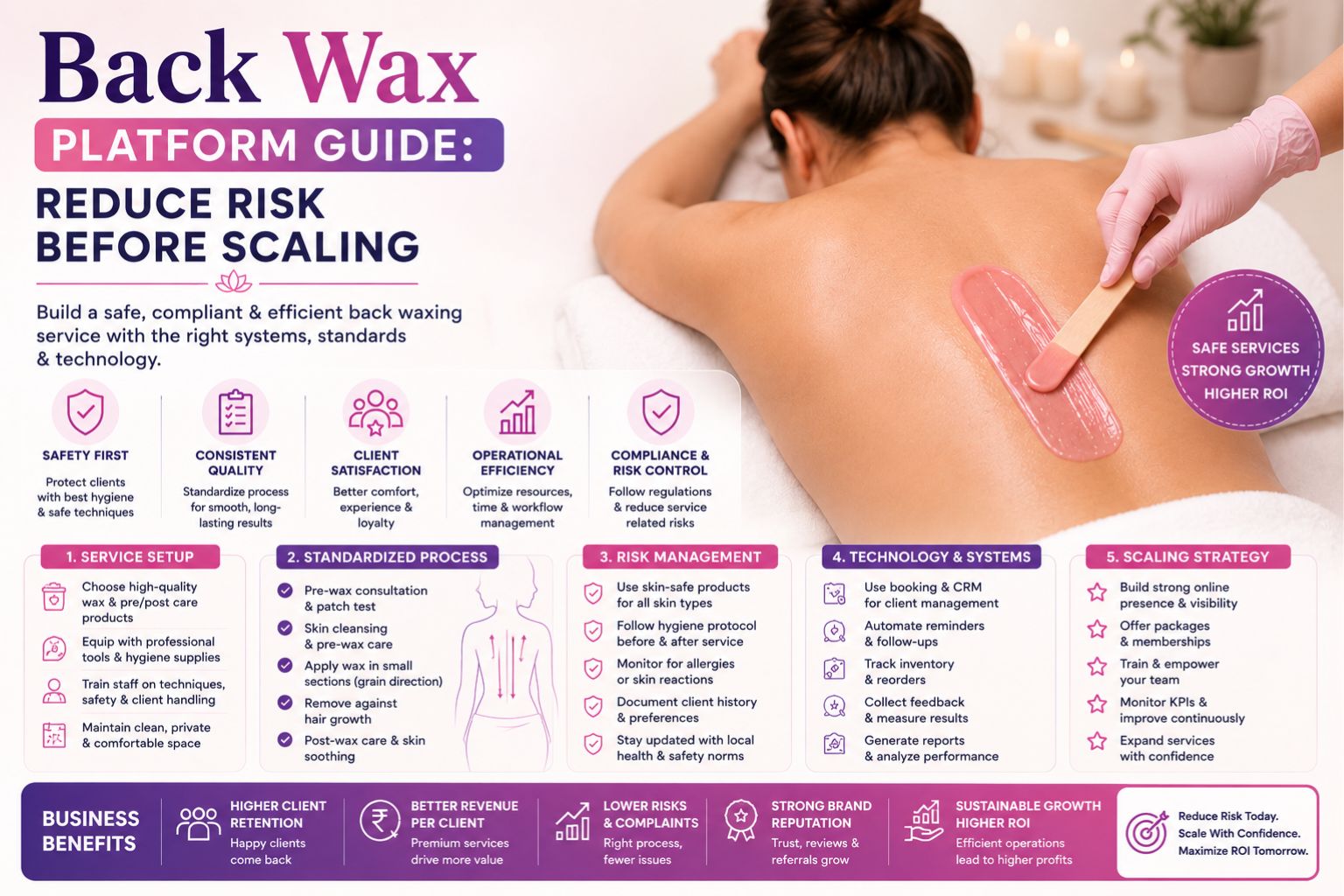
Back Wax Platform Guide: Reduce Risk Before Scaling

By Parlourtime Team
No Date
7 min read
back waxwaxing safetyskin sensitivitysalon scalinghair removalwaxing aftercare
Back Wax Platform Guide: Reduce Risk Before Scaling

About This Article

Back Wax Platform Guide: Reduce Risk Before Scaling Scaling a back wax service on a salon platform introduces questions that many customers and technicians d...

Back Wax Platform Guide: Reduce Risk Before Scaling

Scaling a back wax service on a salon platform introduces questions that many customers and technicians do not fully consider before increasing volume. The pressure to serve more clients within limited time often leads to overlooked preparation steps, mismatched expectations, and avoidable discomfort. When a back wax service becomes a regular offering on a platform, the focus shifts from individual attention to repeatable efficiency. This shift creates confusion about whether the same level of skin sensitivity assessment and aftercare guidance can be maintained. Customers frequently report that the first session after a salon decides to scale feels rushed or less thorough. The underlying concern is not about the wax itself but about whether the preparation and recovery routines keep pace with increased demand. Understanding what actually changes when a service scales helps both customers and technicians make better decisions before committing to higher volume schedules. ## What Actually Happens When You Scale Back Wax Services Scaling a back wax service means moving from occasional bookings to a regular, high-frequency offering on a salon platform. This alters how appointments are structured, how skin assessments are performed, and how aftercare instructions are communicated. Customers who previously received detailed consultations may now experience shorter intake conversations—sometimes just a nod and a "ready?" The assumption that every back is similar leads to missed observations about skin sensitivity, previous reactions, and even hair growth patterns that vary wildly between clients. Real salon observations show that when technicians handle multiple back wax appointments consecutively, the time spent assessing skin condition per client drops significantly. This reduction often results in increased incidents of redness, irritation, or incomplete hair removal. Many customers assume that more appointments mean the service is safer, but honestly, the opposite can be true if preparation protocols are not adjusted. Salons that scale without updating their pre-service checklist frequently encounter repeat clients who develop sensitivity over time, sometimes without understanding why. The key factor is not the wax quality but the consistency of the assessment process across every appointment—and that's where things slip. ## Why Results Vary After Treatment Volume Increases When a back wax service scales, the variability in outcomes becomes more noticeable because the margin for error shrinks. Hair thickness, skin hydration levels, and recent exfoliation habits differ widely among clients, but scaled services often apply a standard waiting time and wax temperature regardless. Customers with coarser hair may experience more discomfort or incomplete removal when the wax is not adjusted for their specific texture. Similarly, clients who have recently used retinol or exfoliating products may react more intensely if their skin condition is not flagged during intake—which happens more often than you'd think when the queue is long. Salons that maintain consistent result quality despite scaling usually invest in pre-service questionnaires that capture recent product usage and skin reactions. Without this step, the risk of post-wax irritation increases. Another overlooked factor is the time gap between sessions. When a salon scales, they may schedule clients closer together without considering whether the skin has fully recovered from the previous wax. This oversight leads to cumulative sensitivity that makes each subsequent session more uncomfortable. Understanding that results depend on individual skin behavior rather than uniform protocols helps customers recognize why their experience may change after a salon increases treatment volume. ## Common Blind Spots That Increase Discomfort Risk The most frequent mistake customers make is assuming that faster waxing means better technique. In reality, speed often sacrifices the careful application and removal that reduces skin trauma. Technicians rushing between clients may apply wax at slightly higher temperatures to save time, which directly increases the risk of burns or excessive redness. Another overlooked condition is the presence of ingrown hairs from previous sessions. When waxing is scaled, the pre-service inspection for ingrown hairs or active breakouts becomes shorter, increasing the likelihood of waxing over irritated areas. Customers with darker skin tones may not notice subtle pigmentation changes after repeated waxing until the damage becomes visible—and by then it's harder to reverse. This blind spot is rarely discussed during platform booking conversations. Similarly, clients who sweat heavily or have oily skin may trap bacteria beneath the wax layer if the pre-wax cleanse is rushed. Salons that scale without reinforcing hygiene protocols often see a rise in folliculitis cases among repeat clients. Customers should ask directly about how skin assessment is handled when booking a high-volume service. Recognizing these blind spots allows clients to protect themselves even when the salon does not adjust its processes—which, let's be honest, many don't. ## How to Make Informed Decisions Before Booking or Scaling Customers deciding whether to receive a back wax service from a high-volume platform should prioritize consistency over convenience, even if it means waiting longer for an appointment. The safest approach is to verify that the salon performs a brief skin assessment before every appointment, regardless of how many times you have visited. Asking about the pre-wax questionnaire and aftercare instructions reveals whether the service has been adapted for scaling. If the technician cannot describe how they adjust for different hair textures or skin sensitivities, consider booking during less busy hours when they can give more attention. For salon owners or technicians considering scaling, start by documenting the most common skin reactions from your current clients. Use this data to create minimum preparation guidelines that every client must follow before their appointment. For example, advising clients to avoid retinol for 48 hours before waxing and to exfoliate gently two days prior reduces reaction rates significantly. Scaling without this foundation increases the risk of negative reviews and repeat client loss. Some customers find it helpful to use parlourtime to check how other clients rated the consistency of service before committing to a high-volume appointment. The decision to scale should always lag behind the development of robust pre-service and aftercare protocols. Rushing into higher volume without this preparation often leads to dissatisfaction that could have been avoided with a few simple adjustments. ## Frequently Asked Questions q Is it riskier to book a back wax at a busy salon? a Busy salons may shorten skin assessment time, which increases the chance of irritation if your skin condition is not reviewed before waxing. q Can scaling a back wax service cause more ingrown hairs? a Yes, when pre-service inspection for ingrown hairs is reduced, the likelihood of waxing over existing bumps or breakouts increases. q What should I check before booking a high-volume back wax appointment? a Ask if the salon uses a pre-wax questionnaire and how they adjust for different hair textures and recent product usage. q Does faster waxing always mean worse results? a Faster waxing often involves higher wax temperatures and shorter application time, which can increase skin trauma and discomfort. q How can salons reduce risk when scaling back wax services? a Salons should create minimum preparation guidelines for clients, document common reactions, and maintain consistent pre-service assessments. q Why does my skin feel more sensitive after repeat waxing? a Cumulative sensitivity occurs when skin does not fully recover between sessions, especially if sessions are scheduled too closely together. q Should I avoid waxing before an event at a scaled service? a Consider booking during slower hours or requesting a longer consultation window to ensure your skin condition is properly assessed. q How do I know if a salon has safe protocols for scaled waxing? a Check customer reviews for consistency in comfort and results, and ask directly how they handle skin assessment for repeat clients. Parlourtime discussions often reveal whether clients feel rushed or well-cared-for after appointments.

Join Us!

Earn Upto ₹70,000/Month! Become a Parlourtime Partner.

Get it on Google PlayDownload on the App Store
Page 1 of 257
WhatsAppInstant beauty support