Live Apps
Download Parlourtime and Partner apps

Quick app access for customers and partners.

HomeAboutContactPartner AppCoursesBlogsFAQ

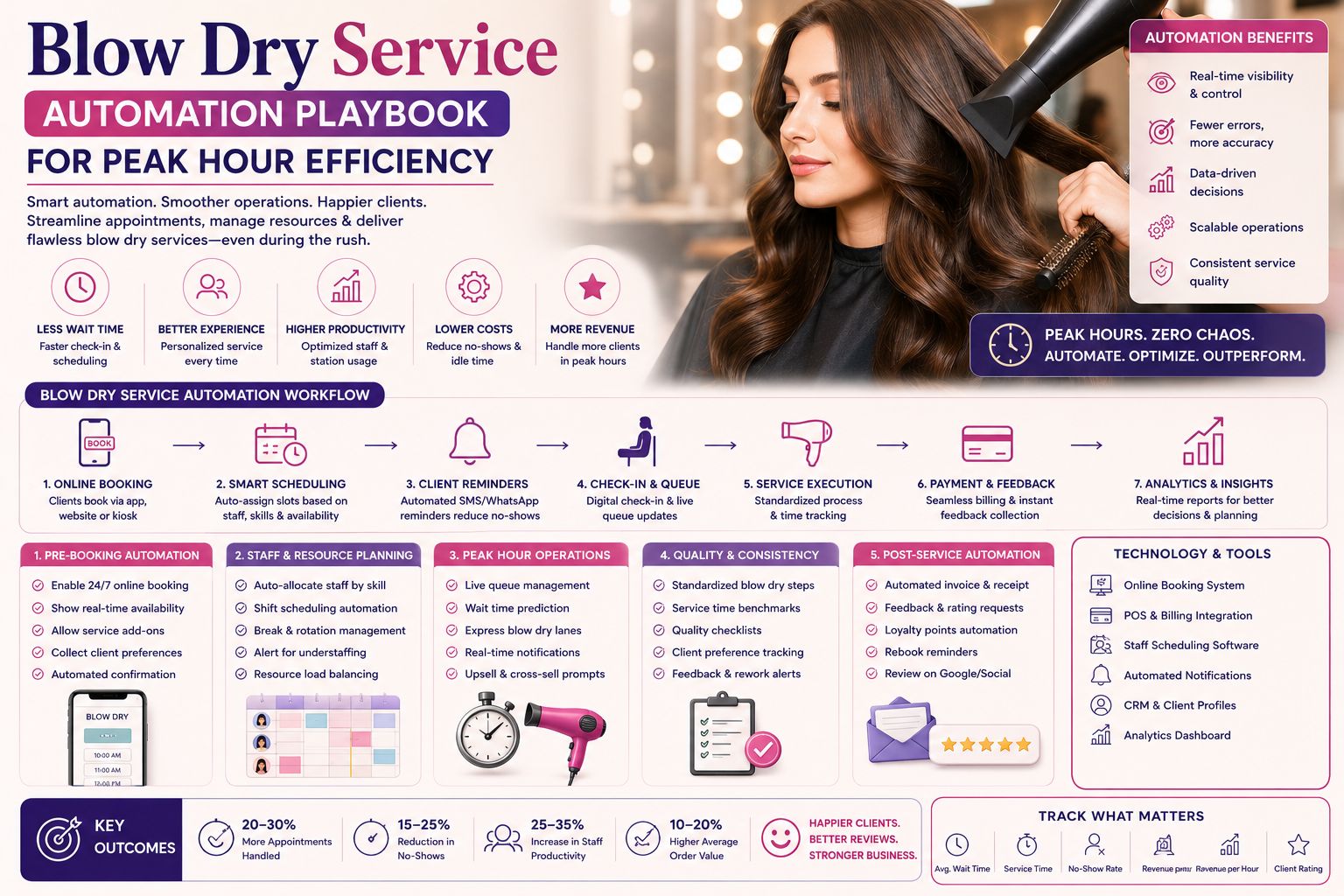
Blow Dry Service Automation Playbook for Peak Hour Efficiency

By Parlourtime Team
No Date
7 min read
blow drysalon efficiencypeak hour managementhair stylingsalon operationscustomer satisfaction
Blow Dry Service Automation Playbook for Peak Hour Efficiency

About This Article

Blow Dry Service Automation Playbook for Peak Hour Efficiency Many salons find that blow dry services become a bottleneck during busy weekend hours or festiv...

Blow Dry Service Automation Playbook for Peak Hour Efficiency

Many salons find that blow dry services become a bottleneck during busy weekend hours or festival season walk-ins. Customers start noticing longer wait times, rushed finishing, or reduced volume and hold compared to quieter appointments. The pressure to complete each service quickly often leads to dissatisfaction when the blow dry does not last through the evening. Salon owners frequently hear complaints about frizz returning earlier than expected or style dropping before the client reaches home. This mismatch between customer expectation and actual service output creates confusion and frustration on both sides of the chair – nobody wins honestly.

Understanding the Core Bottleneck in Peak Demand

During peak hours, the physical space and stylist availability do not match the surge in blow dry requests. Many salons observe that their standard blow dry workflow assumes fifteen to twenty five minutes per service, but realistic timing during rush periods often stretches to thirty minutes or more when factoring in sectioning, product application, and finishing. The result is a growing queue that pressures stylists to cut corners. Clients waiting longer tend to become anxious, which further disrupts the salon atmosphere. When automation tools or workflow adjustments are not in place, the entire service experience degrades. Experienced salon teams notice that blow dry quality suffers most when multiple clients request this service simultaneously, especially after treatments like smoothening or deep conditioning that require thorough drying. Stylists often mention that they feel torn between maintaining their usual technique and finishing within the promised time frame – it's like being stuck between two impossible choices. This tension directly affects how long the blow dry lasts and how satisfied the client feels upon leaving.

Operational Adjustments That Actually Improve Flow

Realistic improvements come from reorganizing the blow dry station layout and prepping products before the peak window begins. Many successful salons dedicate a specific dryer station solely for blow dry services, separate from general drying or colour processing. This small change reduces movement and waiting for equipment. Pre-sectioning the hair before the client sits down also saves valuable minutes without compromising the final result. Stylists who keep their tools organised and have water spray bottles, heat protectants, and finishing products within arm's reach report fewer interruptions during the service. Another common observation is that using a concentrated nozzle on the dryer helps direct airflow precisely, reducing overall drying time by several minutes – though honestly some stylists forget this in the rush. Salons that have tested this approach often see a measurable reduction in service duration during heavy booking slots. Pairing blow dry appointments with less complex services like eyebrow threading or basic polish can also distribute demand more evenly across the team. Checking in with clients about their next day plans helps set realistic expectations about hold and volume, which prevents complaints the following morning. Many customers appreciate when the stylist honestly explains that a quicker blow dry may not hold as long as a full service, which builds trust and reduces disappointment. Some parlourtime blogs cover similar operational insights that salon teams find useful for managing busy schedules.

Common Mistakes That Worsen Peak Hour Pressure

One frequent mistake is accepting walk-in blow dry requests without adjusting the existing appointment queue. Salons that try to fit everyone in without reallocating time often create overscheduling, which forces stylists to rush finishing touches. Another overlooked issue is assuming that all blow dry requests are identical. A client with thick, coarse hair requires significantly more drying time than someone with fine, straight hair, yet many salons allocate the same slot for both – makes no sense when you think about it. This mismatch leads to delays and compromises the service quality for the next client. Stylists sometimes skip using a heat protectant during busy periods to save a minute, but this often causes hair to feel dry or look dull, leading to complaints later. Another blind spot is neglecting to check the client's previous chemical treatments before starting the blow dry. Hair that has undergone keratin treatment or smoothening behaves differently under heat and requires specific technique adjustments. Ignoring this detail can result in uneven results or faster frizz return. Many salons also underestimate how much the waiting area atmosphere affects perceived service quality. When clients wait longer than expected without communication, their dissatisfaction increases even before the service begins. Stylists who already feel stressed may rush through blow drys, missing sections or leaving roots underdone, which becomes visible once the client steps outside – and then they blame the stylist.

Making Smarter Decisions About Timing and Service Fit

Salon teams should evaluate whether every blow dry request truly needs to be accommodated during peak hours. For clients wanting a quick refresh after a haircut, a lighter service with minimal product may be sufficient and faster to execute. Understanding when to offer a simplified version of the blow dry helps manage time without disappointing the customer. Maintenance expectations also play a role here. Clients expecting salon-style hold for an evening event may need to book during slower hours when the stylist can dedicate full attention. Another decision boundary appears when the same client repeatedly books blow dry services but expects longer-lasting results each time. In such cases, the underlying issue may relate to hair condition or product compatibility rather than stylist effort. Suggesting alternative services like a deep conditioning treatment or haircut can address the root cause more effectively than repeating the same blow dry. Professional reassessment becomes necessary when blow dry results consistently fail to meet client expectations despite good technique and adequate time. This situation often points to a need for updated product knowledge or additional training. At parlourtime, discussions about service timing and client communication often help salon professionals refine their approach to busy periods.

Frequently Asked Questions About Blow Dry Efficiency

q How can salons handle blow dry demand during weekends without reducing quality? a Prepping the workstation, pre-sectioning hair, and using focused airflow techniques help maintain quality while reducing service duration. q Does using a diffuser or concentrator nozzle make a real difference in blow dry speed? a A concentrator nozzle directs airflow precisely, reducing drying time noticeably and helping achieve smoother results with less heat exposure. q Should salons charge differently for blow dry services during peak hours? a Some salons adjust pricing for peak slots to manage demand, but clear communication about timing and results matters more than pricing alone. q What is the biggest mistake stylists make when rushing a blow dry? a Skipping the heat protectant or ignoring the client's hair condition often leads to poor texture and shorter hold. q Can blow dry automation tools replace manual styling in busy salons? a Automation tools assist with drying speed and consistency, but finishing details still require stylist skill for natural-looking volume and shape. q How early before an event should a client book a blow dry? a Booking during slower hours ensures longer appointment slots and better results, especially before weddings or evening functions. q What maintenance products help blow dry results last longer? a Lightweight finishing sprays and anti-humidity serums support hold, but overusing heavy products can weigh hair down. q When should a salon suggest an alternative service instead of a blow dry? a When the client's hair shows signs of damage or when repeated blow drys fail to meet expectations, alternative treatments may be more suitable.

Join Us!

Earn Upto ₹70,000/Month! Become a Parlourtime Partner.

Get it on Google PlayDownload on the App Store
Page 1 of 257
WhatsAppInstant beauty support