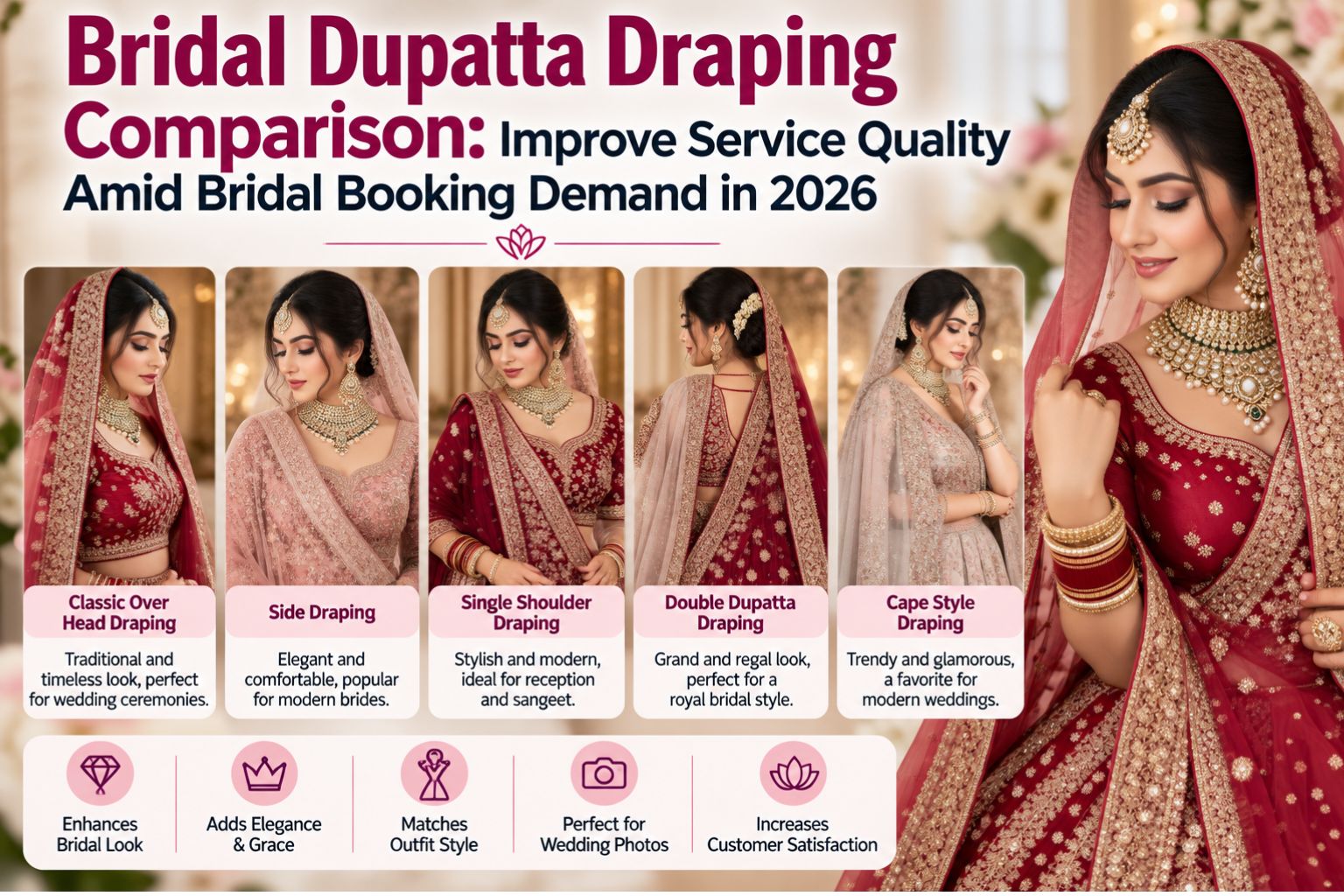


A bridal dupatta draping comparison should judge three common approaches against the same fixed set of criteria. This article compares shoulder-pinned traditional draping, layered pleated draping, and fabric-weight-distributed draping on six shared points: the fabric weight each suits, the pinning method used, setting time on the wedding day, client comfort through long ceremonies, re-drape ease when the drape shifts, and photo-readiness. The purpose is simple. Ask for a dedicated trial before peak wedding dates fill up, score each approach on those six points with the bride present, and book the one the stylist can repeat reliably. That is what turns draping from a hopeful request into predictable service quality.
Bridal dupatta draping comparison: how to set up the trial
Run the comparison inside one trial session, not across several appointments. Bring the actual dupatta, since a sample behaves differently from a heavy zari or banarasi piece. For each approach, pin it once, then test movement. Ask the bride to walk, sit, and raise both arms. Note where the fabric pulls, how many pins sit near the hairline, and how long the setup takes. A stylist who can reset the same drape in under ten minutes after the movement test is showing repeatability. A style that demands constant fixing during the test will demand the same during the ceremony. Set a time for the wedding-day setup and write that number down before deciding.
Three draping approaches compared on the same criteria
| Criteria | Shoulder-pinned traditional | Layered pleated | Fabric-weight-distributed |
|---|---|---|---|
| Fabric weight suited to | Light to medium net, chiffon | Medium to heavy embroidered | Heavy zari, banarasi |
| Pinning method | Few pins at shoulder and hairline | Multiple pins along pleat folds | Anchors spread to spread weight away from hairline |
| Setting time | Fast, usually ten to fifteen minutes | Longer pleat work | Moderate once anchor points are marked |
| Client comfort | Depends heavily on pin placement | Comfort when pleats are not over-tight | Weight spread means less pressure at one spot |
| Re-drape ease | Quick, fewer points to reset | Trickier, pleats must be rebuilt | Moderate, anchors hold shape better |
| Photo-readiness | Clean if pleats hold still | Strong pleat definition and light catch | Consistent front framing, less shine at folds |
Read the table as a matching exercise, not a ranking. Match the approach to the dupatta in hand and to the ceremony length. A light chiffon dupatta pinned the shoulder-pinned way often holds fine. A heavy zari piece needs weight spread across anchor points so the hairline is not carrying the load. Layered pleats suit heavy embroidered fabric because the folds carry their own structure. The wrong match shows up as slipping, pressure marks, or uneven pleats within the first hour.
What separates a reliable draping service from a rushed one
Three operational details predict the result more than any style choice. First, pin spacing. A stylist who never places two pins in the same spot through the day lowers the risk of hairline pain and redness. Second, the time buffer booked on the wedding day. A stylist working between two clients will rush, and rushed draping slips. Third, the written plan for small fixes. Ask the stylist to show one family member how to re-pin a lifted fold without disturbing the hairstyle. A venue that does not allow the stylist to stay for the full function makes this step essential. A vendor with a managed-review workflow may document these steps for you, and it is fair to ask for that record.
Decision boundaries before booking a draping service
A trial reduces risk but does not remove it. Different weather, fabric stretching over hours, or a tighter schedule can still change how the drape sits. When the salon cannot explain its pinning method, refuses a proper trial in peak season, or quotes a setup time shorter than what the trial actually took, treat that as a reason to look further. A simpler drape executed well beats a complex design the stylist cannot repeat under time pressure.
Choose the approach before the wedding week, not on the day, so the stylist has time to mark anchor points and confirm pleat depth on the actual dupatta.
Book the trial three to four weeks before a peak wedding date if the calendar is filling, because a later trial leaves no room for a change of style or pin plan.
Ask what setup time is reserved on the wedding day and compare it with the trial timing. A gap between the two is the clearest sign of a rushed schedule.
Check pin placement across the hairline. Repeated pinning in one spot is the most common cause of discomfort during long ceremonies.
Run the movement test at the trial. If the drape needs fixing after sitting and raising both arms, change the style or the pinning method before booking.
Confirm who handles small fixes during the event. If no stylist stays, a family member needs one short demonstration of how to re-pin without pulling the hairstyle.
Written by: Parlour Time Editorial Desk
Published: 30 September 2026, 09:57 PM IST | Updated: 30 September 2026, 09:57 PM IST
Powered by: Parlour Time