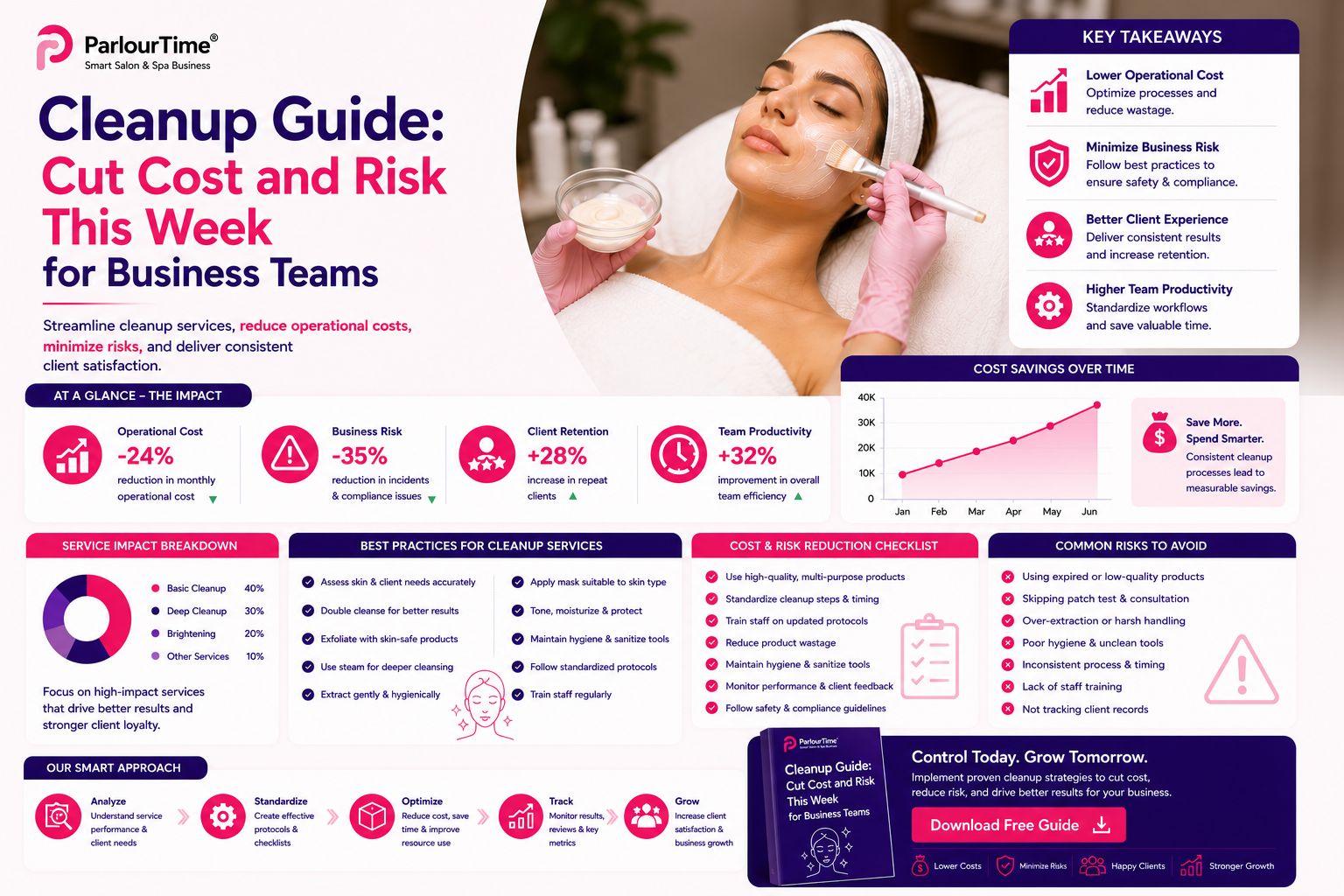


Running a salon or beauty business means dealing with cleanup after every service. Many business teams notice that cleanup costs eat into profits and service risks create unexpected delays. The confusion often starts when teams realise that simple cleanup steps take more time, money, and effort than expected. This is especially true during busy weeks when appointments are packed and staff are rushing between treatments. The real issue is not just about cleaning tools or workstations. It is about understanding where cost and risk actually come from in your daily operations. When business teams overlook small cleanup habits, the impact shows up in higher expenses and more service problems. This guide helps you identify what is driving up your costs and how to reduce risks starting this week. I mean honestly, we've all had those weeks where nothing feels clean enough, right?
What Cleanup Cost and Risk Really Mean for Your Business
When business teams talk about cleanup, they usually mean wiping down chairs, washing towels, and sanitising tools. But the hidden cost goes beyond supplies and labour. In many salons, the real expense comes from product waste, damaged equipment, and time lost between appointments. Service risk, on the other hand, often shows up as skin reactions, tool contamination, or customer dissatisfaction. For example, a facial aftercare routine can fail if tools are not properly cleaned between clients. Similarly, hair smoothening results may suffer if leftover products from previous treatments mix with new ones. Business teams frequently underestimate how much these small oversights cost them every week—like, you think a missed wipe here or there won't matter, but it adds up. The confusion deepens when teams assume that more cleaning products or longer cleaning times solve the problem. In reality, the solution lies in understanding what specific activities contribute most to cost and risk. It's kind of like guessing which leak is costing you water without checking the pipes.
Why Cleanup Costs Rise Faster Than Expected
Cleanup costs do not go up simply because your salon is busier. They rise because of inefficiency and lack of standardisation. When every team member cleans differently, some steps are repeated unnecessarily, while others are skipped entirely. This inconsistency leads to overuse of cleaning supplies, increased laundry costs, and higher utility bills. Service risks also increase when cleaning protocols are not followed uniformly. A common salon experience involves a technician rushing between clients and missing a sterilisation step. Later, that oversight triggers a reaction during a facial or causes a hair treatment to fail. Business teams often blame the product or the client, but the root cause is inconsistent cleanup. The overlooked detail here is that many teams focus on visible cleanliness while ignoring hidden contamination. Tools, brushes, and even towel storage areas can harbour residues that affect service outcomes. Addressing these gaps requires more than just buying better products. It requires a systematic approach to cleanup that every team member understands and follows. Honestly, it's the little things that pile up.
Common Cleanup Mistakes That Increase Business Risk
One of the biggest blind spots for business teams is assuming that surface cleaning is enough. In reality, porous items like brushes, sponges, and towels retain product residues and bacteria. When these items are reused without proper deep cleaning, they can transfer residues to the next client's skin or hair. This is a common cause of unexpected reactions after salon facials or hair treatments. Another mistake is using the same cleaning solution for all surfaces without considering product compatibility. Some cleaning agents react with leftover chemicals from treatments like keratin or smoothening. This can create unpleasant odours, skin irritation, or even damage to salon equipment. Business teams also overlook the cost of improper waste disposal. Products like wax strips, used gloves, and chemical containers require specific handling. When these are thrown away incorrectly, your salon faces disposal fees or compliance issues. The dissatisfaction escalates when teams realise that these mistakes could have been avoided with simple training and standardised procedures. I've seen so many places just grab any spray and call it a day—big no-no.
How Business Teams Can Reduce Cleanup Cost and Risk This Week
Reducing cleanup cost and risk starts with standardising your process across all team members. Begin by creating a simple checklist that covers cleaning steps for every service type. This includes tool sterilisation, surface disinfection, towel management, and product storage. Once every team member follows the same steps, you will notice a reduction in supply waste and fewer service complaints. Next, focus on product compatibility. Check whether your cleaning products are safe to use on tools and surfaces that come into contact with clients. Some cleaning agents can degrade the quality of brushes or leave residues that affect treatments like facials or smoothening. Switching to compatible products can prevent unexpected reactions and extend the lifespan of your equipment. Timing is another critical factor. Cleanup should happen immediately after each service, not at the end of the day. When residue dries, it becomes harder to remove and increases the risk of cross-contamination. For business teams managing multiple appointments, a quick cleanup between clients saves both time and money. Finally, review your waste disposal methods. Proper segregation of disposable items reduces disposal costs and keeps your salon compliant with local regulations. Making these changes this week can immediately lower your operational expenses and improve service reliability. Honestly, it's not rocket science, you just need to start somewhere.
Frequently Asked Questions
q What is the biggest cost in salon cleanup for business teams?
a The biggest cost usually comes from wasted cleaning supplies, unnecessary laundry, and time lost due to inconsistent cleaning routines. I mean, you'd be surprised how much product ends up in the drain.
q How can service risk from poor cleanup affect my business?
a Poor cleanup can cause skin reactions, tool contamination, and treatment failures, leading to client dissatisfaction and refunds. Nobody wants to refund a facial gone wrong.
q Do all cleaning products work the same way on salon tools?
a No, some cleaning products react with leftover chemicals from treatments like keratin or face packs, causing damage or irritation. It's like mixing things without checking.
q How often should salon tools be deep cleaned?
a Tools like brushes and sponges should be deep cleaned after every use to prevent residue buildup and cross-contamination. Yeah, every single use, not just when you remember.
q Can changing my cleanup routine save money immediately?
a Yes, standardising your cleanup process and using compatible products reduces waste and lowers utility costs within the same week. It's faster than you think.
q What is the most overlooked risk in salon cleanup?
a The most overlooked risk is hidden contamination on porous items like towels and brushes that transfer residues between clients. That's the sneaky part.
q How do I train my team to follow a standard cleanup process?
a Create a simple checklist for each service type and review it during team meetings to ensure consistency across all members. Maybe put it on the wall where they can see it.
q When should I seek professional advice for salon cleanup compliance?
a If your team faces repeated service reactions or disposal fines, consulting a beauty service resource like parlourtime can help identify gaps in your current process. Sometimes you need an outsider to point out the obvious.