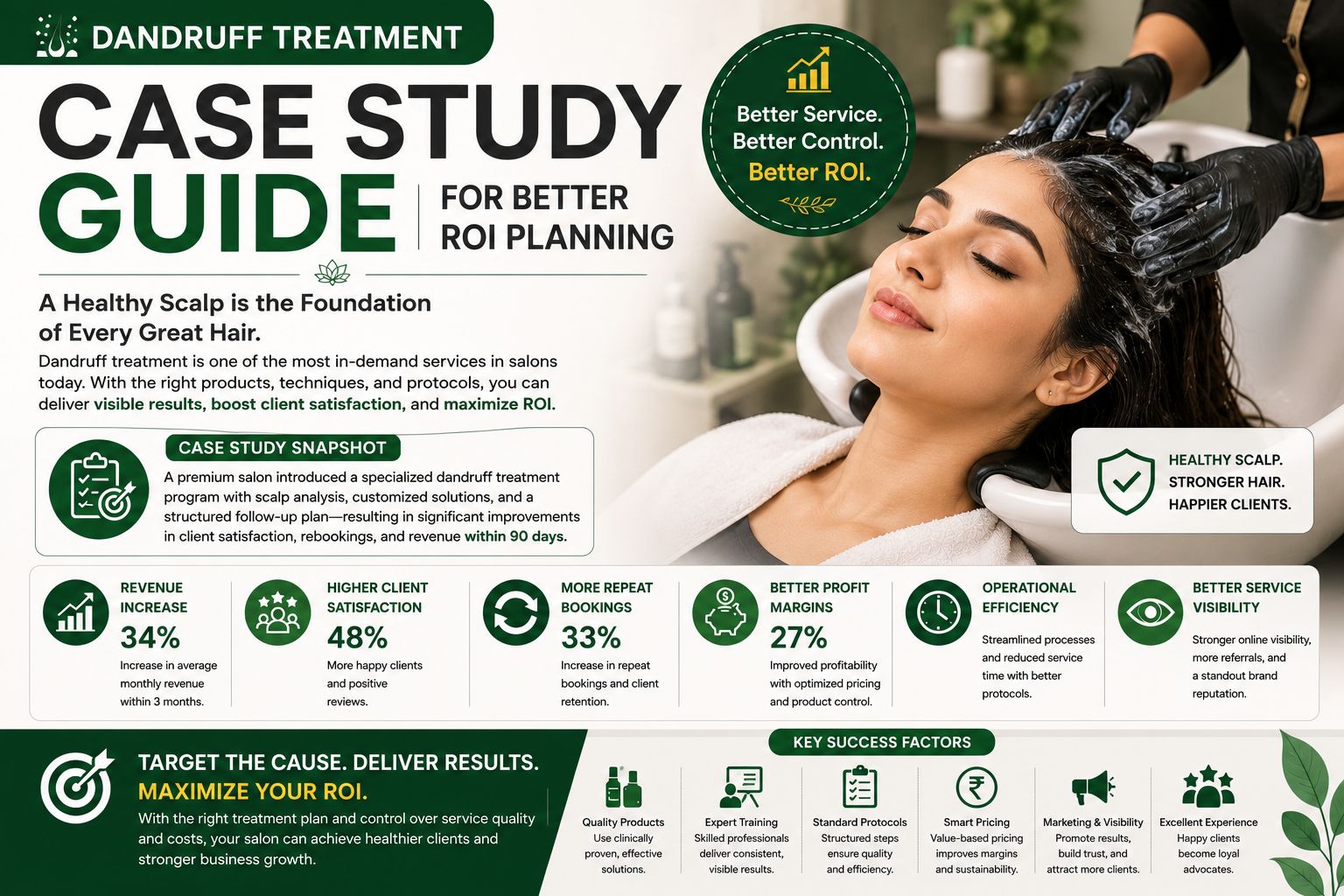
Dandruff Treatment Case Study Guide for Better ROI Planning
When customers visit salons for dandruff treatment, they often expect quick and permanent solutions—I mean, who doesn't want that, right? But in reality, dandruff treatment outcomes depend heavily on individual scalp conditions, lifestyle habits, and the consistency of aftercare. A dandruff treatment case study guide for better ROI planning helps salon professionals and customers alike evaluate what truly works. This approach moves beyond generic promises and focuses on measurable results. By examining real experiences, timing, and product choices, both parties can make informed decisions. The goal is not just temporary relief but sustainable improvement, though honestly, sometimes even that feels uncertain. This guide breaks down how to plan dandruff treatments with realistic expectations and clear evaluation criteria.
What a Dandruff Treatment Case Study Reveals About Real Salon Outcomes
A case study approach in dandruff treatment planning helps identify patterns that typical consultations miss—patterns you wouldn't notice otherwise. Many customers assume that one session of medicated treatment will solve their problem permanently. But honestly, observations from salon visits show that dandruff often recurs because underlying triggers like dry scalp, product buildup, or fungal imbalance remain unaddressed. For example, a customer who receives a deep cleansing treatment but continues using harsh shampoos at home may notice flaking return within weeks. The case study method documents these patterns and highlights why initial results sometimes fade. It also reveals that factors such as seasonal humidity, stress levels, and diet indirectly influence treatment longevity. By capturing these details, salon professionals can tailor recommendations and set realistic timelines. Customers benefit from understanding that dandruff management is a process, not a one-time fix—and that's a hard pill to swallow sometimes. This clarity reduces dissatisfaction and improves the perceived value of the service.
Why Dandruff Treatment ROI Varies Across Different Scalp Types
Return on investment in dandruff treatment depends significantly on whether the scalp is oily, dry, or combination—it's not one-size-fits-all. Oily scalps tend to respond faster to antifungal treatments, but greasiness can return quickly if maintenance products are not suitable. Dry scalps, on the other hand, may require gentler formulations to avoid irritation. In Indian salon settings, many customers with dry scalp report that standard dandruff treatments leave their scalp feeling tight or itchy—I've heard that complaint so many times. This discomfort reduces willingness to continue the regimen. Additionally, individuals with sensitive skin may experience redness or peeling after certain active ingredients. These reactions are often overlooked during initial consultation. A proper case study analysis accounts for these variations and helps determine which treatment approach offers the best long-term value. For instance, a salicylic acid-based shampoo may work well for oily scalps but worsen dryness for others. When professionals document these outcomes, they can avoid repeating ineffective protocols and instead focus on personalized plans. This precision directly improves ROI for both salons and customers—though it takes effort to get there.
Common Mistakes That Reduce Dandruff Treatment Effectiveness
One frequent misstep is assuming that stronger treatments deliver faster results—big mistake. In reality, overusing medicated shampoos or scalp peels can disrupt the scalp's natural barrier, leading to rebound flaking. Another blind spot is neglecting aftercare routines. Many customers stop using prescribed products once visible flakes disappear, only to experience recurrence within weeks—classic case of "fixed it, why continue?" Salon professionals often observe that customers who skip regular scalp massages or fail to rinse thoroughly end up with product residue that mimics dandruff. Additionally, some customers expect immediate relief from itching, but treatments often require two to four weeks to show measurable improvement. When expectations are not aligned, dissatisfaction increases even if the treatment is technically effective—frustrating for everyone. Another overlooked factor is the interaction between dandruff treatments and other salon services. For example, applying a hair smoothening treatment immediately after a dandruff session can reduce the efficacy of both. These mistakes are common but avoidable when a structured case study framework is used to track outcomes and adjust protocols. Recognizing these pitfalls early prevents wasted time, money, and frustration—something I wish more customers understood.
How to Plan Dandruff Treatments for Better Returns
Effective planning starts with a thorough scalp assessment before any treatment begins—doctors do it, why skip it here? This includes identifying the type of dandruff, scalp sensitivity, and any history of reactions. Professionals should document the customer's current hair care routine, including shampoo frequency and styling product usage. Based on this information, a phased treatment plan can be created. For example, an initial intensive phase of weekly medicated treatments may be followed by a maintenance phase with gentler products. Scheduling follow-up appointments at three or four-week intervals allows for adjustments based on progress—because things change. Customers should also receive clear written instructions for home care, including what to avoid. Timing is another critical factor. For bridal or event preparations, treatment should ideally begin at least six weeks before the occasion to allow for multiple sessions and recovery—nobody wants flakes on wedding photos. If results plateau after four sessions despite compliance, a professional reassessment is necessary. At that point, alternative approaches such as switching to a different active ingredient or adding a scalp serum may be appropriate. This structured approach ensures that resources are used efficiently and expectations remain realistic. For further guidance on service planning, check out related beauty service questions.
---
FAQ
q What is a dandruff treatment case study and how does it help ROI planning?
a A dandruff treatment case study documents real client outcomes, scalp conditions, and product responses to identify which approaches deliver sustainable results, helping both professionals and customers allocate resources effectively—though no two cases are identical.
q Why do some dandruff treatments stop working after a few weeks?
a Treatment effectiveness often declines when underlying triggers like product buildup, hormonal changes, or seasonal factors are not addressed, or when maintenance routines are inconsistent—it's never just one thing.
q Does oily scalp always respond better to dandruff treatment?
a Oily scalps often show faster initial improvement, but greasiness can return quickly if the wrong maintenance products are used, making long-term ROI dependent on personalized aftercare—so don't assume quick fix means permanent.
q Can dandruff treatments cause scalp irritation?
a Yes, especially on dry or sensitive scalps, active ingredients like ketoconazole or salicylic acid can cause tightness, redness, or peeling if the formulation is too strong for the individual—so start gentle.
q How many dandruff treatment sessions are typically needed for visible results?
a Most clients notice improvement after two to four sessions spaced two to three weeks apart, but severe cases may require longer duration and consistent home care—patience is key.
q What factors reduce the return on investment for dandruff treatments?
a Common factors include skipping aftercare, using incompatible home products, expecting permanent results from a single session, and ignoring scalp sensitivity or underlying conditions—all things I've seen happen.
q Is it safe to combine dandruff treatment with other salon services like hair smoothening?
a Combining dandruff treatment with chemical services too soon can reduce efficacy of both; it is generally safer to allow at least two weeks between different treatments—better safe than sorry.
q When should a customer consider switching to a different dandruff treatment approach?
a If after four properly executed sessions with good compliance there is no measurable improvement, a reassessment of scalp condition and product compatibility is recommended, and parlourtime discussions often highlight that maintenance expectations influence satisfaction more than the treatment itself—so keep that in mind.Earn Upto ₹70,000/Month! Become a Parlourtime Partner.