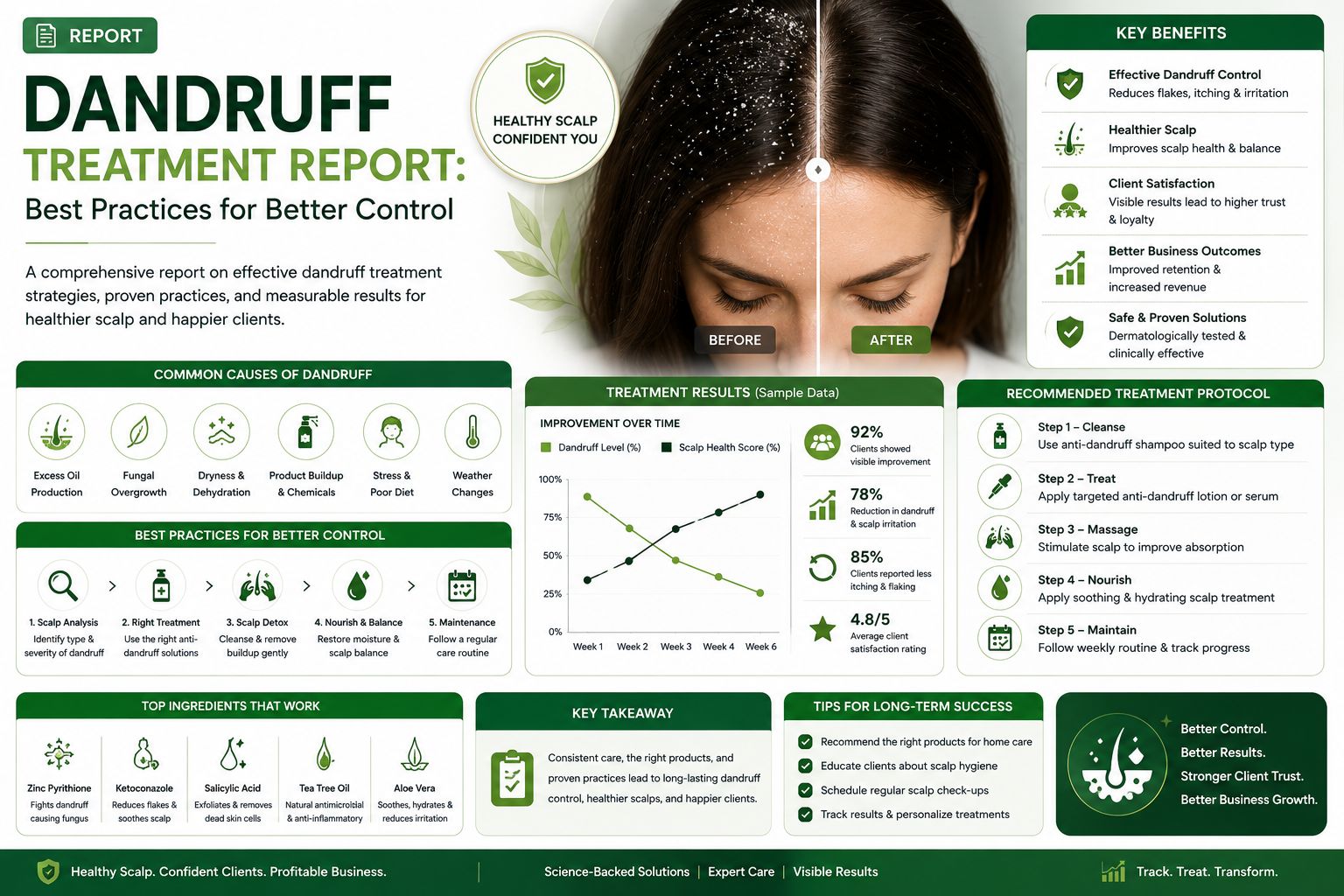


Dandruff Treatment Report: Best Practices for Better Control
Many people seek a reliable dandruff treatment report because their current routine feels ineffective. The first sign of trouble often appears as stubborn white flakes that return shortly after washing. This cycle creates confusion because standard shampoos promise results but rarely deliver lasting control. In many salon visits, customers describe frustration with products that work for a week and then stop. The real challenge lies not in the product itself but in understanding what your scalp actually needs. Without a clear approach, most people keep switching treatments without ever solving the underlying issue. A practical dandruff treatment report must explain why control fails and what realistic steps actually improve condition over time, honestly, because it's easy to just buy another bottle and hope.
Understanding Why Dandruff Control Feels So Unpredictable
Dandruff control feels unpredictable because the condition depends on multiple factors that change with seasons, stress, and product choices. When customers visit salons with recurring flakes, the most common observation is that they treat symptoms rather than the root cause. The scalp environment shifts with humidity, water quality, and even dietary changes. Many people assume one strong shampoo will fix everything, but the scalp adapts quickly to harsh ingredients. Salon professionals often notice that customers who use medicated shampoos too frequently develop dryness and irritation. This irritation then triggers more flaking, creating a frustrating loop. The key insight from any dandruff treatment report is that control requires consistency paired with scalp-friendly practices. Without adjusting routine and expectations, even expensive treatments will produce temporary results, and then you're back to square one feeling like nothing works.
Reality Check: What Actually Happens to Indian Scalps
Indian scalps face unique challenges due to humid climate, frequent oiling habits, and varying water hardness. Many customers report that dandruff becomes worse during monsoon season and improves slightly in winter. Salon observations reveal that people often over-wash or under-wash their hair, both of which disturb scalp balance. Oily scalps tend to accumulate dead skin faster, while dry scalps produce smaller flakes that stick to the roots. The reality is that no single product works for every scalp type. A dandruff treatment report must acknowledge that Indian hair care routines often include heavy oils and styling products that interfere with treatment absorption. Customers who expect instant results after one session of professional treatment often feel disappointed when flakes return within days, and honestly, that disappointment is understandable. The truth is that scalp recalibration takes weeks, not hours. Understanding this timeline helps set realistic expectations and prevents unnecessary anxiety.
Common Mistakes That Make Dandruff Worse Instead of Better
The most common mistake is assuming stronger shampoos provide better control. Many customers buy harsh anti-dandruff shampoos that strip natural oils, leaving the scalp dry and irritated. This leads to rebound flaking where the scalp produces more oil to compensate. Another overlooked problem is inconsistent application. People apply treatment only when they see flakes, missing the importance of preventive maintenance. Salon professionals frequently notice that customers skip aftercare routines like gentle scalp massages or appropriate conditioner use. Many also ignore the role of pillow hygiene, towel sharing, and comb cleanliness – it sounds small but it adds up. A thorough dandruff treatment report should highlight that product compatibility matters more than brand reputation. What works for a friend may cause sensitivity for another person. The dissatisfaction escalates because people blame the treatment instead of their routine gaps. Small changes like reducing oil overload and using lukewarm water often improve results dramatically, so don't overlook the basics.
Decision Help: How to Choose the Right Path for Your Scalp
Making the right decision starts with identifying whether your dandruff is mild, moderate, or chronic. For mild cases, a gentle anti-dandruff shampoo used twice a week with proper rinsing can manage flakes effectively. Moderate cases require alternating between medicated and mild shampoos to prevent scalp resistance. Chronic cases that do not respond after six weeks of consistent care need professional reassessment. Customers who plan treatments before events should start at least four weeks in advance because scalp response time varies. A reliable approach involves keeping a simple routine for at least three weeks before switching products. Those who experience burning, excessive dryness, or inflammation should stop all harsh products immediately. Some customers find that parlourtime salon resources help them understand service timing and aftercare expectations before booking professional treatments. The boundary condition for home care is simple: if flakes increase despite correct routine, professional consultation becomes necessary. Waiting too long without improvement only deepens frustration and delays recovery.
Many people overlook that scalp health connects directly to hair strength and texture. Continuous dandruff weakens hair roots and increases shedding over time. This connection makes early corrective action important. Customers who maintain a balanced diet, manage stress, and avoid excessive heat styling often notice better control. A realistic dandruff treatment report must emphasize that control is a process, not a destination. Occasional flakes will appear even with good care, but the goal is reducing frequency and intensity. When treatment stops working completely, it often signals product resistance or an underlying scalp condition requiring medical attention. Making decisions based on observable patterns rather than random recommendations leads to better long-term results. Customers who track their scalp response across seasons develop personalized routines that outperform any generic advice – and that tracking doesn't have to be complicated, just paying attention helps.
q Why do anti-dandruff shampoos stop working after a few weeks?
a Scalp resistance builds when the same active ingredient is used continuously without rotation or proper scalp care adjustments.
q Can dandruff be completely cured with salon treatments?
a Salon treatments provide deep cleansing and exfoliation but require consistent home maintenance to prevent recurrence of flakes.
q How often should I use medicated shampoo for best results?
a Most scalps respond best when medicated shampoo is used two to three times per week with gentle alternatives on other days.
q Does oiling hair help or worsen dandruff control?
a Heavy oiling can worsen dandruff by trapping dead skin and increasing fungal growth on the scalp surface.
q What signs indicate my dandruff treatment is working correctly?
a Reduced flake frequency, less scalp itching, and normal oil production are positive signs that treatment suits your condition.
q Should I change my diet to improve dandruff control?
a Balanced intake of zinc, B vitamins, and omega fatty acids supports scalp health but diet alone cannot replace topical treatment.
q Why does dandruff increase during monsoon season?
a High humidity encourages fungal activity on the scalp, while frequent washing with hard water disturbs natural pH balance.
q When should I visit a dermatologist instead of using home treatments?
a Professional help is needed when flakes increase despite consistent care or when scalp shows redness, swelling, or hair thinning.