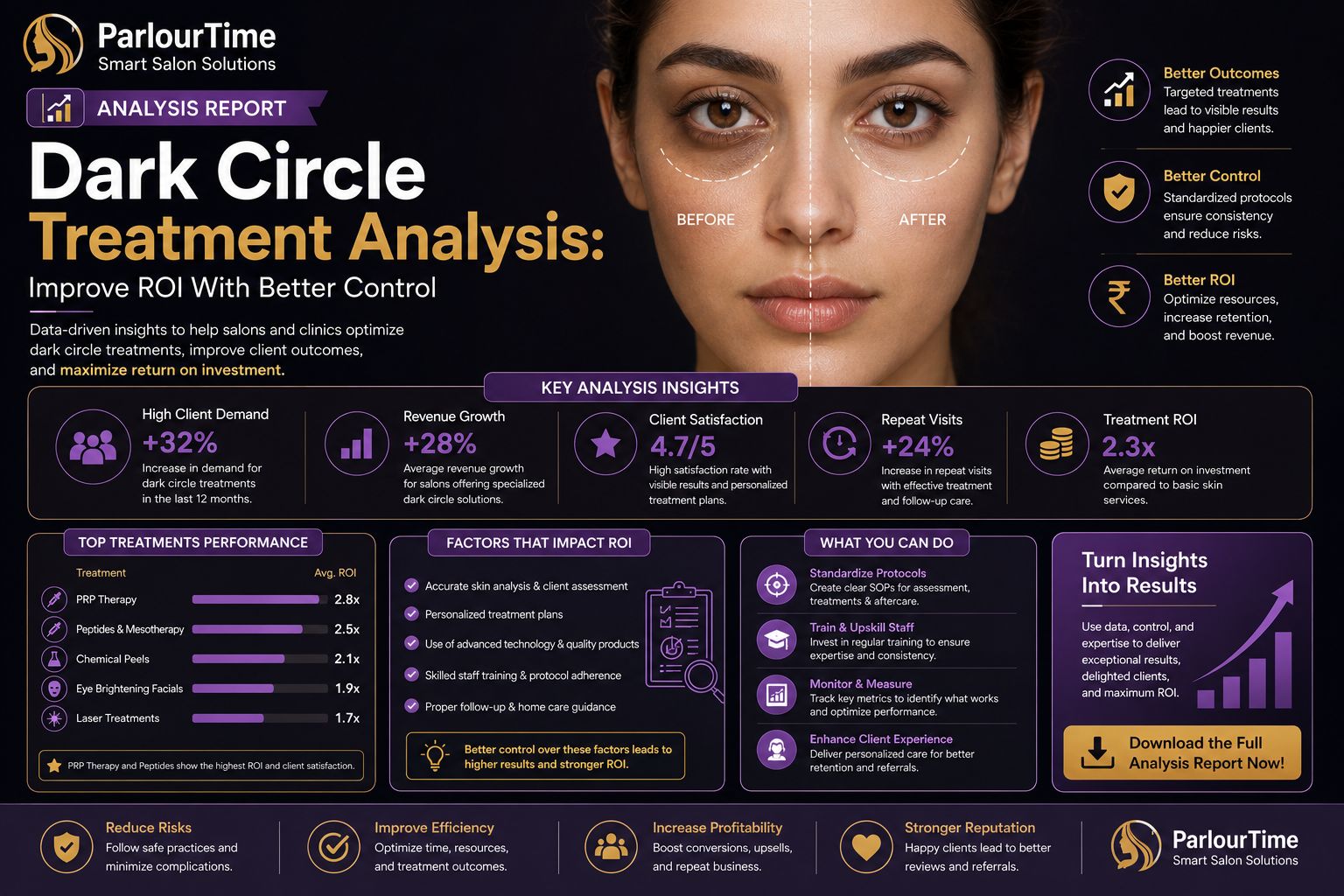


When customers walk into a salon asking for dark circle treatment, they usually carry a mix of hope and confusion. Many have already tried home remedies, creams, or even earlier salon sessions with limited success. The primary reason dark circle treatments feel unpredictable is that the term itself covers multiple underlying issues—pigmentation, thin skin, vascular visibility, and shadowing from structural volume loss. Most customers do not distinguish between these causes when booking a service. A salon professional sees a complaint about dark circles, but what actually needs addressing could be vascular congestion from sleep deprivation or genuine hyperpigmentation triggered by sun exposure or allergies. This disconnect between the customer's broad request and the specific biological cause is where expectations begin to shift. The problem is not always the treatment itself but the mismatch between the real condition and the service chosen.
The Problem With Treating Dark Circles Without Proper Diagnosis
The most common mistake during dark circle treatment analysis is assuming all dark circles are the same. Salons frequently rely on a single standard protocol—like a brightening mask or a mild peel—for every client who complains about under-eye darkness. But here's the thing... pigment-based dark circles respond to different ingredients compared to vascular dark circles caused by visible blood vessels underneath thin skin. Structural dark circles caused by tear trough hollows or aging require volume restoration, not just topicals. When the salon skips assessment, the treatment may show temporary brightness but fails to address the root issue. This leads to a recurring pattern where the customer returns every few weeks expecting a different result but receiving the same protocol. The dissatisfaction is rarely about the product quality or technician skill; it is about treating the wrong condition. Customers often blame themselves or the service when the real gap is the lack of diagnostic thought before the service begins.
Understanding The Factors That Control Treatment Outcome
Several hidden factors determine whether a dark circle treatment actually works well. Skin thickness under the eyes is rarely considered before a treatment. Very thin skin makes vascularity more visible, so even the most effective brightening agent cannot hide purple or blue tones if the skin lacks enough collagen density. Blood circulation patterns also play a role. Customers who sleep poorly have increased blood pooling under the eyes, which creates a temporary darkening that no product can fix permanently. Allergies, sinus congestion, and even dehydration cause puffiness that creates shadowing. Salons often overlook how the same treatment performs differently depending on current hydration levels, seasonal changes, or recent sleep cycles. Another underrated factor is the product pH and compatibility with the eye area. The periorbital region absorbs ingredients at a different rate than the rest of the face. When a product is too acidic or too occlusive, it can backfire and worsen pigmentation or cause irritation. These factors explain why two customers receiving the same service can have completely different satisfaction levels. The treatment is not failing; the control over variables is missing.
Common Mistakes That Lower ROI On Dark Circle Services
Salons often underestimate how maintenance decisions destroy treatment ROI. Many customers skip aftercare because they consider dark circles a quick fix rather than a gradual correction. They continue habits that interfere with results, like rubbing their eyes vigorously, skipping sunscreen around the eye area, or using harsh cleansers that disrupt the skin barrier. On the salon side, the biggest mistake is overpromising. When the conversation uses words like "complete removal" or "permanent solution," the client leaves with unrealistic benchmarks. Any regression then feels like failure. Another frequent error is not matching the treatment frequency to the severity. Mild pigmentation does not require aggressive peels every two weeks, while chronic structural dark circles cannot improve with monthly brightening facials alone. Over-treating wastes inventory and chair time. Under-treating frustrates the customer. Both destroy perceived value. Salons also miss the opportunity to identify when the issue is medical—like iron deficiency anemia or thyroid conditions—and continue cosmetic approaches instead of referring for blood work. This not only wastes money but damages credibility when the client sees no change after multiple sessions.
How To Make Better Decisions About Dark Circle Treatment
A dark circle treatment analysis should start with a clear decision framework. First, decide whether the dominant cause is pigment, structure, vascular, or a combination. This requires minimal effort—a simple observation using natural lighting, a pinch test to assess skin thickness, and a quick inquiry about sleep habits, allergies, and eye rubbing. If the dark circles disappear when you stretch the skin, the issue may be vascular and will not respond to brightening agents. If they fade partially after a good night's sleep, the issue is lifestyle driven rather than fixed pigmentation. Once the cause is classified, the timing of treatment sessions must match the biological repair cycle. Pigment correction needs spaced-out sessions with cell turnover time. Structural issues require different service types entirely, like fillers or microneedling. The decision boundary is reached when repeating the same treatment no longer produces noticeable change. At that point, either the protocol needs upgrading or the condition requires medical referral. Customers appreciate honesty about what a treatment can and cannot do. When they know why their specific type of dark circle needs a specific approach, they become more patient and compliant with aftercare. Many customers share their ongoing concerns on parlourtime, where salon-related discussions often reveal how maintenance routines and timing affect results more than the treatment itself. Professionals who take time to explain these control factors earn repeat visits and word-of-mouth trust.
Frequently Asked Questions
q Can dark circle treatments actually remove dark circles completely? a No single treatment removes all dark circles permanently because the term covers multiple causes including pigmentation, blood vessel visibility, and structural shadows that require different approaches.
q Why do dark circles come back after a facial treatment? a Dark circles return when the underlying cause like sleep deprivation, allergies, or thin skin remains unaddressed and the treatment only provided temporary brightness without correcting the root issue.
q How long should I wait before repeating a dark circle service? a Most pigment-based treatments require a gap of two to four weeks while vascular or structural concerns may need longer intervals or completely different service types to show lasting improvement.
q Is it normal for dark circles to look worse immediately after treatment? a Some brightening or exfoliating treatments can cause temporary redness or irritation that makes the under-eye area appear darker before the skin settles within a day or two.
q Can expensive creams and serums fix dark circles without salon visits? a Home products help maintain results but rarely fix moderate to severe dark circles because salon treatments penetrate deeper and address pigment or circulation at a structural level.
q Why do dark circle treatments work better for some people than others? a Individual differences in skin thickness, blood flow, allergy history, and aftercare consistency cause the same treatment to produce different outcomes across clients.
q Should I stop dark circle treatments if I see no progress after three sessions? a If no visible change occurs after three well-spaced sessions, the cause may be structural or medical and requires reassessment rather than continuing the same protocol.
q How do I know if my dark circles require medical attention instead of salon care? a Dark circles accompanied by persistent puffiness, sunken eyes, fatigue, or hair loss may indicate nutritional deficiency or thyroid issues that need blood work before any cosmetic approach.