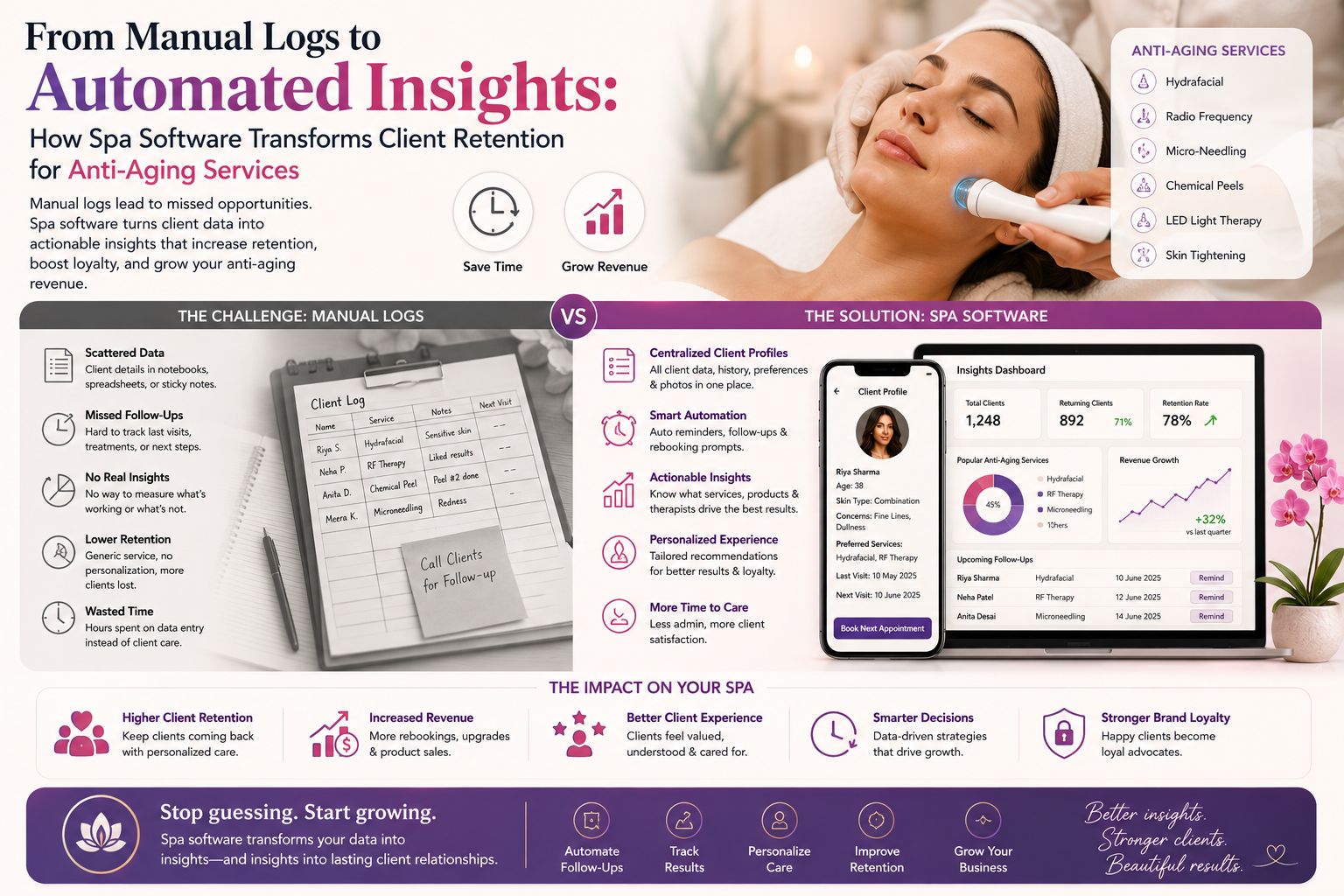


Relying on manual logs for anti-aging service records—honestly, it's such a headache—often leads to missed follow-ups and inconsistent treatment plans, causing clients to drift away from the spa without you even noticing. This shift from handwritten notes to automated insights helps you track every peel, laser session, and serum protocol without guesswork, ensuring no client falls through the cracks, or at least that's the hope.
What Clarity Means for Anti-Aging Service Retention
In many Indian spas, therapists still jot down client preferences and last visit dates in physical registers, which often get misplaced or become illegible—I've seen registers with coffee stains where the ink just blurs. This lack of clarity means that a client who received a chemical peel six weeks ago might never get a reminder for the next session, leading to patchy results and frustration, and honestly, that's when they start looking elsewhere. Automated spa software captures every detail—from skin sensitivity to product reactions—so you never forget that a client's skin needed extra hydration after a retinol peel, which is something I'd probably mess up with a paper log.
The Reality Check: What Actually Happens with Manual Tracking
Without digital support, many anti-aging services fail because staff forget to adjust treatment frequency based on real skin changes, like increased redness from holiday sun exposure—has happened to my cousin, actually. A common oversight is ignoring when a client's schedule conflicts with their last session—say, they need a microneedling follow-up but their diary shows no availability for two weeks, and then you're stuck explaining why the results faded. Manual logs simply cannot flag these service gaps in time, causing clients to seek faster alternatives elsewhere, and that's a loss you feel directly in your repeat business.
The Mistake: Assuming Memory Works for Personalized Care
A major blind spot is believing that experienced therapists can remember every client's skin history, including allergies to certain acids or past reactions to LED therapy—I mean, who can honestly remember all that during a busy Saturday? This assumption breaks down during peak seasons when a spa sees 50 anti-aging appointments per day; therapists easily forget that a client's skin barrier was damaged after a previous laser session, and then you're dealing with complaints. Automated insights prevent this by instantly surfacing treatment dependencies, like avoiding glycolic acid after a recent peel, which manual logs can never guarantee, no matter how good your memory is.
Decision Help: How to Choose the Right Timing for Software Transition
If your spa handles more than 15 anti-aging clients a week or you've noticed a 20% drop in repeat bookings—maybe even less, if you're feeling anxious—it's time to move beyond paper logs. Look for software that offers automated reminders based on service type—such as scheduling a dermaplaning touch-up exactly 28 days later—and tracks client skin conditions across visits, because consistency matters so much. Platforms like parlourtime's automated booking system integrate these insights, helping you retain clients who value consistency in their anti-aging journey, and I've heard good things from a friend who uses it. The boundary is clear: if you cannot recall a client's last peel date or next recommended treatment within five seconds—and be honest with yourself—your manual system is failing retention.
FAQ
q: How do manual logs cause anti-aging service failures?
a: Manual logs often miss key details like skin reaction notes or next session dates, leading to inconsistent treatments that reduce visible results and client trust, and that's a tough cycle to break.
q: What is the biggest risk of using paper records for anti-aging clients?
a: The biggest risk is forgetting service dependencies—like waiting two weeks after a peel before using active ingredients—which can cause burning sensations or redness and drive clients away, which nobody wants.
q: Can spa software really improve retention for anti-aging treatments?
a: Yes, automated insights ensure timely follow-ups based on treatment cycles, reducing gaps that lead to patchy results and helping spas maintain a consistent care schedule for clients, though it depends on how well you implement it.
q: When should a spa switch from manual logs to automated software?
a: Switch immediately if you often lose track of client progress or cannot quickly access past treatment notes, as this directly impacts retention for anti-aging services. For further guidance, visit parlourtime's support page—they're pretty helpful.