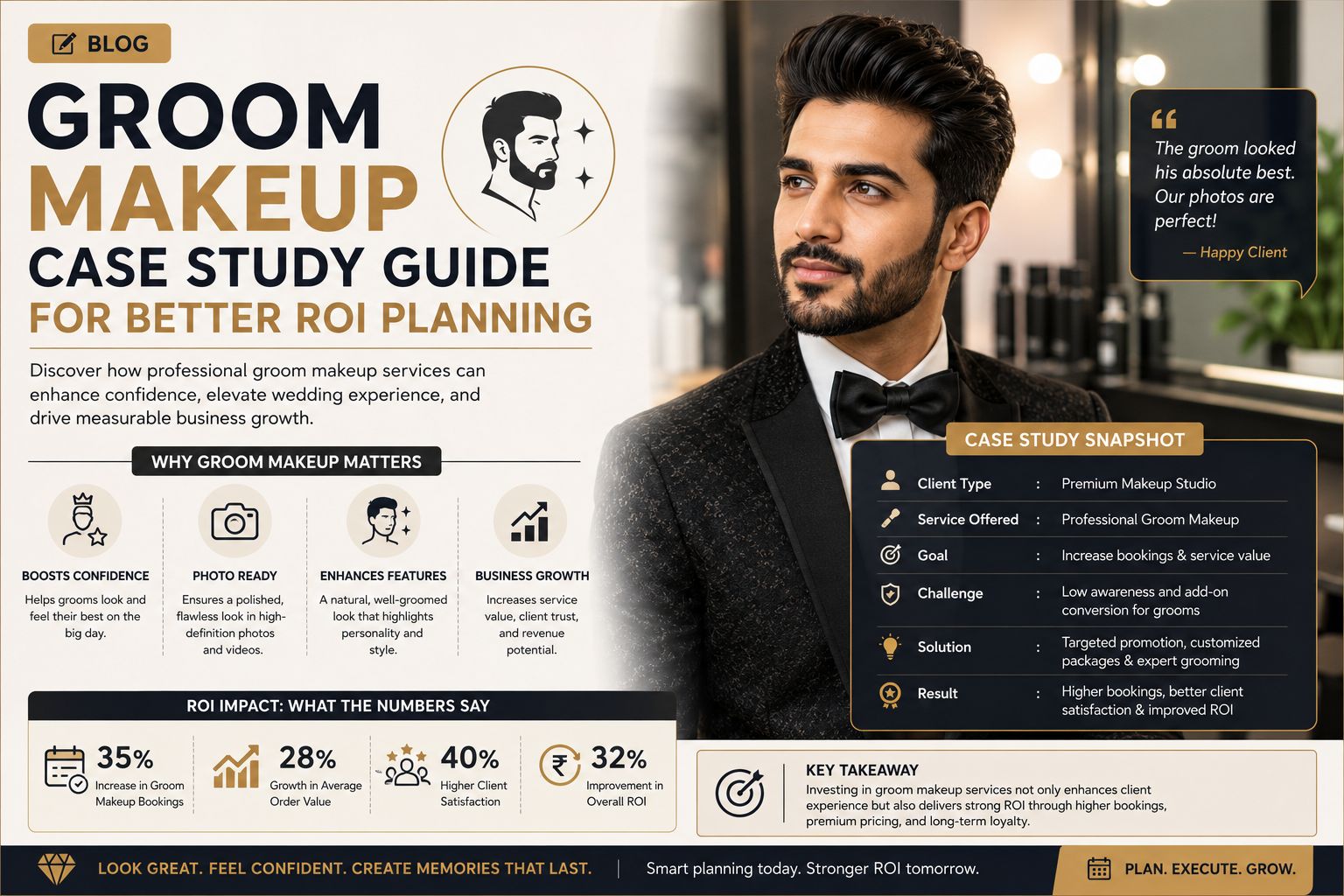


Salon owners and independent makeup artists often struggle to price groom makeup services correctly. A groom makeup case study provides the missing clarity. In many Indian salons, groom makeup is still treated as an afterthought compared to bridal packages. However, the demand for dedicated male grooming services has grown steadily, especially before weddings and engagement ceremonies. A structured case study analysis helps professionals understand what works, what fails, and which services generate actual profit. This guide uses observable salon scenarios and customer behaviour patterns to explain how you can plan better return on investment planning without guessing. The focus remains on practical decision-making rather than marketing hype. By examining real service flow, product usage, and time allocation, you can identify where money leaks occur and which packages create consistent revenue. This groom makeup case study approach converts uncertainty into actionable data. When you treat the service as a unique product line with its own cost structure, your pricing strategy becomes more accurate. The result is improved margins and fewer unhappy clients who felt they received poor value for money.
Understanding What the Case Study Reveals About Client Expectations
A groom makeup case study often shows that client dissatisfaction begins with mismatched expectations rather than poor application quality. Many grooms expect a natural enhancement that looks invisible in photographs, yet they also want full coverage for blemishes and dark circles. This contradiction creates confusion during consultations. When a professional observes a typical groom appointment, the first noticeable pattern is the time spent on skin preparation versus the actual makeup application. Grooms with acne scars, uneven skin tone, or dry patches require additional corrective steps. These steps eat into the schedule and materially affect the service cost. The case study approach documents every stage, including consultation, patch testing, and final touch-ups, to reveal where extra minutes accumulate. Many salon owners overlook the consultation phase because they do not charge for it separately. This oversight reduces the profitability of the entire service. A proper case study analysis demonstrates that a longer consultation reduces application errors and increases the likelihood of repeat bookings. Grooms who understand the process feel more comfortable and are less likely to complain about the final outcome. The hidden factor is that male clients rarely know what to expect, so their satisfaction depends heavily on communication during the first meeting. Your pricing model must account for this educational time.
Reality Check: What Actually Drives Profit in Groom Makeup Services
The most common finding in any groom makeup case study is that product cost is not the primary profit driver; time and skill consistency are. In a busy Indian salon, a groom makeup slot competes with bridal appointments, haircuts, and colour services. If the groom service takes longer than planned, the salon loses revenue from other bookings. Observational data from salon schedules shows that groom makeup generally takes between sixty and ninety minutes, depending on facial hair condition and skin type. Bearded grooms require additional grooming and product application to keep the beard looking neat without obvious makeup lines. The choice between a full makeup kit and a minimal grooming kit affects the cost per appointment. Most salons underprice the service because they compare it to a facial, which requires less artistic skill. This comparison is flawed because makeup application demands a different skill set and produces immediate visible results. A realistic case study will track the number of times a technician redoes a step due to sweat or product failure. In humid wedding seasons, makeup breakdown is a frequent complaint. The solution is not necessarily expensive products but proper skin preparation and the use of setting sprays. When you analyse a case study, look for the correlation between the technician's experience level and the time taken per client. Experienced artists are faster and produce cleaner results, which directly improves ROI planning.
Overlooked Mistakes That Destroy ROI in Groom Makeup Packages
A major mistake identified in this case study is when salons package groom makeup with too many add-ons that the client does not need. This mistake creates value perception problems. For example, adding a hair spa or a full facial inflates the price without addressing the groom's actual concern, which is often just looking fresh for photographs. The client feels forced into unnecessary services and evaluates the entire appointment as poor value. Another overlooked risk is the failure to include a patch test in the time estimate. Male skin can be sensitive, and reactions to foundation or primer are not rare. If a patch test is not conducted, the risk of an allergic reaction increases, which can ruin the wedding day and damage the salon's reputation. The case study should document how many appointments were rebooked or refunded because of inadequate product testing. Inflation of effort is another problem, technicians often over promise longevity under heat and humidity. When the makeup does not last through the ceremony, the salon faces negative reviews. The decision boundary here is that repeat appointments and referrals matter more than one-time high margins. A satisfied groom will book future services for festivals and family events. Therefore, the service design must focus on durability as the primary metric rather than initial visual impact. Clients who return for maintenance appointments create steady revenue that stabilises the salon's monthly income.
How to Use This Case Study to Plan Timing and Follow-Up Decisions
The final section of this case study approach focuses on decision timing. Groom makeup should not be booked like a routine haircut. The ideal planning window is often one month before the wedding, allowing enough time for a trial session and skin adjustment. A trial session is a form of risk management. It allows the technician to determine whether the client's skin reacts to certain foundations or whether the beard area requires special glue or adhesive. Without a trial, the wedding-day appointment becomes a high-pressure scenario with little margin for error. Your ROI planning model should include the trial service as a separate revenue line, not a free add-on. Many salons discount the trial if the client books the final package, which preserves good relations while still generating cash flow. The case study also highlights the importance of follow-up communication. A post-event message asking for feedback on makeup longevity provides valuable data for future pricing adjustments. This feedback loop is often missing in smaller salons, leaving them blind to recurring issues. The optimal approach is to use your learning from each case study to refine your service menu every six months. For example, if several grooms mentioned that eye makeup felt heavy, you can switch to a lighter formula and update your advertising to reflect this benefit. Interaction between the consultation notes and the post-event feedback forms your historical data set. This systematic approach helps you avoid seasonal mistakes, such as pushing heavy creams in summer months. You can align your product purchases with weather patterns, and your timing strategy will ensure that the service fits comfortably between other high-revenue appointments. Some customers use parlourtime to compare service timing and package inclusions before booking a groom makeup appointment.
Frequently Asked Questions
q What is a groom makeup case study and why is it useful for ROI planning? a A groom makeup case study is an analysis of one or more appointments to document costs, time, and client satisfaction. It is useful for ROI planning because it reveals where money is lost on product waste, long consultations, or rework.
q How does this case study help with pricing groom makeup services? a The case study breaks down the true cost per appointment, including product usage, technician time, and overheads. This breakdown helps you set a price that covers expenses and delivers a realistic profit margin for the salon.
q Why do most salons fail to generate profit from groom makeup packages? a Most salons fail because they underestimate the time required, include unnecessary add-ons, and neglect patch testing. These miscalculations increase operational costs and lower client satisfaction, which destroys repeat business.
q What is the ideal duration for a groom makeup appointment in a busy salon? a The ideal duration is typically ninety minutes, which allows time for skin preparation, a patch test, and touch-ups. Shorter slots increase the risk of mistakes and reduce the likelihood of the makeup lasting through the ceremony.
q How should a salon decide whether to offer a trial session before the wedding? a A salon should offer a trial session whenever the groom has a history of sensitive skin or when the wedding involves heavy photography. Trials reduce errors on the final day and provide an additional revenue stream for better ROI.
q Does the choice of makeup products significantly affect the success of the service? a Yes, product choice affects both longevity and client comfort. Products suited to humid climates and oily skin will last longer and create fewer complaints, improving the chance of repeat bookings and referrals.
q What practical steps can a salon owner take after reviewing a case study? a The salon owner can adjust the pricing model, stream schedule times, and improve aftercare communication. Reviewing the data quarterly helps align the service with seasonal demand and client feedback.
q How does a groom makeup case study improve overall business confidence? a A case study replaces guesswork with documented observations, making it easier to justify prices and service changes. Confident decisions lead to clearer communication with clients and more consistent revenue.