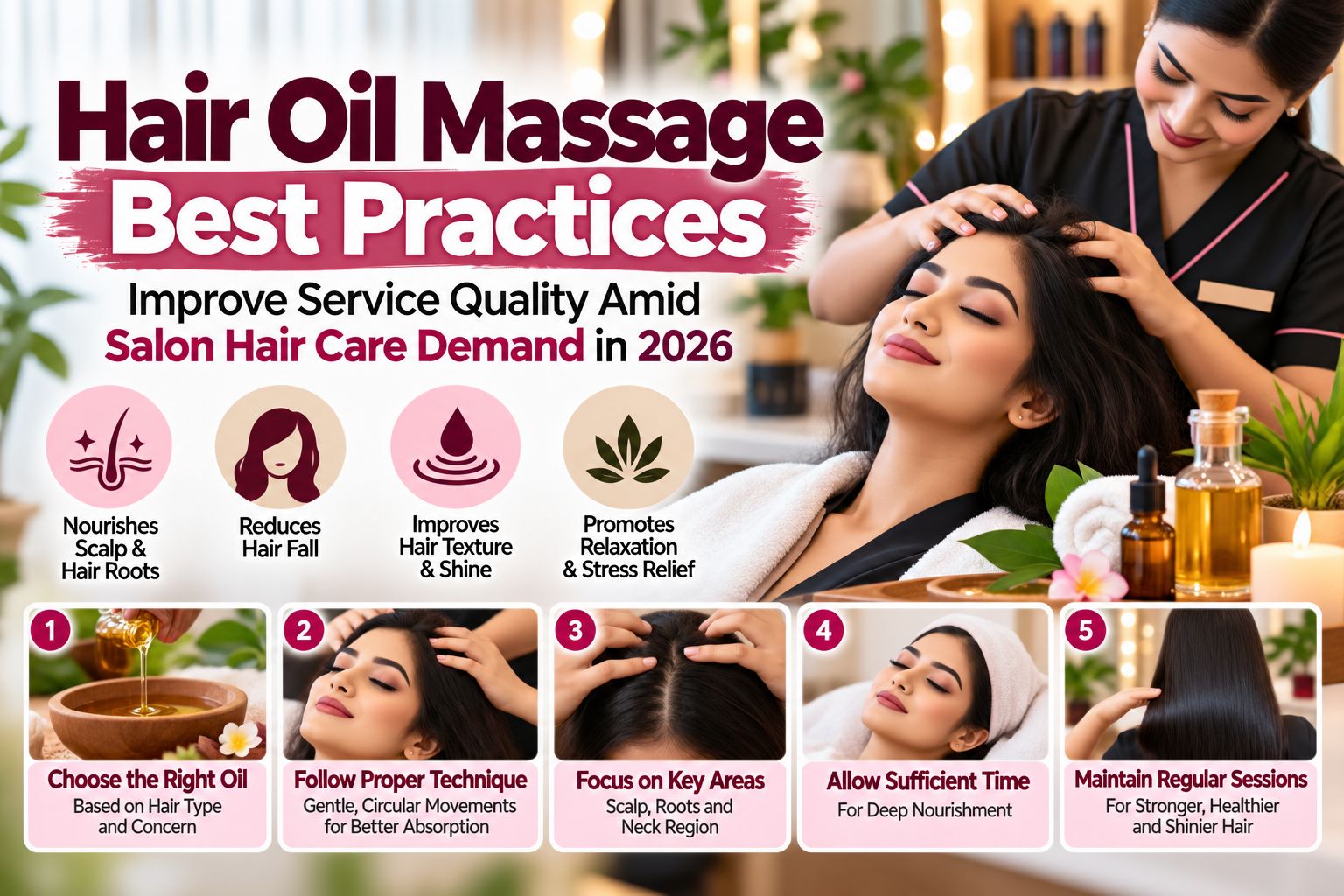


A consistent hair oil massage comes down to four things: a proper client consultation, an oil weight that suits the client's hair type and scalp health, a fixed oil quantity, pressure and duration, and clear wash-out timing. Get these right and a salon hair care service becomes repeatable instead of hit or miss.
Two clients can book the same oil massage and leave with very different results. One notices a calmer scalp and softer strands within two days. The other feels heavy roots, lingering oiliness, or no change after a few washes. That gap is rarely about the massage alone. It comes from how the service was set up before the first drop of oil was applied. Fixing the setup is what improves quality across a whole team.
Start every hair oil massage with consultation and scalp screening
A short client consultation before the service is the single biggest lever on service quality. Ask four things at the chair: recent colour or smoothening treatments, current flaking or itching, medicated shampoos or topical treatments in use, and how the client's scalp usually behaves two days after oiling. Write the answers on the client card so the next visit starts from a known baseline. This takes three to four minutes and prevents most complaints.
Screen for triggers that change the plan. Active dandruff, visible redness, broken skin, or unusual shedding means the massage should be paused and the client referred for professional assessment rather than pushed ahead. If a client reports a reaction to any oil before, do a patch test on the inner forearm and wait before applying anything to the scalp. Recent chemical treatments also matter. An oil massage too close to a colour or smoothening appointment can interfere with how those products absorb, so keep at least a week between them. Timing relative to treatment dates belongs in the booking notes, not in a verbal reminder that gets forgotten.
Scalp health is the point of this step. A massage on an irritated scalp rarely delivers the comfort the client came for.
Match oil weight to hair type and scalp condition
Pick the oil by weight, not by smell or habit. The working rule: lighter bases for fine hair and oily scalps, heavier bases for thick, dry or coily hair. A fine-haired client on a heavy coconut or castor blend will usually complain of flat, greasy roots by the next morning. A thick-haired client on a very light oil may feel nothing at all after washing.
Use scalp condition as the second filter. An oily scalp does best with a light, non-comedogenic base used sparingly and washed out within a few hours. A dry, flaky scalp tolerates a richer base left on longer. Sensitive scalps need a fragrance-free option and a shorter contact time on the first visit. Humidity shifts the decision too. In hot, humid weather, oil left on for many hours attracts dust and builds up faster, so shorten the contact window.
Keep the range small and label it clearly. Two to three oils with a written rule for each hair type beats a shelf of twelve bottles and no policy. Record what was used on the client card every visit. Repeat clients then get the same result twice, which is what builds trust in a salon hair care service.
Standardise oil quantity, massage duration, and pressure
Set a fixed quantity per hair length and stick to it. As a working guide, a small amount for short hair, roughly double that for shoulder-length, and up to four times that for long or very thick hair, applied in stages rather than all at once. More oil does not mean deeper care. Excess oil congests the scalp, weighs down fine hair, and makes the wash-out harder for everyone.
Fix the massage at a set duration so every client gets the same service. Ten to fifteen minutes of structured movement is enough for a scalp massage in a standard appointment. Standard pressure is firm but never painful, worked in slow circles with fingertips, not nails. Pressure that is too hard on weakened or chemically treated strands can cause breakage and scalp soreness. Train the team on one routine so that a client who sees a different therapist still gets the same experience. Consistency here is what separates a professional service from a casual head rub.
Set aftercare and wash-out timing before the client leaves
Give wash-out guidance at the chair, matched to hair type and weather. As a rule, leave the oil on for a few hours before rinsing. Fine or oily hair should be washed the same day. Thick, dry hair can stay oiled longer, but not overnight in humid conditions. Hard water areas need a proper shampoo and a second lather at the roots to clear residue.
Tell the client what to expect in the next 48 hours. Mild flaking may loosen and clear for some. Persistent itching or redness is a signal to stop, not to book another session. If dryness improves but hair fall continues after several visits, the cause needs professional evaluation rather than more massages. Clients comparing service timing across visits can use hair care resources as a general reference point before their next booking.
Where oil massage stops is clear. It supports scalp comfort and manageability. It does not repair severe damage and it does not replace targeted treatment.
What to avoid, and the checks that keep quality steady
Do not skip the consultation. Booking an oil massage without asking about recent colour, smoothening, dandruff, or sensitivity is the most common cause of a poor result.
Do not over-oil. Extra product does not add benefit and usually creates buildup and flat roots.
Do not use heavy pressure on weak or chemically treated hair. Breakage and soreness are avoidable.
Do not schedule an oil massage right before a colour or smoothening appointment. Keep a week between them.
Do not repeat the same massage when itching, redness, or shedding continues. That is a referral signal, not a frequency problem.
Before the next shift, three checks are worth running. Confirm every therapist asks the same four consultation questions and notes the answers. Confirm one oil range with a written hair type rule sits at the station, not in someone's memory. Confirm every client leaves with wash-out timing stated aloud and written on the card. Do that, and service quality stops depending on who happened to be on the floor that day.
Written by: Parlour Time Editorial Desk
Published: 26 September 2026, 11:35 AM IST | Updated: 26 September 2026, 11:35 AM IST
Powered by: Parlour Time