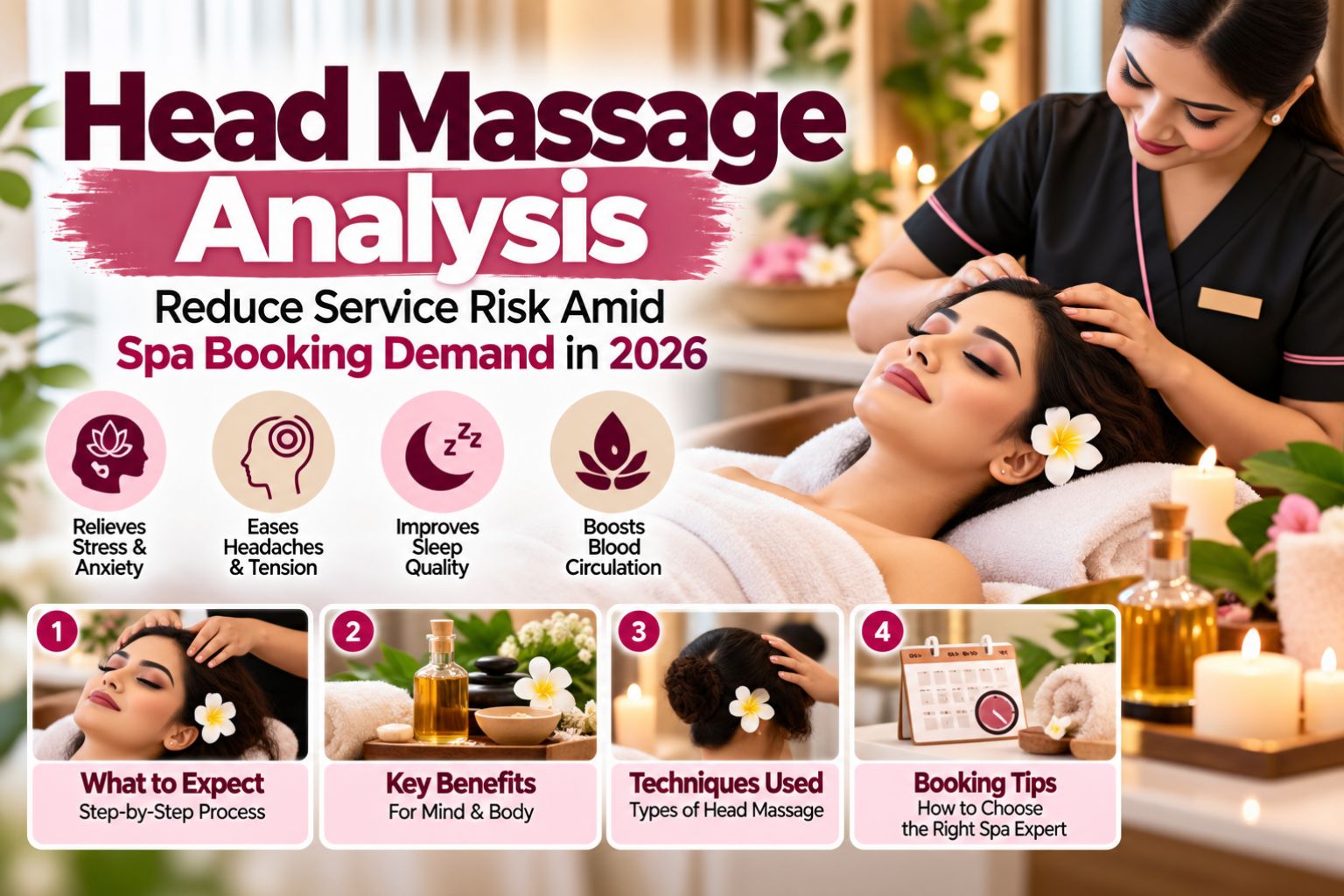


A head massage service risk analysis is a simple review of what can go wrong before, during, and after a head massage, and what your team does about it. It is meant for spa owners, booking managers, and therapists who expect fuller appointment books in 2026 and want fewer complaints, fewer refunds, and fewer awkward conversations at the counter.
The quick version: most head massage complaints come from a mismatch, not from the technique. Wrong oil for the scalp, wrong pressure for the client, missing intake questions, or an unclear wash-and-aftercare plan. Screen the client first, agree the plan out loud, and write down what happened. That single habit removes most of the risk.
One note on scope. The 2026 booking demand framing comes from the article title and is treated here as a planning premise, not a measured market fact. Check your own local booking patterns before you change prices, staffing, or package design.
Screen the client before the oil is chosen
Service risk drops fastest at the intake step. Before a head massage is confirmed, the booking desk should capture a short scalp profile. Ask about scalp type, oiliness, flaking, known sensitivity, recent colour or chemical treatment, recent scalp injury or surgery, and any current irritation. Ask whether the client has had a bad reaction to a hair oil or massage before. If yes, note which product and what happened.
Some clients should be referred onward rather than booked. Open wounds, active infections, unexplained scalp pain, spreading rash, or sudden unusual shedding are reasons to pause and suggest a clinician, not to proceed with a gentler session. Pregnancy, migraine history, and blood pressure concerns are not automatic refusals, but they should be flagged so the therapist adjusts pressure and duration, or refers the client to a qualified professional if there is any doubt. This article is operator guidance, not medical advice.
Consent is part of screening, not paperwork theatre. Read back what the client agreed to: oil type, pressure level, whether a wash is included, and expected aftercare. A two-line note in the client record is enough. If a reaction happens later, that note tells you what was used and what was promised.
Set therapist qualification and pressure rules
Pressure is where head massage service risk is easiest to prevent and easiest to ignore. A firm session feels good to one client and leaves another with tenderness for a day. The fix is not to ban firm pressure. It is to make the therapist check in during the session and adjust in real time.
Give therapists a three-level scale that clients can understand, and state the level at the start of the session. Then check in at least twice: once after the first few minutes and once before the session ends. If the client frowns, flinches, or goes quiet, that is a signal to lighten pressure, not to push through. Document the level used so the next appointment starts from a known point.
Qualification matters here too. Decide internally what training a therapist needs before they take head massage bookings alone, how a new therapist is supervised, and how often techniques are reviewed. A vendor with a managed-review workflow may be able to help with structured checklists, but the decision boundary is yours: no booking tool or outside vendor should decide clinical or contraindication questions for your team.
Match oil and wash timing to the scalp profile
Oil choice drives most of the after-session complaints that reach the front desk. Heavy oils sit on fine hair and show within hours. Light oils may not give the softness a dry scalp client wants. Rather than stocking one oil for everyone, build a short selection logic based on the profile you captured at intake.
Essential-oil blends deserve special care. They are commonly reported to trigger burning or itching on reactive scalps, so use them only after a patch test or with clear client consent, and keep a plain base oil as the default. For anyone with a known sensitivity, the safe default is the simplest oil on the shelf.
Wash timing should be agreed before the session, not after. Clients with oily scalps usually do better when the oil is washed out within a few hours. Clients with dry scalps may prefer to leave a light oil on longer. Write the client's preference in the record and repeat it at checkout. If the client has an event within the next day or two, say plainly that oil residue and flatness may affect how their hair sits, and let them decide.
Close the loop with aftercare and incident logging
Aftercare is where good sessions turn into repeat bookings or complaints. Hand the client a short written note with wash timing, which product was used, what to avoid for the next day, and which symptoms should prompt a call back. Redness, scalp pain, or unusual shedding after a session should be logged and reviewed, and the client should be advised to see a clinician if symptoms persist.
Log every adverse reaction, even mild ones. Record the date, the oil used, the pressure level, how long the oil stayed on, and how the client described the reaction. Patterns show up quickly in these logs. If the same oil or the same pressure level keeps appearing, that is your answer, and it comes from your own records rather than from a guess. Escalate recurring issues to whoever owns service quality, and pause the specific service step until it is reviewed.
Some clients use beauty guidance on parlourtime to compare service timing and understand aftercare before confirming a booking, so make sure what your team says at the desk matches what the client read beforehand.
Practical checks for the booking desk and treatment room
Scalp profile on file: record scalp type, sensitivity, recent treatments, and past reactions before the booking is confirmed.
Plain default oil: keep an unscented base oil as the safe choice and treat essential-oil blends as an opt-in with consent.
Pressure agreed out loud: state the level, check in twice during the session, and write down what was used.
Wash timing settled upfront: agree whether the oil is washed out in the salon, later at home, or left on, and note it.
Referral instead of booking: pause and suggest a clinician for open wounds, active infection, unexplained pain, or spreading rash.
Incident log in use: record date, oil, pressure, wash timing, and the client's description for every reaction, however mild.
Written by: Parlour Time Editorial Desk
Published: 26 September 2026, 11:33 AM IST | Updated: 26 September 2026, 11:33 AM IST
Powered by: Parlour Time