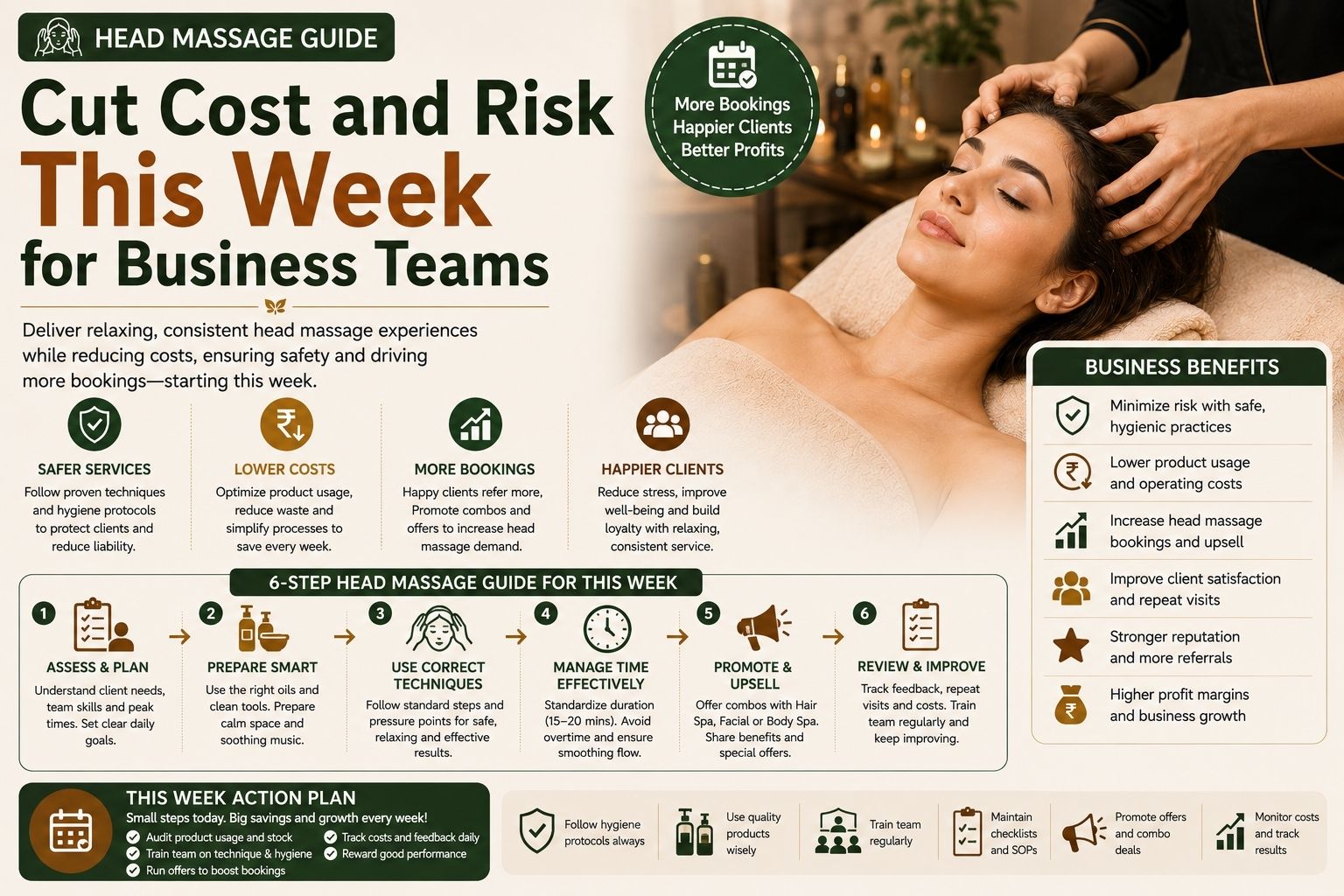
Head Massage Guide: Cut Cost and Risk This Week for Business Teams
Business teams often face a common dilemma when planning workplace wellness initiatives. The demand for services like head massage has grown noticeably as companies look for practical ways to support employee wellbeing. But honestly, the pressure to deliver something meaningful without blowing the budget creates real tension. Many team leaders and HR professionals find themselves confused about what actually matters when arranging these services. The head massage guide approach discussed here focuses on reducing both cost and operational risk while maintaining quality. This week, many decision-makers will compare options, check availability, and worry about whether they are making the right call. The biggest concern is not just the price but the potential for disappointment, wasted time, or even negative experiences that reflect poorly on the organizing team.
Understanding the Core Concern Behind Corporate Wellness Service Choices
When business teams search for head massage services, the underlying anxiety often revolves around accountability. The person arranging the service carries responsibility for the outcome, whether it is a small team offsite or a larger corporate event. The fear of choosing a provider who delivers inconsistent results creates hesitation. Many managers have seen situations where a promising wellness vendor failed to meet expectations, leaving employees dissatisfied and the organizer embarrassed. The confusion deepens because pricing varies widely, service quality differs between providers, and online reviews do not always reflect real-world performance. This head massage guide addresses that uncertainty by explaining what actually happens during service selection and delivery. The first noticeable pattern is that teams often prioritize cost above everything else, only to realize later that hidden factors like travel charges, setup time, or rushed sessions inflate the final bill beyond the original quote.
Another overlooked aspect involves the physical environment where the service takes place. A professional head massage requires comfortable seating, proper hygiene, and adequate time between sessions. Corporate settings sometimes lack these basics, and providers may not flag the limitations beforehand. This creates risk because the experience fails even when the therapist is skilled. The decision pressure increases when multiple stakeholders are involved, each with different priorities. Some want the cheapest option, others want premium branding, and a few simply want minimal disruption to the workday. Balancing these competing interests often leads to compromise that satisfies no one fully. For business teams, the real issue is not finding a service but finding one that can operate reliably within corporate constraints such as limited space, fixed schedules, and strict safety expectations. The head massage guide therefore starts by clarifying what realistic expectations look like before any booking decision is made.
Reality Check: Why Head Massage Outcomes Vary Across Corporate Settings
The results of corporate head massage sessions depend on several factors that are rarely visible in marketing materials. Employee skin sensitivity is one major variable because scalp conditions differ widely across individuals. Some employees may feel temporary discomfort during pressure application, while others find the experience deeply relaxing. Providers who fail to ask about health conditions before the session increase the likelihood of negative reactions. Another important factor is the duration of each session. A rushed ten-minute chair massage produces a completely different outcome than a proper twenty-minute head massage with adequate preparation. Corporate schedules often squeeze service time, and employees may feel the session ended abruptly or did not deliver the promised benefit. This is why the head massage guide emphasizes that time allocation must be discussed clearly during vendor evaluation.
Weather and seasonal conditions also influence how employees respond to head massage services. During humid months, employees may feel heavier or oilier afterward, especially if certain oils are used. In dry winter conditions, the same service can leave hair feeling brittle or static-prone. Providers who adjust their products and techniques based on the season demonstrate a level of professionalism that reduces dissatisfaction. The physical workspace also plays a significant role in whether results feel positive. A noisy open-plan area with constant interruptions will never allow employees to relax fully, regardless of the therapist's skill. Similarly, poor lighting or uncomfortable seating can turn a well-delivered service into a mediocre experience. The head massage guide repeatedly highlights that outcomes are never determined by the therapist alone. The environment, scheduling, and employee preparation all contribute to the final result. Business teams must therefore evaluate the whole delivery system rather than simply choosing a provider with good reviews.
Common Mistakes and Overlooked Risks in Corporate Wellness Planning
One significant mistake business teams make is assuming that premium pricing guarantees premium results. The head massage guide often exposes this misconception because expensive services still fail when logistics are weak. A provider may charge high rates but arrive late, use inadequate equipment, or rush sessions to fit multiple employees in a tight window. The visible outcome becomes a series of disappointed employees who question why the company spent so much for so little benefit. Another frequent error involves ignoring the need for proper consultation before the event. Providers who do not ask about scalp sensitivity, hair treatments, or medical conditions create unnecessary risk. An employee with a recent chemical treatment may react poorly to certain oils, leading to embarrassment and discomfort that could have been avoided with a simple questionnaire.
Timing also creates significant blind spots for business teams. Scheduling a head massage service on the same day as an important deadline or presentation is risky because employees may not feel relaxed enough to enjoy it. Similarly, booking sessions during the busiest part of the workday means constant interruptions as participants check phones or dash back to their desks. The head massage guide points out that strategic scheduling is one of the most cost-effective ways to improve perceived value without spending extra money. Another overlooked condition is post-service maintenance. Employees may leave the session feeling wonderful but then return to a stressful meeting that erases all the relaxation benefits within minutes. This is not the provider's fault, but it affects whether the service feels worthwhile. Teams that plan a buffer period after sessions allow employees to re-enter work gradually, preserving the calm state that makes the service feel successful.
Practical Decision Help for Business Teams Managing Budgets and Risks
When business teams evaluate head massage providers, several boundaries should shape the decision. The first boundary involves cost transparency. Every provider should clearly state what is included in the quoted price, such as setup time, travel fees, and product costs. Hidden charges after the event create distrust and complicate budget reporting. The second boundary concerns safety protocols. Providers should be able to demonstrate hygiene practices, including clean towels, sanitized equipment, and disposable materials where needed. The head massage guide advises teams to ask direct questions about these details before signing any agreement. Another important boundary is scalability, because a service that works well for five employees may collapse when expanded to fifty. Teams should confirm that providers can maintain session quality regardless of participant numbers.
The decision about timing requires careful thought about the work calendar. Teams should select a day with moderate workload rather than peak pressure periods. This allows employees to actually benefit from the service rather than treating it as another obligation. Where maintenance is concerned, teams should set clear expectations that a single session provides temporary relaxation, not a permanent solution to workplace stress. The head massage guide emphasizes that corporate wellness is an ongoing commitment, not a one-off gesture. When outcomes do not meet expectations, the response should be feedback rather than blame. Professional providers value constructive input that helps them adjust future sessions. Some business teams also find value in using a platform to compare service options before committing. Resources like salon FAQs can clarify typical service expectations, while appointment support options help teams manage scheduling complexities. The head massage guide reminds teams that the goal is not perfection but consistent, safe, and reasonably priced services that employees appreciate. When repeated sessions yield diminishing returns or when employee feedback becomes consistently negative, it is time to reassess the provider relationship entirely rather than repeating the same cycle. Parlourtime conversations often reveal that service satisfaction depends more on clear expectations than on the treatment itself.
Frequently Asked Questions
q What is the biggest cost risk when booking head massage for corporate teams?
a Hidden charges like travel fees, setup time, and product costs often inflate the final bill beyond the original quote.
q How can business teams reduce risk during corporate head massage sessions?
a Ask direct questions about hygiene practices, therapist qualifications, and session duration before signing any service agreement.
q Why do head massage results vary between different corporate events?
a Employee scalp sensitivity, weather conditions, workspace environment, and session timing all influence whether the experience feels positive.
q How many sessions should a business team book for employees?
a One session provides temporary relaxation, but consistent wellness benefits require scheduling services regularly rather than as a one-time gesture.
q What should teams do when head massage outcomes disappoint employees?
a Provide constructive feedback to the provider and reassess the service agreement if negative patterns continue across multiple sessions.
q When is the worst time to schedule corporate head massage sessions?
a Scheduling on the same day as major deadlines or during the busiest part of the workday reduces relaxation benefits and increases perceived disruption.
q Are premium priced head massage providers always better for corporate events?
a Higher pricing does not guarantee better results because logistics issues like rushed sessions and inadequate equipment can ruin premium services.
q How should teams evaluate aftercare for employees following head massage?
a Plan a buffer period after sessions so employees can re-enter work gradually instead of returning immediately to stressful meetings.Earn Upto ₹70,000/Month! Become a Parlourtime Partner.