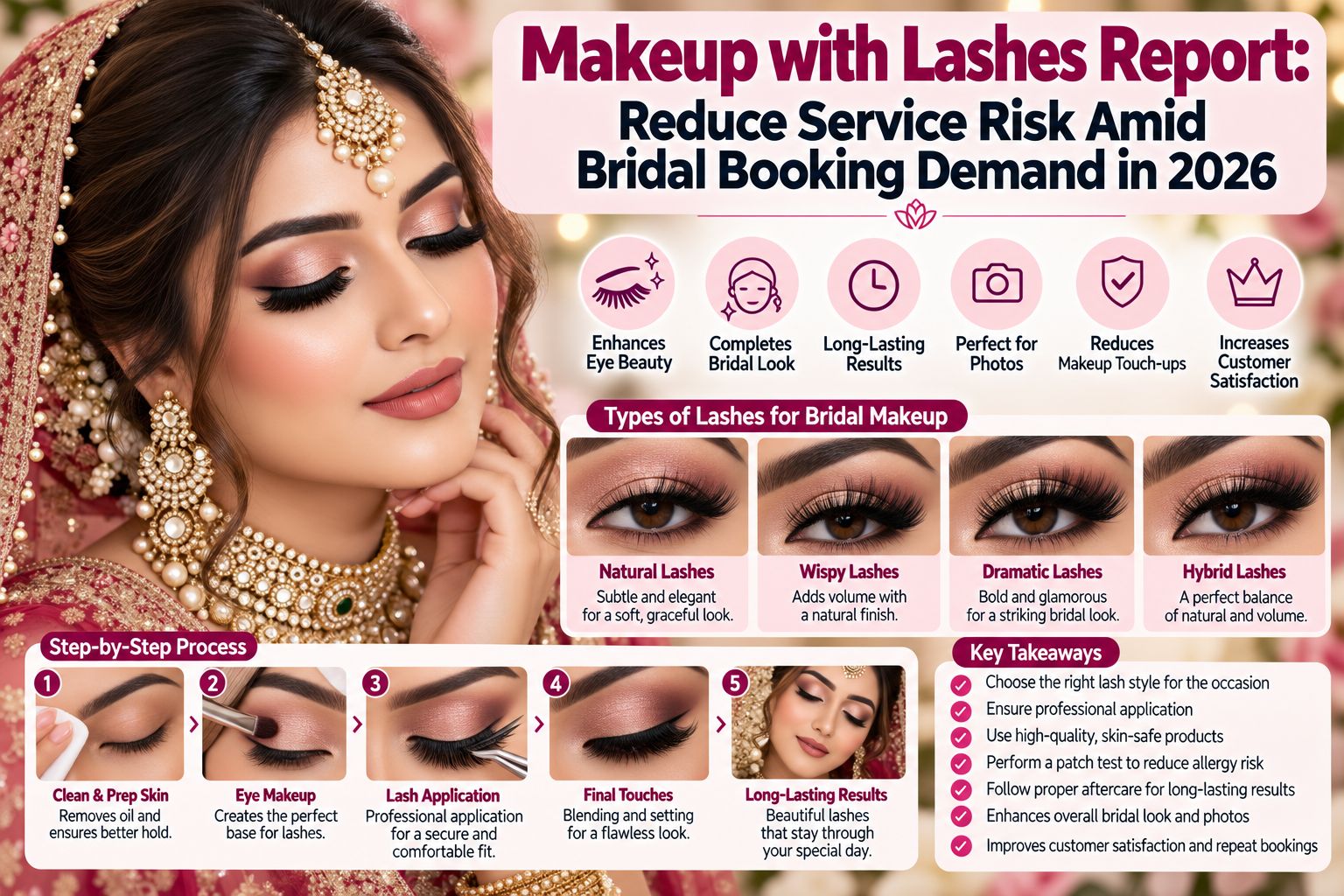


Makeup with lashes looks simple in a portfolio photo and feels very different on a booking sheet. For salon owners and lead artists, the real problem in 2026 is not the look, it is where the service quietly breaks: a trial that never got documented, an adhesive lot nobody logged, a client who mentioned sensitivity only in passing. The practical outcome worth chasing is a booking that can be rescheduled, adjusted, or escalated on evidence rather than guesswork. This report maps where lash-related failures start, and which process gaps you can close before bridal season tightens.
Why Bridal Booking Demand Creates Makeup and Lash Pressure
Bridal demand does not only fill calendars, it compresses everything around them. Trials, patch tests, and pre-event grooming get pushed into fewer open weeks, and the gaps between one service and the next get shorter. That compression is where risk builds, because a lash trial needs enough distance from the event to reveal a problem and still leave room for a different adhesive, a lighter lash, or a second test. When the trial sits three days before the function, you have removed your own correction window. Ask a simple operational question at intake: how many clear days sit between this trial and the final application? If the honest answer is one, the booking carries more exposure than the client realises, and the decision boundary is straightforward. Once a trial sits inside the same week as the event, treat the booking as a compressed-risk booking and plan the re-trial trigger before you begin.
What Actually Happens on Indian Skin During Lash Makeup
Results vary because lid sensitivity, oiliness, service history, and product compatibility all interact, and none of these behave identically between two clients. What you can control is observation. The eye area is thin-skinned and quick to show a response, and clients often describe tightness or warmth before anything visible appears. Treat those spoken signals as clinical data, not nerves. Document what the client reported and when, note the product and adhesive lot used, and record where the lash sat on the lid. A patch test that is written down becomes a reference point; a patch test that only happened in conversation becomes a dispute later. This is the difference between a salon that improvises and one that holds a standard.
Common Mistakes That Increase Lash and Makeup Risk Before Weddings
Most service failures trace back to the intake stage, not the application stage. The most common gap is no screening: nobody asked about previous reactions, current lid condition, or how the client's eye area behaved after the last lash appointment. The second is untracked product. If you cannot say which adhesive lot went on which client, you cannot compare two reactions or rule a batch in or out. The third is skipping the patch test because an earlier salon trial seemed fine, even though products and conditions change between sessions. The fourth is timing blindness, scheduling lash application on the same morning as full makeup with no gap to observe anything. The fifth is the re-book reflex: repeating the identical service after a client reports discomfort instead of changing one variable. A re-trial exists to isolate what changed, and if you alter lash type, adhesive, and prep at once, you learn nothing.
Practical Decision Points for Makeup and Lash Bookings
Run consultations off a written intake rather than memory. Record prior reactions, current lid condition, products previously used, and any prescription or eye-area treatment the client is on. A one-page intake form catches what a rushed phone call misses.
Document every patch test with a date, the product name, the lot number, and the result. If a reaction appears later, this is the only record that lets you compare sessions fairly instead of starting over from scratch.
Keep a lot log for adhesives and lash products. When one client reports sensitivity, a lot log tells you whether others using the same batch need a check-in, and whether the product should be set aside. This is basic stock discipline, not a legal document.
Set your own re-trial triggers and write them down. A trial that produced any tightness, warmth, or lasting redness earns a second test or a changed product before the event booking proceeds, and the client hears this at the time of booking, not after.
Separate the lash appointment from the full makeup appointment on event day. Even a short gap gives you room to check adhesion at the corners and correct placement before photographs begin.
Some clients use parlourtime to compare service timings and maintenance expectations before locking bridal appointments, and reading salon aftercare information alongside reviews gives a clearer picture of what a service actually involves.
Risk Thresholds for Rescheduling, Adjusting, or Escalating
Adjust and continue: the client reports mild tightness that settles within a stated time, no visible change on the lid, and the trial sits well clear of the event. Note it in the record, keep the same product and lot, and proceed as planned.
Adjust and re-test: any visible redness, persistent warmth, or a reaction that outlasted the day of the trial. Change one variable at a time, run a second patch test, and confirm the result before the final application is booked.
Reschedule: the trial falls inside the same week as the function, or the client arrives for the final application with lid irritation already present. Move the lash work earlier where possible, or reduce it to a lighter placement that can be checked before the event.
Escalate: swelling, a spreading reaction, or any eye-area symptom that is worsening rather than settling. Stop product use on the area, do not layer more makeup over it, and direct the client to appropriate medical advice. Your role here is to stop the sequence, not to solve it.
Review at salon level: the same complaint recurring across different clients with different products points at prep, hygiene, or application technique. Bring it to a team review before peak bridal weeks, not after.
Hold the standard: if a client asks to skip the patch test or compress the trial to fit the calendar, the boundary stays. A shorter booking is easier to absorb than a service failure on a wedding morning.
Written by: Parlour Time Editorial Desk
Published: 30 September 2026, 10:02 PM IST | Updated: 30 September 2026, 10:02 PM IST
Powered by: Parlour Time