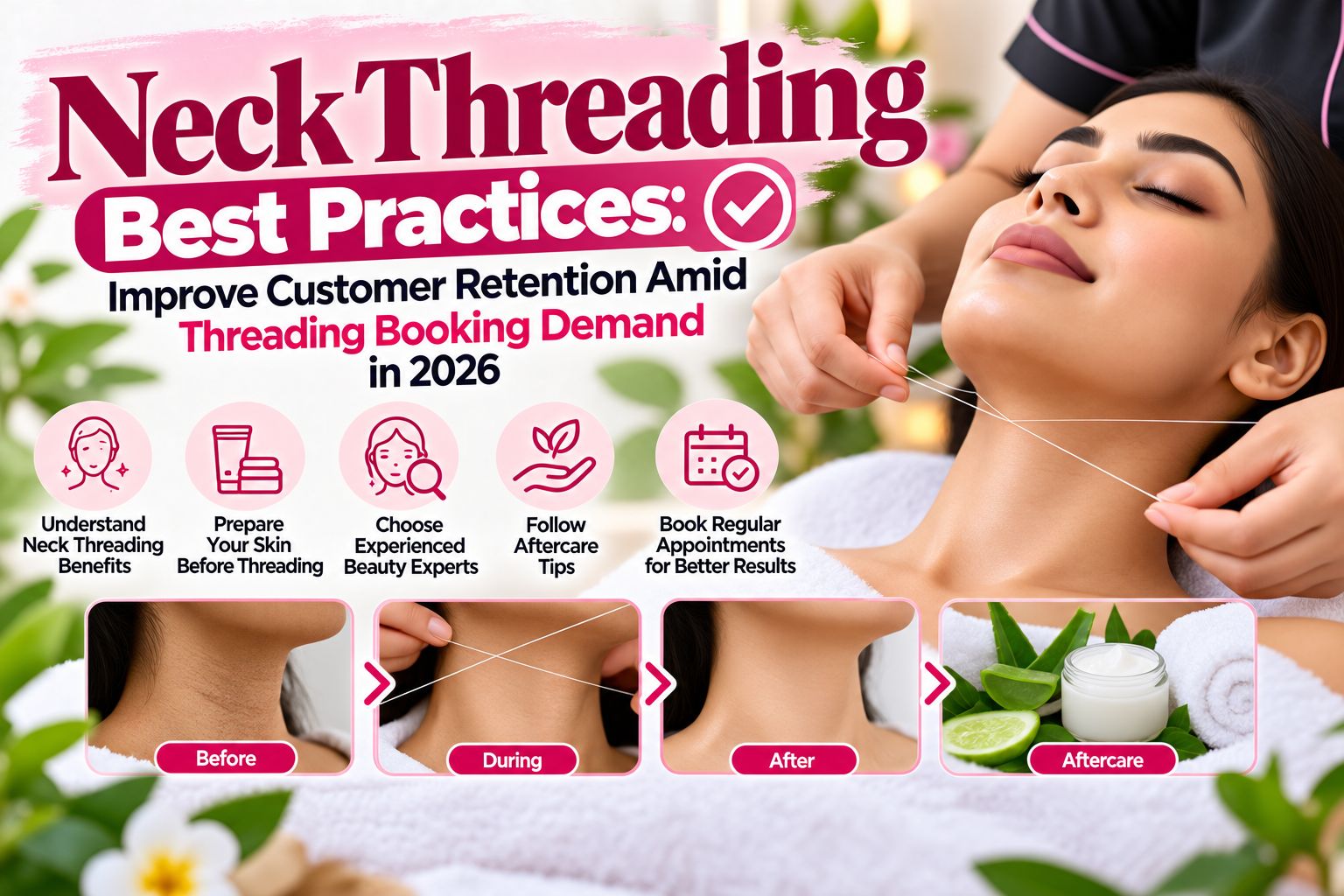


Neck threading best practices are the habits that keep the service comfortable, clean, and repeatable: checking the skin before the thread starts, stating plainly how the session will run, pausing when the skin reacts, and giving simple aftercare that the client can follow at home. If you run a salon or threading chair, those habits are what decide whether a first-time client comes back. Retention rarely turns on price. It turns on how the neck looked and felt two days later. You do not need a 2026 stat to know this. Check your own booking log and your own rebooking rate, and the pattern shows up.
Pre-appointment skin check and the questions worth asking
Ask about the neck before the client sits down. Has the area felt dry, sun-exposed, or reactive in the last few days? Has any retinol, acid, or exfoliating scrub touched the neck recently? Nobody outside the appointment can confirm how thin or sensitive neck skin is compared with facial skin, so skip the anatomy lesson and go by what the client reports and what you can see. Look for flaking, redness, or fresh irritation. If the barrier looks stressed, offer a cleanup of the visible area, or suggest a short gap before a full session. Write the answer in the client record. Next visit, you start from evidence instead of memory.
The in-chair conversation and consent for neck work
Say what you plan to do in one or two sentences. Which direction, how many passes, whether you will hold the skin taut, and when you will stop. Invite the client to speak up the moment something feels sharp rather than warm. Consent for neck work is not paperwork. It is a short agreement about pace, and it gives the client permission to slow the session down without feeling awkward. Confirm the thread is clean and freshly cut, since frayed thread drags and breaks. This is also the right moment to ask whether the client has an event coming up, so the two of you can plan the recovery window instead of discovering it later.
Signals to pause during the session
Watch the skin, not just the hair. Stop or ease off when the area turns bright red, when the skin feels hot under your fingers, or when the client flinches at a spot that was fine a minute ago. Two clear passes beat five rushed ones, and repeated passes over the same patch are a common cause of bumps along the jawline and the sides of the neck. If the hair keeps breaking instead of releasing, the angle or the stretch is wrong, not the number of attempts. Say so out loud and adjust. Clients read a pause as care, not as failure, which is exactly the kind of moment that builds a second booking.
Aftercare window and rebooking rhythm tied to recovery
The first day matters most. Suggest a light, fragrance-free soothing gel, and ask the client to keep harsh actives and heavy makeup off the neck for a day or two. Advise avoiding steam, hot showers, and tight collars while the skin settles. Then set the next appointment by skin recovery, not by calendar habit. If the neck still feels tender when the client messages you, move the booking. For event work, plan the threading with enough recovery time before the date, and let the client's own past experience guide how many days that is. If you want to shorten the guesswork, note in the record how many days each client took to settle the last time.
Practical checks for salon owners and clients
Verify demand claims locally. Any statement about rising threading booking demand in 2026 should be tested against your own appointment data, your own wait list, and your own rebooking rate before you act on it.
Keep a one-line skin note per client. Dry, reactive, recently exfoliated, or fine. That single line changes how the next session starts.
Treat the pause as a service step. A technician who stops on a redness signal protects the result and earns the return visit.
Give written aftercare in two sentences. No fragrance, no actives, no tight collars, no steam for the first day or two.
Book the next visit from recovery, not from the calendar. If the neck was still tender, the interval was too short.
Compare service timing before stacking back-to-back appointments. Clients who want context on booking windows can read beauty guidance and salon FAQs on parlourtime, then decide based on how their neck feels this week, not on a photo from last season.
Written by: Parlour Time Editorial Desk
Published: 27 September 2026, 10:06 PM IST | Updated: 27 September 2026, 10:06 PM IST
Powered by: Parlour Time