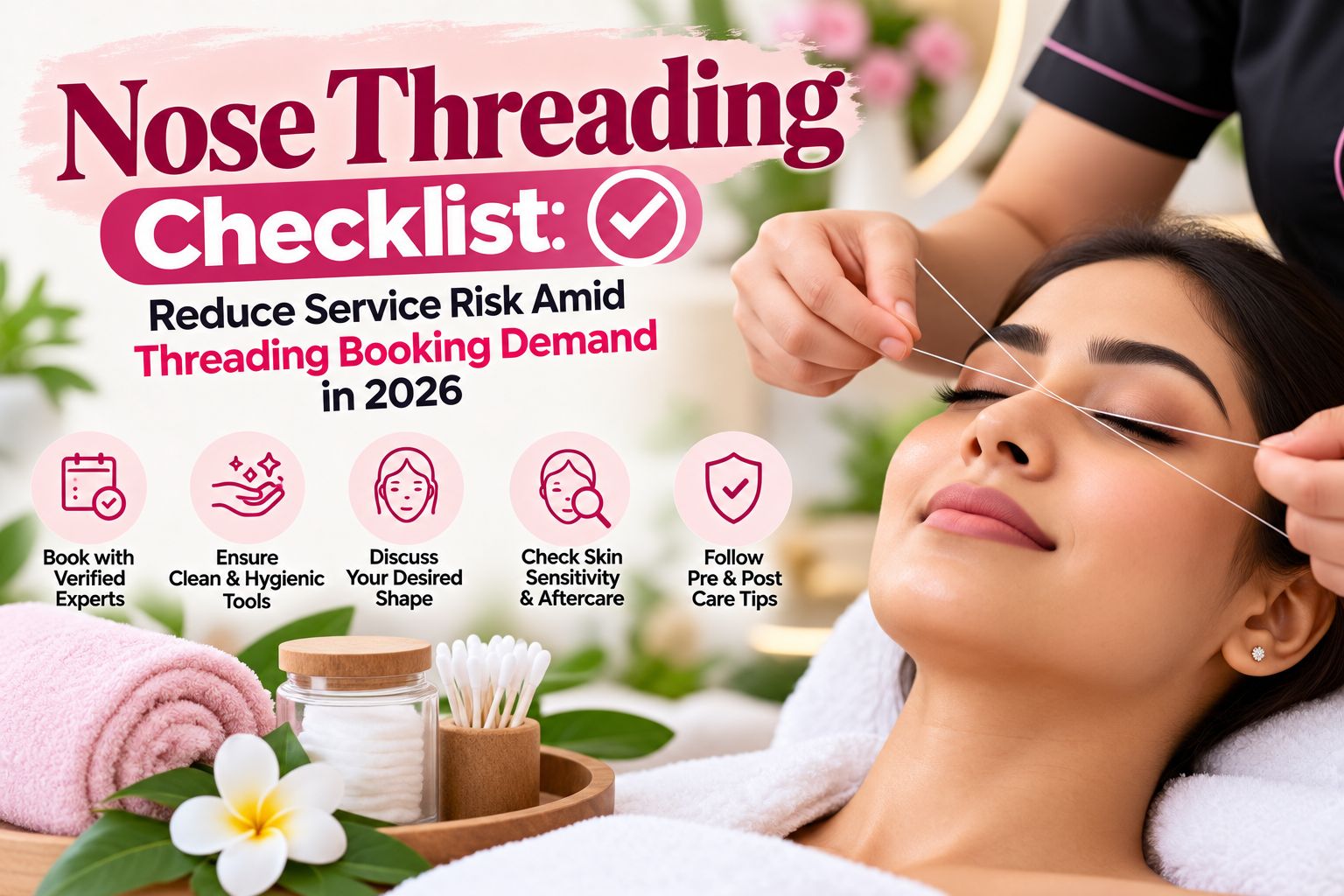


If your salon fixes a patchy nose threading result on a busy Saturday, the cost is rarely just the strand of hair. You lose the slot, the client, and possibly the review. This nose threading checklist gives you three sets of checkpoints, before the client sits down, during the service, and after they leave, so the same job gets done the same way every time.
Treat booking demand figures as unverified for now. No checked source backs any claim about how many people are booking threading this year, so plan your staffing on your own appointment book, not on outside noise. What this checklist actually does is stop the small, fixable gaps that turn a routine service into a complaint.
Pre-service checkpoints before the client sits down
A quick front-desk conversation prevents most threading problems. Ask about skin sensitivity, recent facials, and any product the client has applied in the last two days. Record the answer against the client's name so the next technician does not have to guess.
Walk through the prep side of your salon service checklist:
Confirm the client is not booked just before a wedding, shoot, or party where the skin has no time to settle.
Check the area for an active breakout, a healing pimple, or visible dryness before the thread starts.
Ask what was applied to the face that day, including any active serum or scrub.
Book a slightly longer slot than you think you need, so the technician is not watching the clock.
Note the client's preferred shape and pain tolerance in their record, not in your memory.
On the hygiene protocol side, the thread must come from a sealed pack at the station, not from a loose bundle kept in a drawer. Tweezers, scissors, and any tool that touches the skin should be disinfected between clients. If your salon has no written threading hygiene protocol, write one this week and pin it at the station.
One operational observation worth keeping: most informal complaints about threading come from rushed peak-hour slots, not from the thread itself. Capping bookings during the busiest two hours almost always beats adding one more name to the list.
Decision boundary: if a client arrives with visibly irritated skin, the honest move is to decline the service and offer a later date. It costs one appointment. It protects the client and your name.
In-service checkpoints while the thread is in hand
Technique consistency during the service is what lowers nose threading service risk. A few rules are worth repeating at every staff huddle.
The technician asks about comfort once, out loud, rather than silently pushing through the sore spots.
Each area gets limited passes. Repeated pulling over the same patch is where over-threading starts, so work once, check, and stop.
Upper-lip and nose strands are removed in the direction the hair grows, not against it.
Fresh thread is used for each client without exception. Set a column for every client and discard the thread at the end.
After threading, the technician applies a simple calming product, keeping it fragrance-free if the skin is reactive.
If the client winces or says the pulling feels sharper than usual, slow down or stop for a minute. Pain rarely improves a result. A technician who ignores it usually ends up with redness that shows up in the client's photos the next day.
Post-service checkpoints before the client leaves
The first ten minutes after threading are part of the service, not an extra. Give the client simple aftercare before they stand up, and keep it to a few lines they can remember.
Skip makeup on the threaded area for a few hours.
Avoid steam, hot water, and heavy workouts on the same day.
Use a gentle, fragrance-free moisturiser. Leave active serums and scrubs for a few days.
Do not book another nose threading session within the next few days, even if the client asks for a touch-up.
For deeper aftercare questions, clients can check the Parlour Time beauty blog instead of trying to remember everything said at the counter. Your team should be able to explain the same points in one or two sentences, so the advice matches what is written on the salon's own sheet.
Set a clear return rule: if redness lasts beyond a day, or if the area feels increasingly painful, the client should call the salon rather than rebook. A technician can then compare the reaction with the client's record and decide whether a gentler method, or a different hair removal option, fits better.
Salon self-audit: quick checks that reduce threading risk
Run these checks once a week and you will usually catch a service issue before a client does. They are written for the salon owner or floor manager rather than the client.
Thread stock count Count sealed thread packs at the start and end of the week. A number that drops without matching the client count means someone is reusing thread.
Peak-hour cap Fix the maximum number of threading bookings per technician per hour, and hold it even on the busiest days.
Client note check Pick five client records at random. If sensitivity, medication, or recent facials are missing, the front desk needs a sharper intake step.
Redness return log Track every client who calls back with redness or bumps. Two calls from the same technician in a month is a training signal, not bad luck.
Aftercare copy Confirm every counter has the same printed aftercare lines, so clients hear the same advice from every staff member.
Two things sit outside this checklist and belong with a doctor: blistering, and pain that gets worse instead of settling. Send those clients for professional advice and note it in their record. Everything else here is a process fix you can make inside the salon this week.
Written by: Parlour Time Editorial Desk
Published: 27 September 2026, 09:44 PM IST | Updated: 27 September 2026, 09:44 PM IST
Powered by: Parlour Time