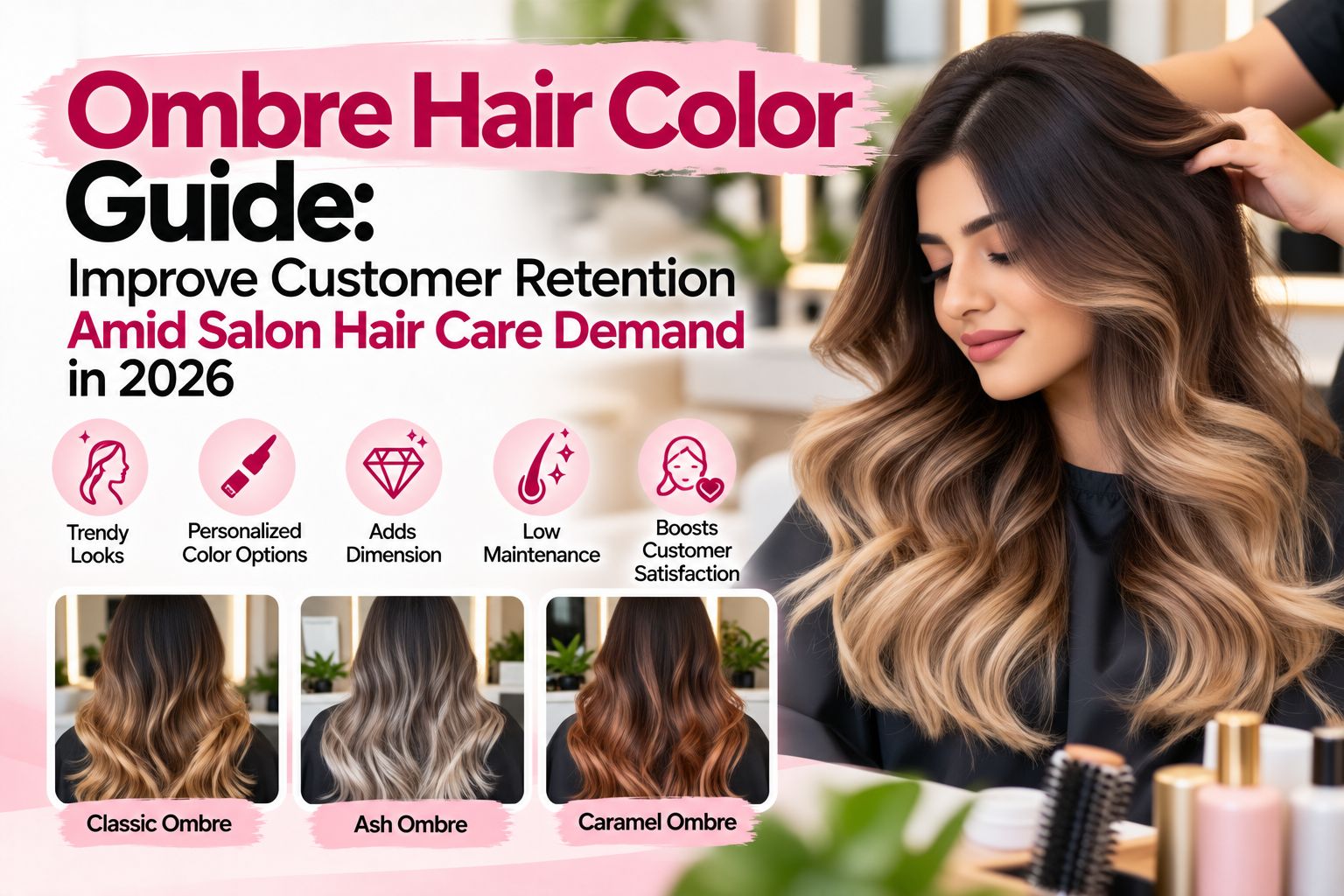


Ombre hair color is a graduated color service where the roots stay dark or natural and the mid-lengths to ends shift several shades lighter, with balayage and highlights sitting further down the pricing and upkeep list. For salon owners, stylists, and front-desk teams, the reason it earns its keep is simple. The roots rarely need touching, so the service turns into a repeat cycle you can plan around rather than a one-time appointment.
That predictability is also the catch. Clients who aren't told what the lighter section needs tend to read normal fade as a failed job. This guide defines ombre hair color in plain terms, separates it from balayage and highlights, and shows how rebooking and maintenance prompts support salon hair care and customer retention.
Why Ombre Results Often Confuse Customers After the First Wash
The first wash at home is usually when something feels off. Ends that looked soft and blended under salon lights can start feeling dry, and the lighter part seems to lose tone faster than the roots. Clients often describe the color as sitting on top of the hair rather than inside it.
The reason is technical, not personal. Ombre almost always involves lightening the ends, and lightening opens the cuticle, which makes that section more porous. Porous hair holds less pigment and releases it faster. As a general observation, this is where most of the confusion in Indian salons begins, and it becomes a retention problem when nobody explains it in the chair. A client who thinks the service failed doesn't come back for the next one.
Here is the practical split. Ombre is a deliberate gradient from a darker base to lighter ends, and the transition line stays low and blended. Balayage is a freehand painting technique used to create sweeps of lightness, and it can look like ombre without being a true gradient. Highlights are individual strands lightened from near the root, which means more frequent root maintenance. In salon work, a client asking for ombre is often describing something that is actually balayage or a highlight service, and catching that difference at the consultation is what stops expectations from drifting three weeks later.
How Ombre Hair Color Supports Customer Retention
Client retention is the share of people who come back to the same chair for their next appointment, and ombre is unusually good at earning it when the follow-up is managed. Because the root area stays intact, the return visit is mostly a tone refresh rather than a full lightening session.
That shorter, lighter appointment changes the calendar. A stylist can book a gloss or toner refresh every six to eight weeks instead of a full redo, which fills the chair with lower-effort visits and gives front-desk teams a predictable call list. As a general observation, salons that set the second appointment before the client leaves tend to see more of them return, and ombre makes that ask easier because the service genuinely needs less downtime between visits.
It also helps to name the maintenance path out loud during the consultation: a first follow-up for toning, a mid-cycle bond or repair service if the ends feel rough, and a decision point on whether to keep lifting. Clients remember the plan more than they remember the technique. When the plan exists, fade is no longer a surprise, and a surprise is the most common reason a color client disappears.
Price is not the variable that predicts how long the color lasts. The condition of the hair before the service and how the client cares for it afterward matter far more, and a simple version on healthy hair will often hold better than an expensive one on compromised ends.
What Really Happens on Indian Hair Textures
Indian hair is usually dense and heavily pigmented, which changes how lightening behaves. Some strands lift quickly. Others hold on to warmth and turn orange instead of the soft beige a client brought in as a reference.
Prior chemical history is the bigger factor. If the hair has already been colored, smoothened, or treated with keratin, it usually lifts unpredictably because the cuticle has been through processing before. As a labeled general observation rather than a measured finding, water quality and humidity in many Indian cities can add to the effect, since mineral-heavy water and moisture in the air both influence how lightened hair reads in daylight.
Clients with a dry or sensitive scalp sometimes feel mild discomfort during lightening, even after a patch test. That is usually reported, not hidden, and a stylist who checks in during the process catches it early. Overall, texture, service history, and aftercare tend to matter more than which product line the salon happens to stock.
Practical Checks for Rebooking and Maintenance
Use these prompts at the chair, on the call, or in a follow-up message. They work for a client deciding what to do next, and for a salon trying to keep a color client on schedule.
Fade check before the third week. Ask the client to look at the ends in daylight, not bathroom light. If the ends have shifted tone but the roots look unchanged, that is normal fade and it means a toner refresh, not a redo.
Rebooking window. Book the tone refresh at the six-to-eight-week mark, before the client notices the shift. Waiting for a complaint usually means a longer, more expensive appointment and a less happy client.
Only one more lightening pass at a time. If the gradient feels subtle after a single session, wait before booking more lift. Repeated lightening inside a few weeks is what pushes ends from dry into snapping.
Rate the ends, not the whole head. Dry, brittle, rough-to-touch ends mean repair-focused care comes first, before any further color work. A hair spa or bond-building service timed here usually helps the color sit better afterward.
Pre-event bookings. Someone asking for ombre two days before a wedding is asking for a flawless blend with zero recovery time. Offer a softer gradient or a gloss instead, and explain that fresh lightening settles over the following week or two.
Stop point. Maintenance products cannot reverse severe damage, and heavily compromised hair may never reach the exact shade on the reference photo. When several sessions stop improving the result, that is the signal for a professional reassessment, not another attempt.
Some salons use their salon FAQs to set treatment timing before events, and that kind of written guidance saves the same conversation at the desk every week. Reputable salons also flag a stop point early, because protecting the hair and protecting a returning client are the same goal. For more on this idea, see this discussion of what happens when maintenance expectations go unset. In practice, it is the clarity of the plan, not the price of the service, that decides whether a client books the next one.
Written by: Parlour Time Editorial Desk
Published: 30 September 2026, 12:26 AM IST | Updated: 30 September 2026, 12:26 AM IST
Powered by: Parlour Time