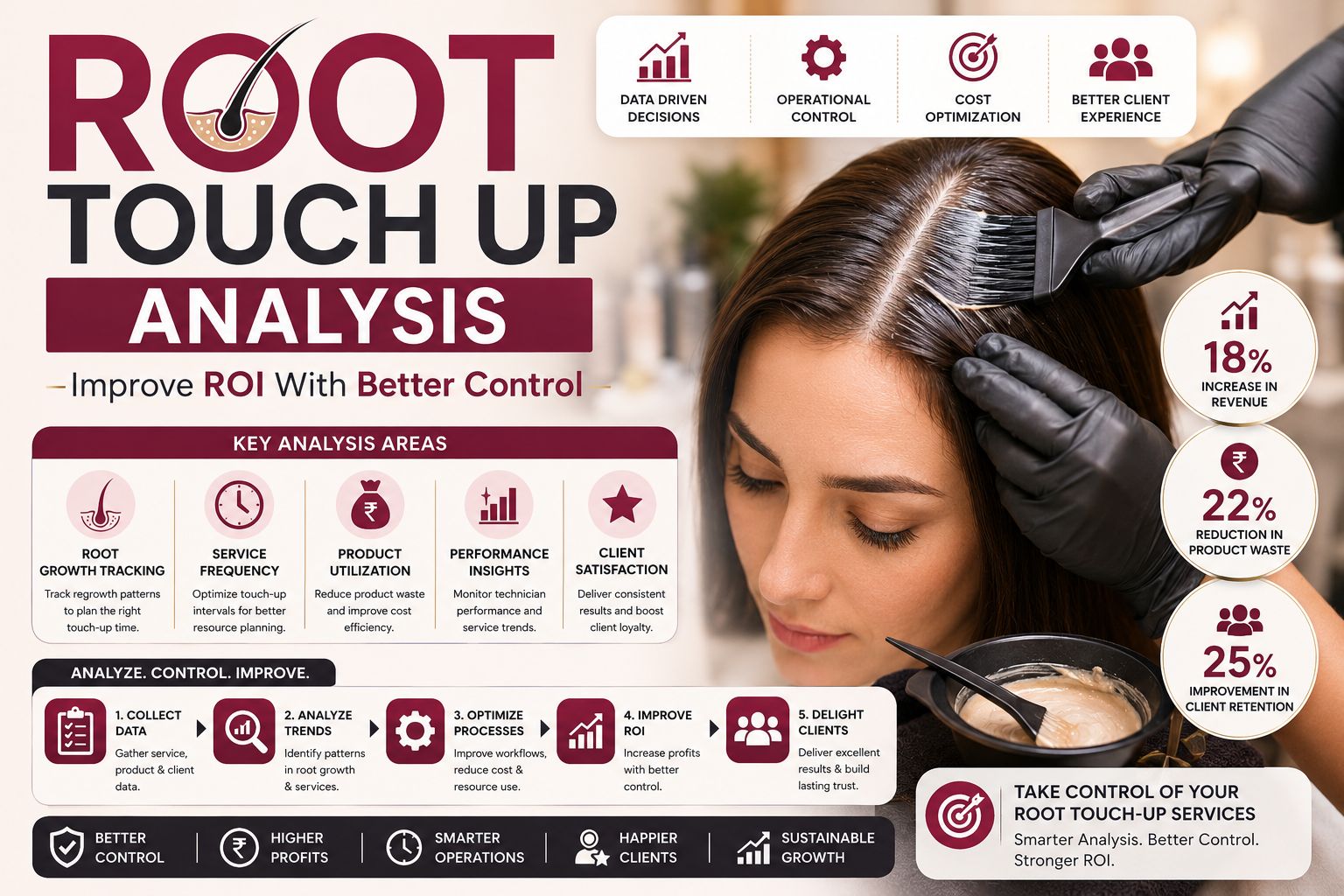


Where Control Gets Lost During Root Touch Up Services
The reality of root touch up work involves multiple variables that directly influence how long the color lasts and how naturally it blends. Indian hair textures, previous color layers, and styling history — all of it changes how new color deposits at the root area. Many clients arrive with two or three different color formulas on their hair from previous sessions, making consistent results harder to achieve. The overlap zone between new growth and previously colored hair requires precise timing during application. If the color sits too long on previously treated strands, those sections become darker or develop banding. If the processing time is too short, the roots remain uneven. Salon technicians often face pressure to finish quickly, especially during busy hours or wedding season. Rushing application or skipping sectioning leads to missed spots and color pooling. Climate conditions also play a role. High humidity changes how color develops on the scalp area, while dry winter air can cause uneven absorption. Salon observation frequently shows that when consultation time is reduced to save minutes, the risk of mismatch increases. Clients leave with visible roots or color that looks flat, and the salon loses the chance to create a loyal return customer.Common Blind Spots That Reduce Root Touch Up ROI
Many salon professionals overlook the condition of the scalp and skin before beginning the root touch up. A sensitive or irritated scalp reacts differently to ammonia-based colors and developers, sometimes causing discomfort that makes the client shift during application. This movement creates uneven coverage. Excess oil production on the scalp also affects how color lifts and deposits. When the scalp is not prepped properly, the color may not grab evenly at the root. Another blind spot is underestimating the importance of strand testing before every root touch up session. Even when a client has used the same brand before, the porosity of previously colored hair changes between appointments. Without a quick test, the salon risks guessing the timing. Customers also frequently forget to mention recent home treatments like oil massages, herbal packs, or anti-dandruff shampoos — they just don't think it matters. These products leave residues that interfere with chemical processing. The dissatisfaction deepens when the client returns complaining that the color faded within two weeks or that roots look harsh. The salon then absorbs the cost of corrective work, which eats into profit margins. Repeated corrective sessions reduce availability for new clients and create scheduling chaos. This cycle directly impacts ROI because the time spent fixing previous work could have been used for full-color services with higher margins.When Mistakes Happen: The Dissatisfaction Escalation Path
The moment a root touch up result looks uneven or unnatural, the client’s trust in the salon drops. Customers typically notice issues within the first wash cycle, when the color appears patchy or the roots look too light. Some clients wait a few days hoping the color will settle, but disappointment grows. By the time they call the salon, frustration is already high. Many clients assume the technician lacked skill or rushed through the process. In reality, the cause often lies in overlooked details like outdated product stock, incorrect developer strength, or failure to account for previous chemical services. When salons do not document past treatments properly, the next technician starts from scratch without useful history. This leads to repeated guesswork. The emotional cost for the client includes wasted time, money, and the stress of needing an urgent fix before an event. For the salon, the cost includes product waste, additional labor, and negative word-of-mouth. Some clients never return after a bad root touch up, even if the salon offers a free correction. The reputation damage compounds over time. Recognizing that dissatisfaction often stems from process gaps rather than skill gaps helps salons focus on system improvements instead of blaming individual staff members. Building a controlled workflow prevents these escalation patterns from forming.How To Make Better Decisions For Consistent Root Touch Up Results
Improving ROI starts with changing how salons approach the root touch up consultation. Clients need clear information about what the service can and cannot achieve on their specific hair. When a client expects the color to look identical to their previous full application, the salon should explain how overlapping colors and porosity affect the outcome. Setting realistic expectations during consultation reduces post-service complaints. Salons should also evaluate whether the client’s root touch up frequency makes sense for their hair growth rate. Some clients wait too long between appointments, allowing more than an inch of new growth. This increases the challenge of blending and raises the risk of visible demarcation. Recommending a shorter interval between appointments helps maintain consistency and reduces the workload per session. Another decision point involves choosing between root touch up and full application. If the client’s ends are very faded or damaged, a simple root touch up will not restore overall color harmony. In those cases, advising a full color service or a gloss treatment prevents disappointment. When a client insists on a root touch up despite damaged ends, the salon should document the recommendation and discuss maintenance expectations. Parlourtime often helps clients compare service timing and maintenance needs before booking, which supports informed decision making. When the salon and client agree on realistic outcomes, satisfaction improves and repeat visits increase. Controlling the variables that matter most — consultation depth, documentation, and timing — directly boosts ROI by reducing corrections and building trust. Salons that invest in structured workflows and client education see fewer complaints and stronger loyalty, making root touch up services a reliable revenue stream rather than a recurring frustration.FAQ
q Why do root touch ups sometimes look uneven? a Uneven results often happen when the technician rushes application, skips sectioning, or mismatches the processing time between new growth and previously colored hair.
q How can salons reduce root touch up corrections? a Salons can reduce corrections by conducting thorough consultations, performing strand tests before every session, and documenting each client’s treatment history for consistent results.
q Does scalp condition affect root touch up color? a Yes, an oily or sensitive scalp changes how color lifts and deposits, which can lead to uneven coverage or faster fading at the root area.
q What is the ideal gap between root touch up appointments? a Most clients benefit from scheduling root touch ups every four to six weeks, depending on their natural hair growth rate and contrast level.
q Can previous chemical treatments ruin a root touch up? a Previous color layers, bleach, or smoothing treatments change hair porosity, making it harder for new color to grab evenly without professional adjustment.
q Why do root touch ups fade faster than full color applications? a Root touch up color sits on newer growth with different porosity, and the overlap zone often processes differently, causing faster fading on the root area.
q Is root touch up cheaper than full color application? a Root touch up is typically less expensive because it uses less product and time, but if ends need correction, a full application may offer better long-term value.
q How do salons explain root touch up limitations to clients? a Salons should describe how past chemical history, hair condition, and timing affect results, and recommend alternatives when a simple touch up won’t meet expectations.