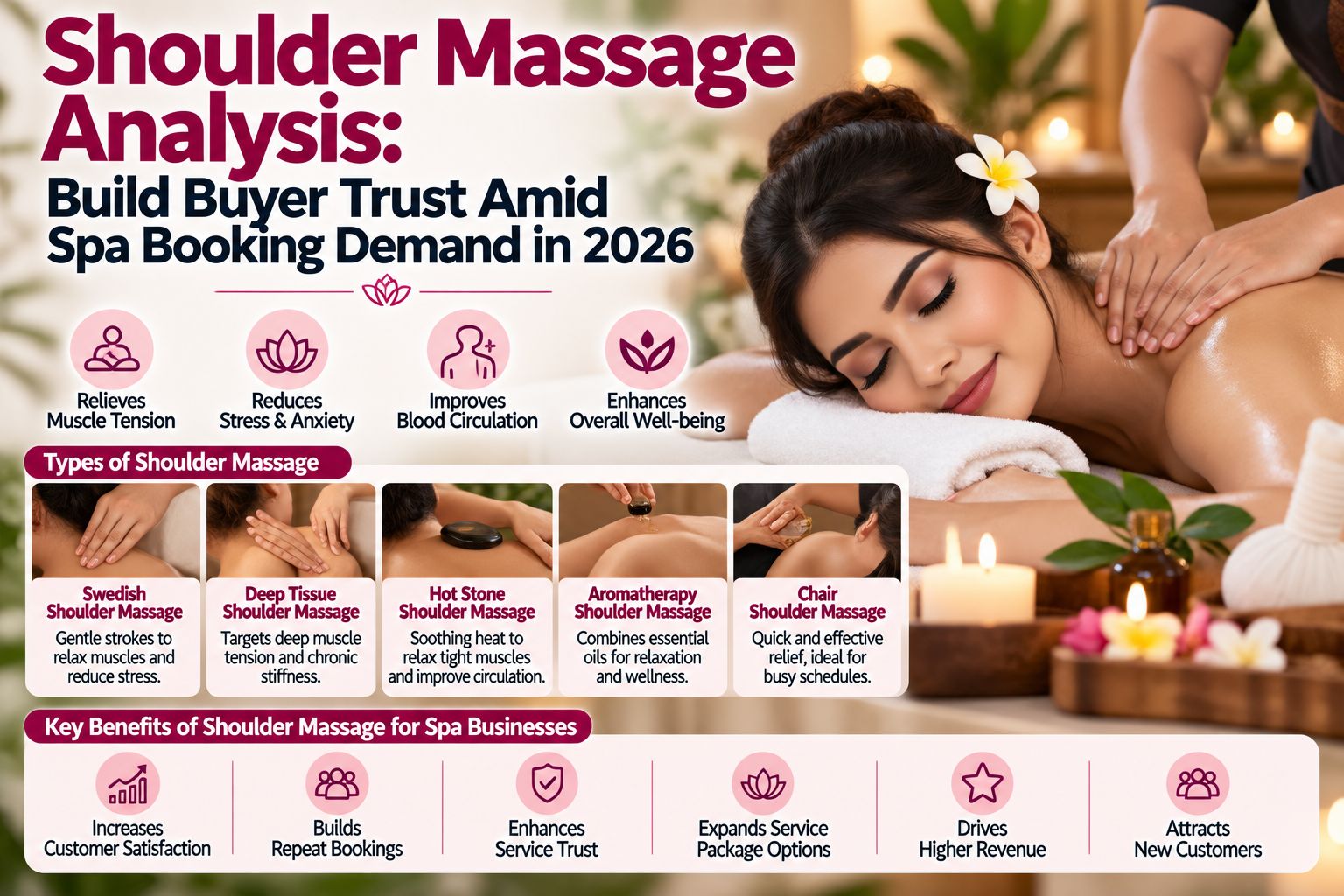


A shoulder massage is a focused treatment on the neck, upper back, and shoulder muscles, usually booked for desk-related tightness, travel strain, or everyday stress. Buyers choose it because it targets one area well and fits a short appointment window. The main trust factor a spa operator should address is clarity: what the session includes, who performs it, and what it costs. If you are a spa operator, wellness business owner, or booking decision-maker, the question is not whether people want shoulder work. It is whether your listing gives them enough reason to book with you instead of hesitating.
What a shoulder massage is and how it differs from other menu items
Before trust can be earned, the service has to be understood. A shoulder massage concentrates on the neck, upper traps, shoulder blades, and the muscles around the shoulder joint. A full-body massage covers the whole body, so the shoulder portion receives only a share of the time. An aromatherapy massage centres on oils and relaxation, and may use light pressure throughout. A deep tissue massage works slowly into deeper layers and can leave next-day soreness. None of these is better than the others, but buyers compare them, and confusion here costs bookings. When a listing explains the difference in one or two plain lines, fewer people arrive expecting something else.
Question: What makes buyers trust a shoulder massage booking?
Buyers trust a shoulder massage booking when the listing is specific. They want a clear price, the therapist's credentials, visible hygiene practices, a fair cancellation policy, and reviews that sound like real experiences. Vague menus and missing details push them to delay. Operators who publish these basics win the booking before the first visit.
Trust signals that earn the booking before the first visit
The strongest signal is a menu that answers questions instead of raising them. State the duration, the pressure options, and where the session focuses. Name the therapist qualifications on the booking page, because therapist credentials carry weight when a buyer is choosing between two similar listings. Show hygiene visibly: fresh linens, clean tools, sanitised surfaces, and a short note about changing linens between clients. Explain the cancellation policy in plain words, including timing and any fee, so nobody discovers the terms after paying. Verified reviews matter too, but only when they describe something specific, such as pressure adjustments or how a therapist handled a sensitive neck.
One operational observation holds up across most listings we have seen: the spas that answer pressure, credentials, and cancellation details on the booking page get fewer pre-booking messages and fewer no-shows. The information does the work that a front-desk call would otherwise do. That is not a marketing trick. It simply removes the pause a buyer feels when something on the page is unclear.
Where spa booking demand meets a decision boundary
Spa booking demand rises and falls for many reasons, and no single operator controls the wider market. What an operator does control is the clarity of their own offer. Treat this as a decision boundary: you can publish price, credentials, hygiene, and policy, and you can answer questions quickly. You cannot promise that a shoulder massage will fix months of postural strain, and you should not imply it will. When pain spreads down the arm, brings numbness, or worsens after every session, that belongs with a medical professional, not the treatment room. Operators who say this openly lose almost nothing and gain a reputation for honesty.
This is also where booking demand and buyer trust factors meet. A buyer who understands the limits of the service is less likely to feel let down, and less likely to leave the review that damages your listing. Clear boundaries protect both sides of the transaction.
Practical checks before you publish or book a shoulder massage
Transparent pricing: show the exact amount and what it covers, so nobody has to ask.
Therapist credentials: list training and experience on the booking page, not just at reception.
Hygiene standards: describe linen changes and surface cleaning in one visible line.
Cancellation policy: state the timing and any fee before payment, not after.
Verified reviews: keep feedback that describes pressure, timing, or handling of sensitive areas.
Scope notes: say clearly that the service eases muscular tightness and is not medical treatment.
If your listing already covers these points, the next step is smaller than it looks. Read your own booking page as a stranger would, and fix the one detail that would make you pause. You can also compare how other services are described through hair care resources and salon FAQs on parlourtime before you update your menu.
Written by: Parlour Time Editorial Desk
Published: 30 September 2026, 10:41 PM IST | Updated: 30 September 2026, 10:41 PM IST
Powered by: Parlour Time