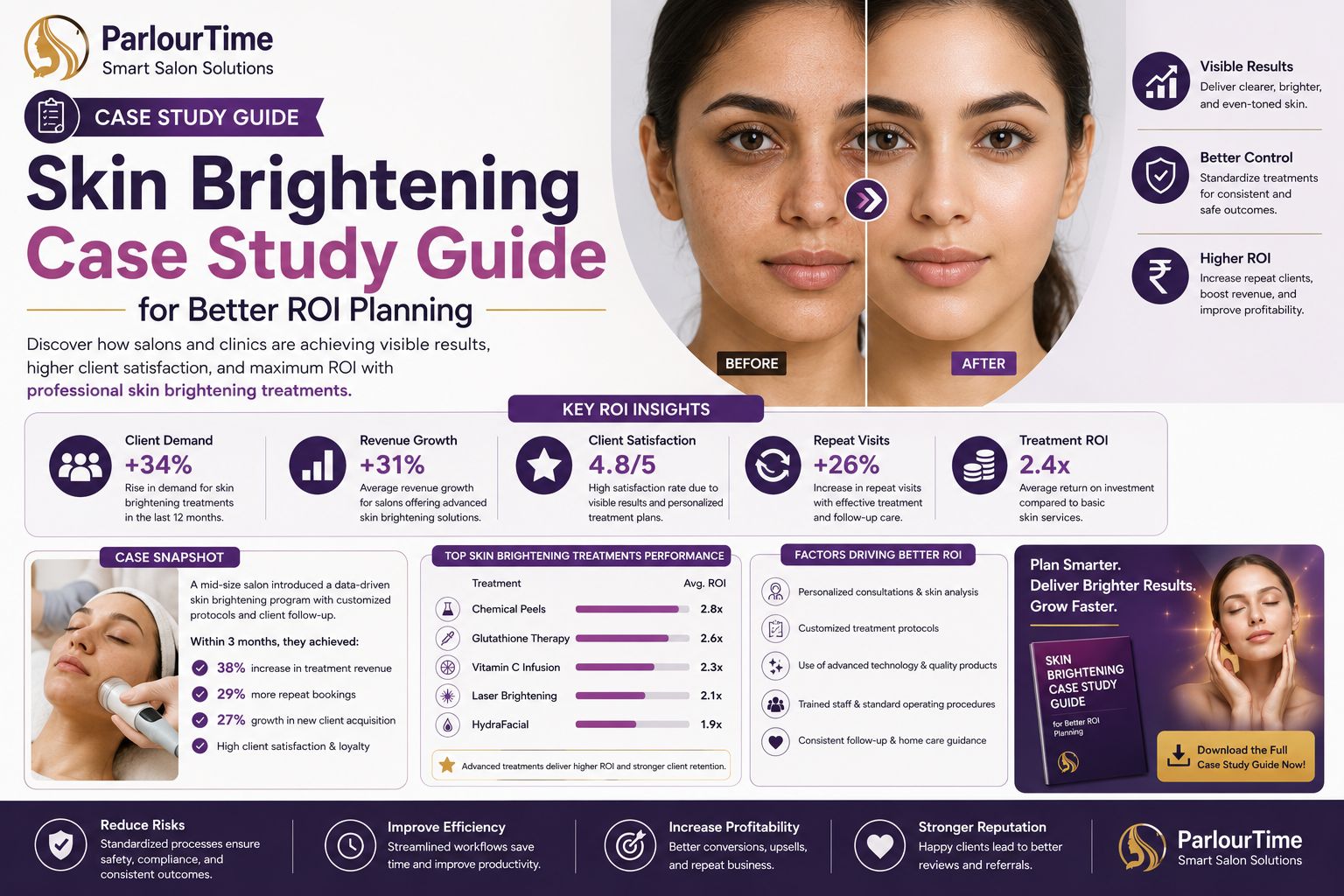


Salons invest significantly in skin brightening treatments from basic facials to advanced peel procedures expecting consistent results and satisfied returning clients. A skin brightening case study guide for better ROI planning helps beauty professionals evaluate service performance beyond surface-level outcomes. Many salon owners judge success solely by immediate glow without considering maintenance frequency product costs and client retention patterns. When results vary unpredictably confusion arises about whether the treatment itself underperformed or external factors influenced the outcome. Understanding real treatment trajectories through structured observation transforms how salons approach service menus pricing and client communication. This guide helps break down what a skin brightening case study should capture from initial consultation to long-term skin response and why these details—honestly, they matter more than most owners realise—directly impact return on investment.
The Meaning of Skin Brightening Case Studies in Salon Planning
A case study in the salon context means documenting a client's treatment journey including skin type concerns products used session intervals and observed outcomes over weeks or months. For salons offering services like fruit facial diamond facial or chemical peel tracking these variables reveals which treatments genuinely deliver lasting brightness for particular skin conditions. Many parlours overlook this documentation assuming experience alone guides decision-making. But here's the thing—without recorded evidence repeat disappointments occur such as clients reporting glow fading within days or skin reacting adversely after multiple sessions. A structured case study captures exactly what happened what was applied and how the skin behaved eliminating guesswork. This shifts planning from intuition toward pattern recognition allowing salon owners to allocate budget toward services with proven client satisfaction and avoid those with recurring complaints. The return on investment improves when treatment choices are backed by real observational data rather than supplier claims or popular trends that might just be hype.
Why ROI Planning for Skin Brightening Services Needs Case Evidence
Return on investment in beauty services is not just about immediate revenue but long-term client trust repeat bookings and referral generation. Skin brightening treatments vary widely in cost product consumption and time investment. Without case study evidence salons might continue offering a popular facial that shows temporary brightness but fails to satisfy clients over multiple sessions. Clients who see inconsistent results may switch parlours or blame the service quality rather than their skin condition or aftercare gaps—and honestly who can blame them when they don't know better. Documenting case studies reveals these patterns—for instance a client with oily skin may respond better to enzyme-based brightening than cream-based masks. Another with dry sensitive skin might require longer intervals between treatments to avoid irritation. Such insights inform service customisation pricing adjustments and training needs. ROI planning becomes more accurate when decisions rest on documented outcomes from diverse skin types rather than assumptions or one-off testimonials from a single happy client.
Common Mistakes When Evaluating Skin Brightening Case Results
One frequent mistake is judging treatment success based only on the immediate post-session glow without monitoring how long the brightness lasts. Many clients leave satisfied only to return disappointed when results fade faster than expected. Another blind spot is ignoring skin history—clients who have undergone multiple chemical treatments or used strong home products may have compromised barriers that reduce product absorption. Salons often assume all brightening products work similarly across skin types leading to inconsistent outcomes. Overlooking aftercare routines also distorts case study analysis. A client who uses harsh cleansers or skips sunscreen will not retain brightness regardless of treatment quality—this is something I see all the time at my own parlour visits. Misinterpreting temporary reactions like mild redness or tingling as negative signs can also lead to unnecessary service discontinuation. These mistakes prevent accurate ROI assessment because the data collected does not reflect the full picture. Correcting them requires systematic observation across multiple sessions and honest documentation of all influencing factors even the ones that make you uncomfortable.
Decision Framework for Skin Brightening ROI Using Case Studies
To make better planning decisions salons should define clear evaluation criteria before starting a case study. Document baseline skin condition treatment protocol product brand session frequency and client aftercare habits. After each session record visible changes client feedback and any reactions within 48 hours. Compare outcomes across three to four sessions to identify patterns. For example if brightness peaks after session two and declines despite continued treatment it signals product saturation or need for a different approach. Timing matters—clients preparing for events should understand that multiple sessions spaced appropriately yield better results than aggressive single treatments. Maintenance becomes necessary for most skin types and this expectation must be communicated upfront—no sugarcoating. When a treatment consistently fails to meet expectations despite proper protocol it may be time to discontinue or replace it with an alternative service. Professional reassessment becomes necessary when clients report no improvement after three sessions or experience adverse reactions repeatedly. Using parlourtime to compare service timing and treatment options before scheduling helps salons and clients align expectations better from the start rather than dealing with disappointment later.
Frequently Asked Questions
q What is a skin brightening case study in salon planning?
A case study documents a client's treatment journey including skin type products used and outcomes observed to help salons make informed service and investment decisions.q Why should salons document case studies for brightening services?
Documenting case studies reveals which treatments deliver consistent results for specific skin conditions reducing trial-and-error and improving client retention over time.q How do case studies help calculate return on investment?
Case studies provide actual outcome data enabling salons to compare treatment costs against client satisfaction repeat bookings and long-term loyalty for accurate ROI analysis.q What mistakes affect accurate ROI evaluation in skin brightening?
Judging success based on immediate glow ignoring skin history or overlooking aftercare habits frequently distorts data and leads to poor service planning decisions.q Can skin brightening results vary significantly between clients?
Yes skin type condition product compatibility aftercare routine and treatment frequency all influence brightness outcomes making standardised expectations unrealistic without case evidence.q What should salons include in a skin brightening case study? Salons should record baseline skin description treatment protocol product brand session intervals client reactions aftercare habits and observed changes over multiple visits.
q How many sessions are needed to judge treatment effectiveness? Observing outcomes across three to four sessions typically reveals consistent patterns that indicate whether the treatment suits the client's skin and delivers expected brightness.
q When should a salon reconsider a brightening service offering? When case studies repeatedly show poor retention adverse reactions or low client satisfaction despite proper execution it signals the service needs adjustment or replacement.