

Searching for a spa automation buyer guide usually starts with a practical problem rather than curiosity. You are running a salon, spa, or grooming setup, enquiries are getting harder to track manually, and you want to select top rated beauty experts without wasting money on the wrong system or the wrong team. Most owners compare prices and features online, then feel stuck because every tool looks similar on a landing page. The real problem is narrower than it looks. You are not only buying software, you are deciding which professionals will actually use it, so the person selling you the tool and the people using it need to be checked separately. Until you separate the tool decision from the people decision, the buying loop keeps repeating.
What the phrase top rated commits the vendor to
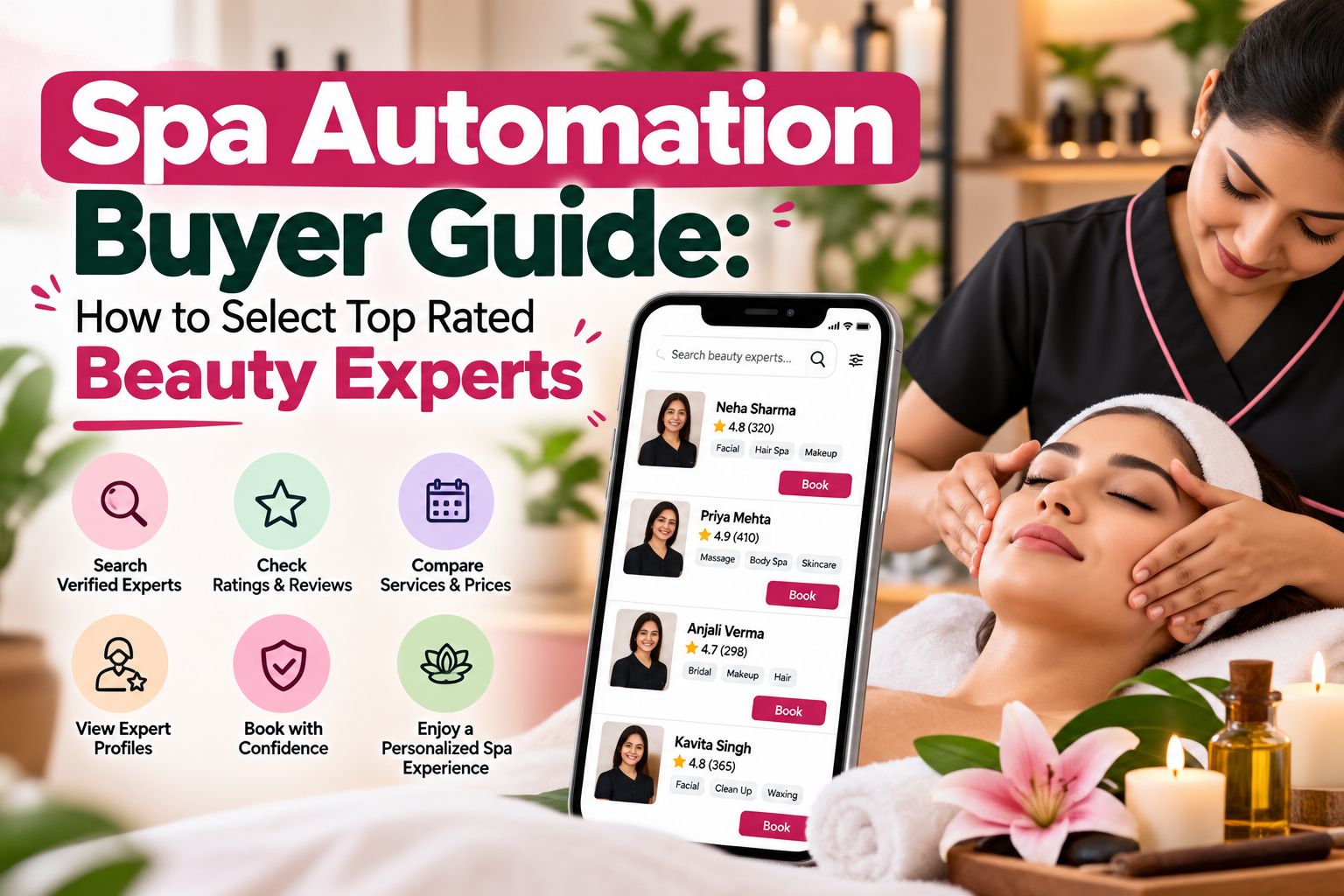
When a vendor promises access to top rated beauty experts, treat that as a claim you can test rather than a feature you accept. Ask plainly what the phrase means in their system. Is it a rating collected inside their own platform, a badge bought through a listing, or an independent assessment? Ask who assigns it, how often it is refreshed, and whether a professional can lose it. Most confusion starts here, because owners assume the vendor has already vetted the people on the roster, while the vendor assumes the buyer will check.
Put the same question to the vendor in writing. Request the credential source for each expert, the review provenance behind the rating, and the names of two clients willing to speak about their experience. A vendor with a managed-review workflow can usually produce these on request. A vendor without one tends to answer with general praise instead of documents. This is the first honest signal in your spa automation selection criteria, and it costs nothing to ask before any demo.
How to verify beauty expert credentials before you sign
Credential checking is a paper exercise, not a vibe check. Ask for the certificate or licence number, the issuing body, and the date it was granted. Then ask which services each expert is cleared to perform, since a certificate for one treatment does not automatically cover another. Your beauty expert vetting checklist should also record how long each person has worked in a live salon setting, not just in training.
Rating provenance needs the same treatment. Ask whether clients can leave a review without a completed booking, whether negative reviews are removed, and whether placement in search results is paid. These are neutral questions and any confident vendor will answer them. If the answers are vague, you are looking at marketing rather than evidence. Keep your verification notes in one file, and update it as you speak to each candidate. That file becomes the backbone of your decision.
Setting trial scope before the tool goes live
A demo shows what the tool can do under the vendor's control. A trial shows what your floor does with it, and only if you define the scope in advance. Before the trial starts, write down who will use the system, which services will run through it, how many bookings will be processed, and what a pass looks like. Pick a busy week on purpose, since quiet weeks hide friction. Decide who audits the trial, and give that person authority to call it off.
Keep the tool decision and the people decision separate during this period. Software adoption is one test. Whether the assigned experts actually match your client demand is another. If the tool works but the roster does not fit your regulars, you have a placement problem, not a software problem. Use this stage to verify beauty expert credentials against real bookings, so the two checks do not blur together.
Contract, exit terms, and ongoing support
Read the exit terms before you read the feature list, because leaving is where most buyers lose money. Ask how much notice is required to cancel, what the notice period costs, and whether your client records and booking history can be exported in a usable format. Then ask where the data lives after the contract ends and how long it is retained. Get the answers in writing, in the contract itself, not in a chat message.
Support depth deserves the same scrutiny. Ask who runs onboarding, how many sessions are included, what happens outside support hours, and whether the same person stays with your account after setup. Vendors vary widely here, and the difference shows up in the second month, not the first. Set a clear boundary for yourself as well. If your team is small and your services are highly personalised, a heavy setup can add more administration than it removes, and a lighter scheduling tool may serve you better until volume grows.
Decision signals from your own vendor conversations
Signals to watch A vendor that answers credential and rating questions with documents is easier to work with than one that answers with reassurance. Note which type you are speaking to.
Go signal You can name each expert's credential source, the services they are cleared for, and two referenceable clients without going back to the vendor for more.
No-go signal The vendor cannot explain how the rating was earned, or the review policy changes each time you ask. Both are reasons to pause rather than negotiate on price.
Decision boundary Automation cannot judge skin sensitivity, hair damage repair needs, or whether a client should wait before another session, so keep human review in the loop at every stage.
When to walk away If the contract blocks data export, or the trial scope keeps shifting whenever you try to define it, the fit is unlikely to improve after you pay.
Written by: Parlour Time Editorial Desk
Published: 24 September 2026, 09:14 PM IST | Updated: 24 September 2026, 09:14 PM IST
Powered by: Parlour Time