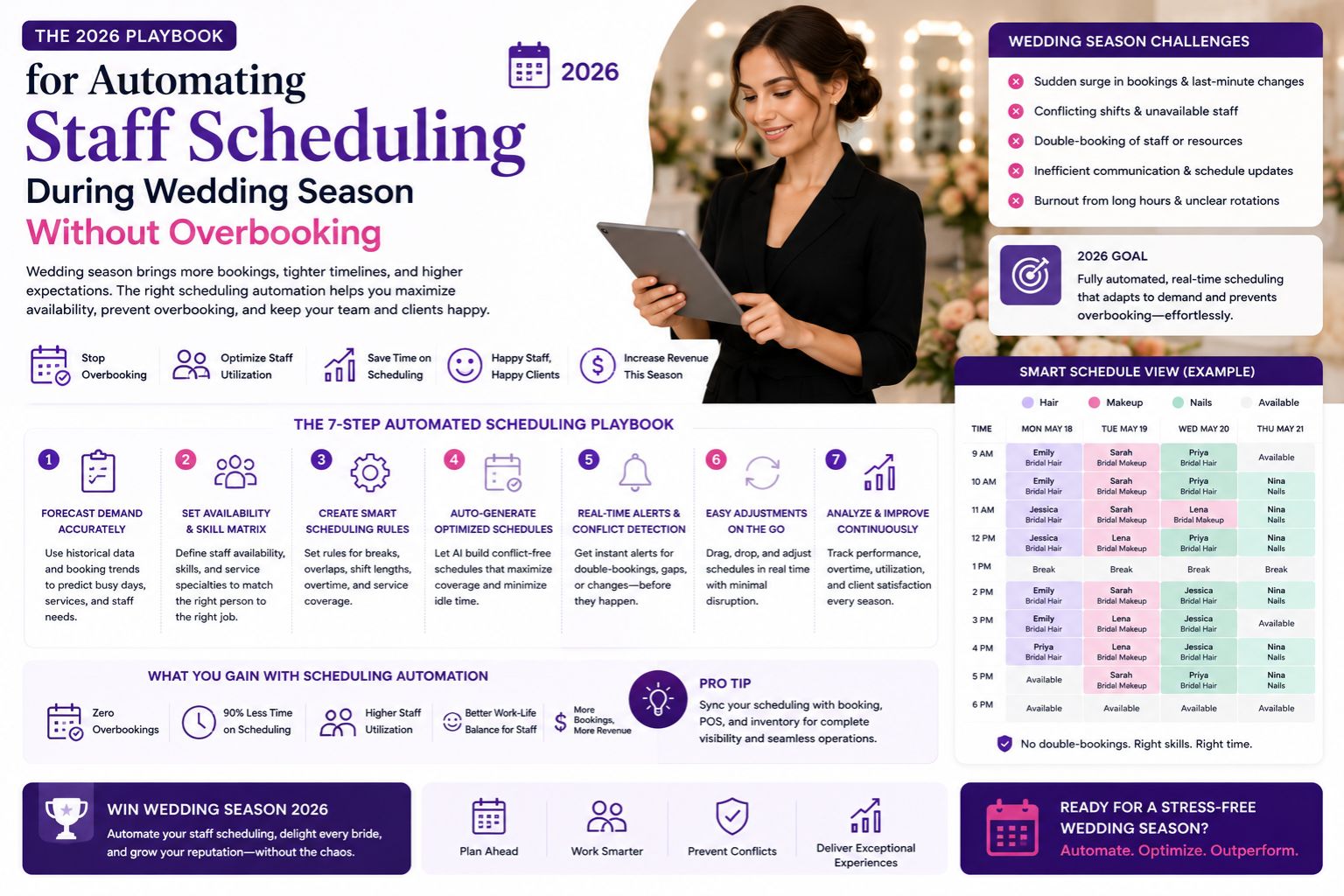


Every wedding season, salons face a familiar pressure—back-to-back bridal appointments, walk-in demands, and a constant risk of double-booking staff. The real concern isn't just busyness; it's the fear of overbooking leading to rushed services, unhappy clients, and exhausted employees. When staff scheduling relies on manual updates or memory, even one missed entry can create chaos on a peak Saturday. Brides expecting flawless service for their big day carry high expectations, and a single scheduling mistake can damage your salon's reputation for months. This tension between high demand and operational control is what makes automated scheduling essential for modern beauty businesses. Understanding why traditional methods fail during rush periods is the first step toward fixing the problem, especially when a full appointment book doesn't automatically equal a smooth day—sometimes it actually makes things worse.
What Automated Staff Scheduling Really Means for Peak Seasons
Automation in staff scheduling isn't just about putting shifts into a digital calendar; it's about creating a real-time system that accounts for service duration, staff availability, and appointment overlap. During wedding season, a salon might handle multiple bridal parties requiring different stylists for hair, makeup, and skincare, often at overlapping times. Without automation, a manager might accidentally assign one technician to two bridesmaid groups simultaneously, leading to delays and frustration. A properly configured scheduling tool will flag conflicts before they happen, ensuring each team member gets adequate time per service. The overlooked detail many salons miss is that overbooking doesn't just happen from double-booking—it also occurs when services take longer than expected, and no buffer time is built into the schedule. Automated systems can enforce minimum gaps between appointments, protecting both the client's experience and the staff's sanity, especially when back-to-back bookings are managed across multiple service categories like facials and hair treatments—but honestly, even the best tool needs someone to actually check it.
Why Manual Scheduling Breaks Down During Wedding Rush
When wedding season peaks, the sheer volume of inquiries and last-minute changes overwhelms any manual system. A handwritten log or basic spreadsheet cannot handle real-time updates when a bride reschedules her trial two days before the wedding, or when three new clients book the same slot for a threading appointment. The most common result is overbooking that forces staff to work through breaks or rush through services, which impacts quality. On Indian skin, rushed facials often leave residue or cause minor irritation because the products weren't given proper time to absorb. Similarly, hair treatments require specific timing for smoothing or conditioning steps to work effectively. Without automation, a manager may not realize two high-priority bridal appointments are staffed by the same person until it's too late. The non-obvious factor many salons ignore is that staff availability often changes during wedding season—sick leave, family commitments, or even burnout increases, and a manual schedule cannot adapt quickly enough to prevent overbooking. This is where the service boundary breaks down: no amount of goodwill can compensate for a double-booked stylist on the morning of a wedding, and honestly, clients don't care about your scheduling problems.
Common Mistakes That Lead to Overbooking During Peak Demand
One recurring miscalculation salons make is assuming that hiring extra wedding-season staff solves the scheduling problem. But introducing new team members without integrating them into a unified scheduling system creates its own chaos—different staff may have different start times, skill levels, or service specialties. A common misunderstanding is that overlap between appointments is acceptable if the same staff member is only "helping" with two clients in the same room. This almost always leads to one client feeling neglected, especially during high-stakes bridal preparation where attention to detail matters most. Another mistake is relying on phone call confirmations for bookings; a single missed call or voicemail gap can result in a client arriving at the same time as another booking. The risk increases when walk-in clients are added manually without cross-referencing existing staff assignments. One salon owner in Delhi observed that a stylist booked for a bridal trial at 10 AM was also assigned to finish a bridal mehendi application from the previous day, creating a 45-minute overlap that upset both clients. The real blind spot is failing to understand that overbooking is often a symptom of poor visibility into each employee's actual workload and travel time between services—travel time, honestly, nobody ever accounts for that properly.
How Clients Decide When to Book During Wedding Season
A client's decision to schedule a service during wedding season is driven by urgency and event timelines. Brides usually plan multiple appointments weeks in advance, but many non-bridal clients also try to book for their own special events or routine care. The timing constraint is straightforward: a client who needs a facial and hair treatment before a relative's wedding cannot afford to wait two weeks for an available slot that doesn't conflict with other commitments. This creates pressure on salons to squeeze in appointments, but doing so without automated checks risks overbooking. The decision boundary for many clients is when they encounter an overbooking situation: if they show up and their stylist is already occupied, their trust in the salon erodes immediately. One practical observation is that clients prefer salons that offer transparent slot management—knowing exactly when their preferred staff is available gives them confidence to book without hesitation. When a salon uses automated scheduling that communicates real-time staff availability, it signals professionalism and reduces last-minute cancellations. For beauty businesses aiming to serve clients reliably during high-demand periods, investing in structured tools like parlourtime can align staff availability with client expectations, but the core requirement remains a clear, conflict-free schedule—otherwise clients just go somewhere else frankly.
FAQ
q: How can I prevent double-booking my staff during wedding season without hiring extra managers?
a: Automating staff scheduling through a digital system that blocks overlapping assignments is the most reliable method. Even a simple tool that links appointment time to specific employees reduces human error significantly. Many salons also set maximum booking limits per staff member per day to maintain service quality and prevent burnout—but you actually have to enforce those limits, otherwise it's just a number on a screen.
q: What is the biggest risk of overbooking during bridal appointments?
a: The primary risk is destroying client trust on the most critical day of their year. A rushed bridal facial or poorly timed hair treatment due to overbooking can cause lasting dissatisfaction and negative reviews. Additionally, staff morale drops sharply when they are forced to multitask unsafely under time pressure, and honestly word spreads fast among bridesmaids about which salon messed up.
q: Can small salons with just 3-5 staff members afford scheduling automation?
a: Yes, many affordable scheduling apps offer basic tiered plans suitable for small teams. Even a simple shared digital calendar with conflict detection can replace paper logs. The cost of a double-booked appointment often exceeds the subscription fee for a month, making automation a cost-effective choice during peak season—think about it, one angry bride leaving a bad review costs way more than the software.
q: Does automating schedules mean I cannot accept walk-in clients anymore?
a: Not at all. Automation systems can include walk-in slots if configured properly. The key is to maintain a real-time view of each staff member's current workload before adding any unplanned appointment. Most tools allow managers to see whether a staff member has free time before offering services to walk-ins, preventing sudden overbooking—but you need someone to actually glance at the screen before saying yes to every walk-in who walks through the door.