

AI Booking Systems Change How Customers Schedule Services
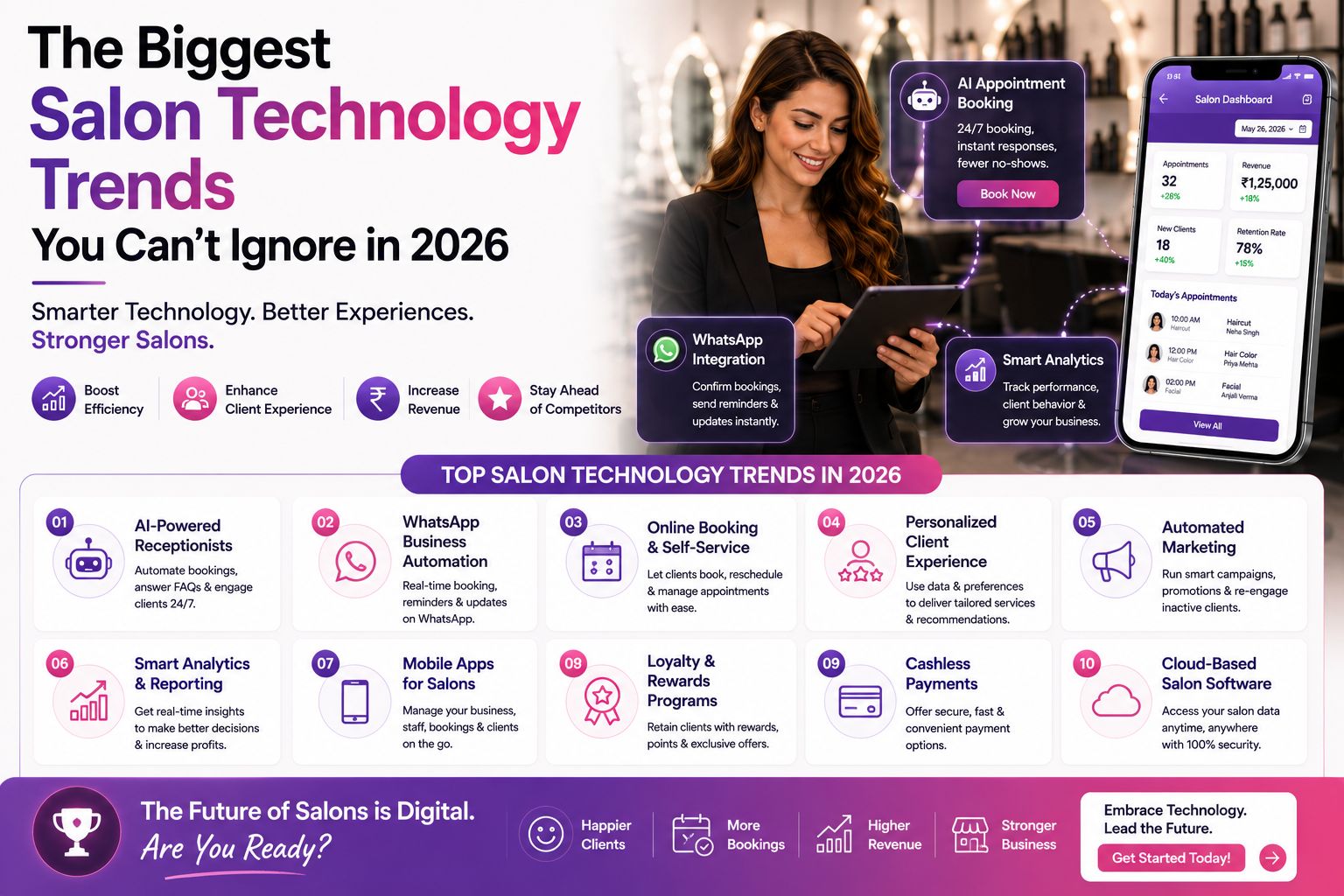
Booking a salon appointment used to involve phone calls and waiting for confirmation. Now artificial intelligence powers scheduling platforms that learn customer preferences over time. These systems remember past services, preferred stylists, and even product sensitivities. When a customer books a haircut, the system automatically suggests complementary services like hair spa or smoothening treatments based on their history. This removes the guesswork from appointment planning and reduces the anxiety of deciding what to book next. For salon owners, AI scheduling minimizes no-shows and optimizes staff allocation. Customers commonly notice that booking feels faster and less stressful, though some worry about data collection—like, are they tracking everything? The real advantage is that AI booking frees up front desk staff to focus on service quality rather than administrative tasks. When customers can see available slots and service descriptions clearly, they feel more confident about their choices.Smart Service Recommendations Reduce Treatment Regret
One of the most frustrating experiences for salon visitors is choosing a treatment that does not match their hair texture or skin sensitivity. Smart recommendation tools analyze customer profiles including past chemical treatments, reaction history, and seasonal concerns. For example, a client with dry scalp who wants keratin treatment receives a warning about potential irritation and alternative options. These tools do not replace professional consultation but provide an extra layer of information that helps customers prepare for their visit. Many customers report feeling less anxious about trying new services when they understand the likely outcomes and dependencies—though sometimes I wonder if it's oversimplifying things. The technology also helps stylists prepare better, leading to fewer cases of discomfort like burning sensation or excessive redness. While some worry these tools make decisions for them, the reality is they simply present relevant data so humans can choose wisely. This trend directly addresses the problem of service dissatisfaction caused by mismatched expectations.Virtual Try-On Tools Solve Color and Style Uncertainty
Choosing a hair color or facial treatment without seeing the result is a major source of decision pressure. Virtual try-on technology uses augmented reality to show how different shades, haircuts, or even glow-enhancing facials might appear on the customer's own face. This tool is especially popular for bridal preparation where timing is critical and mistakes are costly. Customers can experiment with bold changes in a risk-free environment before committing. The technology also helps manage expectations for treatments like diamond facial or fruit facial where the immediate result might not last long. By seeing a realistic preview, customers understand that temporary redness or post-treatment glow variations are normal. Virtual try-on reduces the gap between expectation and reality, which is often the main reason for dissatisfaction. However, customers should remember that real outcomes depend on condition factors like current hair damage or skin sensitivity that simulation cannot fully capture—so don't expect a perfect match.Smart Salon Equipment Improves Treatment Consistency
Professional salon equipment is getting smarter with sensors and automated controls. Hair dryers now adjust temperature based on hair moisture levels, reducing heat damage. Facial steamers monitor skin response and stop automatically if irritation is detected. These advancements make treatments more consistent across different stylists and salon visits. For services like hair smoothening or botox treatment, precise temperature and timing control directly affect how long results last. Customers often notice that their smoothening stays smoother longer when the salon uses calibrated equipment. Smart tools also help stylists avoid common mistakes like over-processing or uneven application. While the initial investment for such equipment is high, it pays off through reduced product waste and higher customer satisfaction. The hidden benefit is less guesswork for professionals and fewer cases where customers wonder if their treatment could have been better—you know, that nagging feeling. This trend represents a shift from relying solely on stylist intuition to combining human skill with reliable technology.Data-Driven Aftercare Guidance Extends Treatment Results
Many customers leave the salon happy but become disappointed within days or weeks when results fade faster than expected. Data-driven aftercare systems now provide personalized maintenance instructions based on the specific treatment received. For example, after a hair smoothening service, the system might recommend sulfate-free shampoo and warn against high humidity exposure. After a facial, it suggests avoiding exfoliation for a specified period. These recommendations are not generic but tailored to the customer's hair texture, skin type, and even local weather conditions. Customers who follow data-backed aftercare routines report longer-lasting satisfaction and fewer regrets. The technology also helps salon owners build trust by showing they care about results beyond the appointment. This trend directly tackles the common problem of post-treatment disappointment caused by incorrect maintenance assumptions. Some customers initially ignore aftercare advice because they believe their condition is different, but data often proves otherwise—I've been guilty of that myself.Salon Management Platforms Simplify Decision Making
Running a salon involves complex decisions about inventory, staff scheduling, pricing, and customer communication. All-in-one management platforms now centralize these functions with dashboards that highlight trends like peak booking times or popular services. For customers, this means smoother check-ins, faster payments, and better communication about service timing. For owners, it means fewer scheduling conflicts and more accurate product availability. The technology also helps customers discover services they might not have considered, such as pairing hair color with a hair damage repair treatment. While some small salons resist these platforms due to cost, even basic versions reduce administrative stress significantly. Customers benefit indirectly through more organized service delivery and fewer delays. The key is choosing a platform that matches the salon's size and service complexity without overwhelming staff with features they will not use—otherwise it's just more confusion.Frequently Asked Questions
q What is the most important salon technology trend for 2026?
a AI booking and smart recommendation systems are considered most impactful because they directly address customer uncertainty about service timing and suitability.
q Will virtual try-on tools replace professional consultation?
a No, these tools are designed to support consultation by providing visual previews, not replace the expert assessment of a trained salon professional.
q How does smart equipment improve treatment results?
a Smart equipment uses sensors and automated controls to maintain consistent temperature, timing, and application, reducing human error and improving outcome reliability.
q Can data-driven aftercare really extend treatment longevity?
a Yes, personalized aftercare guidance based on treatment type and individual condition helps customers avoid common mistakes that accelerate result fading.
q Are salon management platforms only useful for large businesses?
a Even small salons benefit from basic features like online booking and inventory tracking, though advanced analytics are more relevant for larger operations.
q Do customers need to worry about data privacy with salon technology?
a Privacy concerns are valid, and reputable platforms implement data protection measures, but customers should always ask how their information is stored and used.
q How quickly should a salon adopt new technology trends?
a Adoption timing depends on the salon's current systems and customer needs, but gradual implementation during quieter periods reduces disruption.
q Where can customers learn more about salon technology options?
a Parlourtime salon resources provide guidance on how technology influences service timing and customer experience, helping visitors make informed appointment decisions.