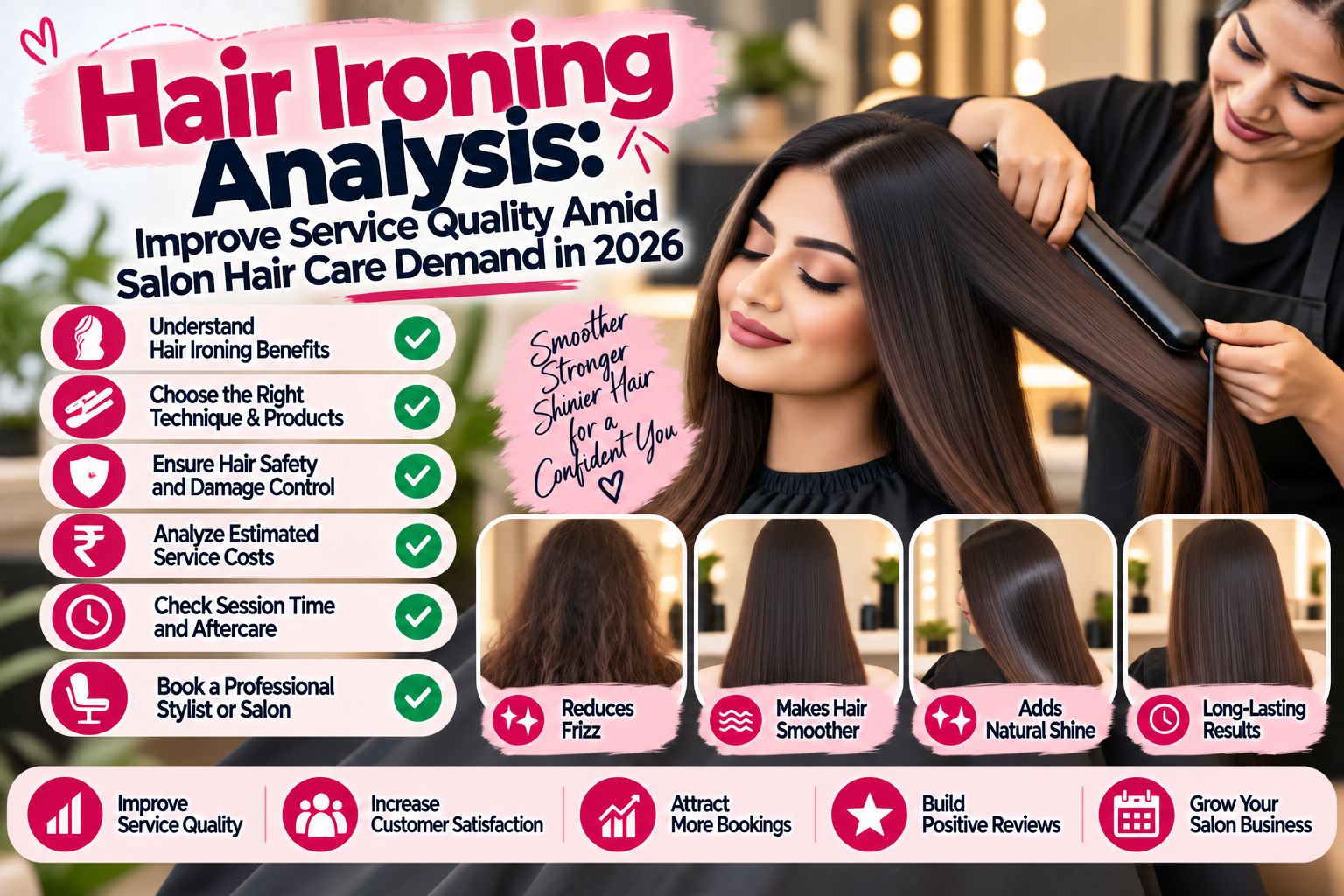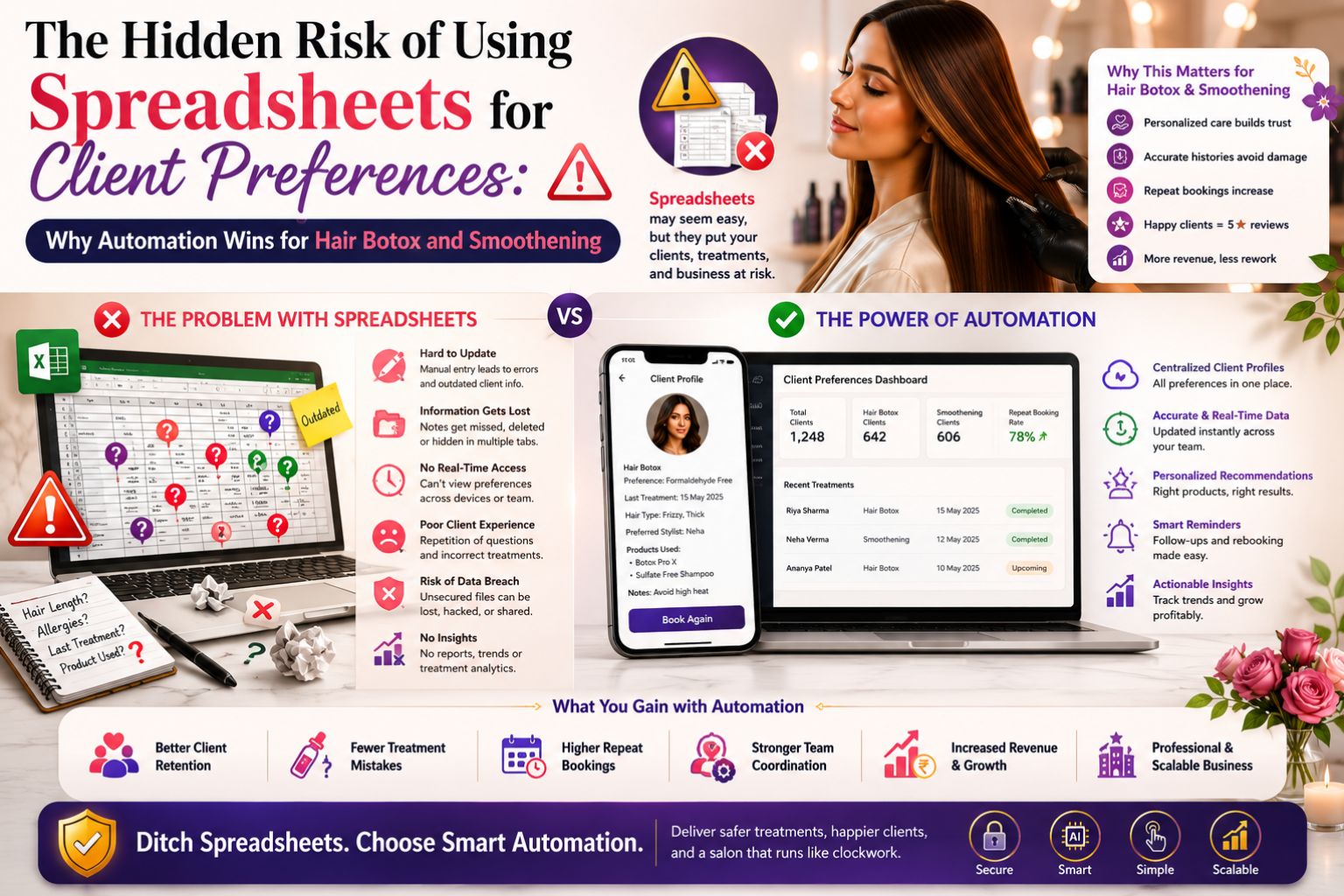


Many Indian salon owners still rely on spreadsheets to track client preferences for hair smoothening and hair botox treatments, but this manual system often leads to missed details like a client’s previous chemical history or scalp sensitivity, resulting in dissatisfied customers and wasted products. During a recent salon visit in Delhi, a stylist overlooked a client’s past keratin treatment note in a cluttered spreadsheet, leading to an over-processed strand breakage that required weeks of repair. The primary risk here is not just data entry errors—it is the lack of real-time updates during busy hours, which automation solves instantly by linking client history with service booking, but honestly, who has time to update a sheet when three clients are waiting?
What Client Preference Tracking Means in Real Salon Workflows
In a typical Indian salon, a stylist may serve 8 to 12 clients daily for treatments like hair botox or smoothening, and each client brings unique factors such as previous dye use, porosity level, or allergy to formaldehyde derivatives. Spreadsheets fail here because they require manual cross-referencing between sheets, often missing critical shifts like a client switching from smoothening to a gentler treatment after pregnancy. A common observation from salons in Mumbai and Bangalore is that spreadsheet data is rarely updated during the service itself, so if a client complains about burning sensation mid-treatment, the note might never make it back to their profile, leading to repeated mistakes on their next visit—and trust me, clients remember that kind of thing.
The Reality Check: Spreadsheet Limitations for Indian Skin and Hair Types
Indian clients often have mixed hair textures—coarse at the roots and dry at the ends—which means a single spreadsheet cannot capture the nuance of how a smoothening relaxer behaves differently on each section. For a service like hair smoothening, the waiting time between applying the cream and washing it off must be adjusted based on the client’s previous reactions, but spreadsheets do not send alerts when a stylist deviates from the safe window. A non-obvious detail many overlook is that spreadsheets become unmanageable when you have more than 100 active clients, leading to duplicate entries or forgotten preferences about avoiding high heat blow-dries. One salon owner in Pune noticed that after switching to automated booking via Parlourtime’s blog resources, their repeat error rate for smoothening treatments dropped by half because the system flagged a client’s past irritation from a botox session—something a tired stylist would simply miss on a Saturday rush.
Mistakes and Risks: Wrong Assumptions That Cost Salons Time and Money
A major assumption with spreadsheets is that every staff member has equal access and discipline to update them, but during peak hours, stylists often rely on memory and ignore the spreadsheet entirely, leading to incorrect product selection. For hair botox, applying a protein-heavy formula to a client with over-moisturized hair can cause frizz and breakage, yet spreadsheets cannot predict such conflicts without manual checking. Another common blind spot is booking timing—spreadsheets do not warn that a client with scheduled smoothening should not receive any other chemical treatment within two weeks, increasing the risk of patchy results or delayed glow. The boundary where spreadsheets completely break down is during last-minute cancellations or rebooking, where the history of the previous service is lost unless someone remembers to link the notes, which rarely happens in busy salons—I've seen it happen, it's a mess.
Decision Help: How Salon Owners Choose Between Manual and Automated Systems
When evaluating whether to switch from spreadsheets to automation, salon owners should consider three factors: the number of clients per day, the variety of chemical services offered, and the frequency of repeat visits for smoothening or botox treatments. For example, a salon with five or fewer daily services might survive with spreadsheets, but one managing ten or more clients must use automation to avoid the risk of allergic reactions or service mismatch. A common misunderstanding is that automation is expensive, but platforms like parlourtime offer integrated solutions that connect client history directly with appointment calendars, reducing manual labor and increasing client trust. The decision boundary is crossed when a spreadsheet error leads to a client walking out unhappy or demanding a refund, which automation can prevent by ensuring every stylist sees the latest preference note before starting any hair treatment—and honestly, who wants to deal with an angry customer over a preventable mistake?
FAQ
q What happens if a salon continues using spreadsheets for hair smoothening client data?
a The salon risks missed details like chemical history or scalp sensitivity, causing over-processing or allergic reactions, leading to client dissatisfaction and potential refunds.
q Can automation replace my existing spreadsheet system without losing old data?
a Yes, most automated tools can import CSV files from spreadsheets, preserving past client notes and simplifying the transition while adding real-time update features.
q How does automation handle last-minute changes for hair botox appointments?
a Automation updates the client profile instantly when the booking changes, so the new stylist sees the same preference history, including any previous service reactions.
q What is the biggest sign that my salon needs to switch from spreadsheets to automation?
a If you notice duplicate client entries, missed preference updates, or increased complaints about service inconsistency during busy hours, it is time to adopt an automated system like parlourtime.