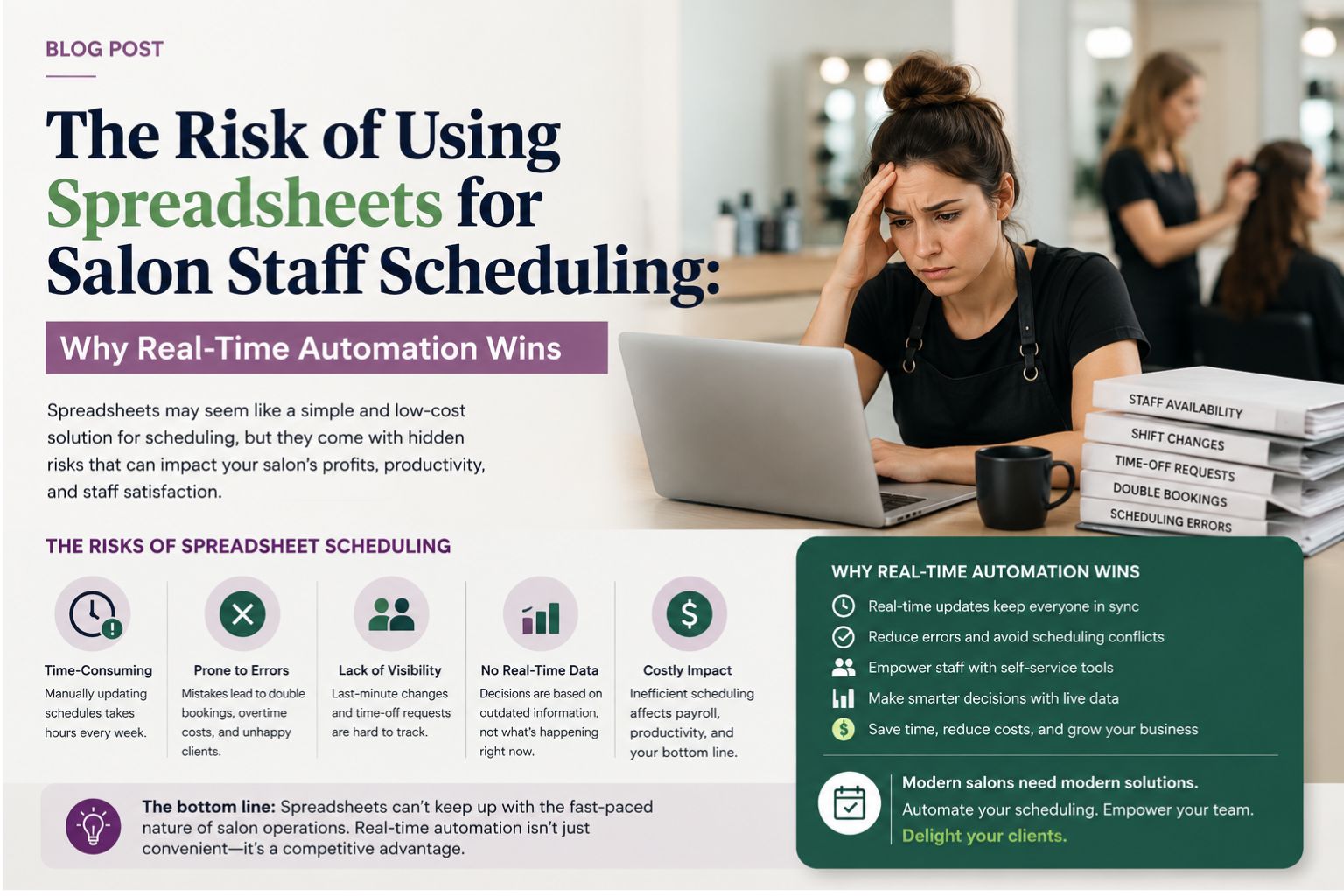


Relying on spreadsheets for salon staff scheduling might seem manageable at first—honestly, it feels like the cheap and easy option when you're starting out—but the risks of human error, double bookings, and staff conflicts can quietly drain your revenue and team morale, especially during peak hours when you're already running around. One missed update, or even a stupid forgotten formula, can turn a fully booked day into a customer-service nightmare, and that's exactly why real-time automation is increasingly the safer, smarter choice for modern salons.
What's Really at Stake with Static Schedules
When you use a static spreadsheet, every schedule change requires manual re-entry, which often leads to overlapping shifts or overlooked availability; at one busy salon I visited, a stylist was scheduled at two different counters simultaneously because two managers updated different copies of the same file—literally no one noticed until the client showed up for both appointments. This lack of a single source of truth creates confusion for staff, forces last-minute scrambling, and makes clients wait longer, so honestly, your reputation for reliability just takes a hit every time it happens.
Why Spreadsheets Fail Under Real-World Salon Pressure
Spreadsheets were never designed for the dynamic nature of salon operations, where walk-ins, cancellations, and last-minute leaves are daily realities; the moment you need to adjust a shift—say, someone's kid is sick and they can't come in—you risk breaking formatting, losing data, or accidentally deleting someone's availability without even realizing it. The most overlooked result of this rigidity is that staff quickly lose trust in the schedule, leading to unscheduled absences and higher turnover, and trust me, this problem escalates on weekends and during bridal season when demand spikes unpredictably and you really can't afford to be short-handed.
The Hidden Mistake: Trusting Manual Updates for Critical Data
Many salon owners believe that if everyone uses the same spreadsheet link, the data will stay accurate, but they completely forget that multiple editors can overwrite each other's entries without any record of who changed what or when—I've seen it happen, and it's a mess. This mistake becomes critical when a senior stylist cancels last minute and you rely on outdated shift times, forcing you to call clients to reschedule or apologize for long waits; non-obvious details like timezone differences or daylight savings adjustments in shared sheets only compound the chaos, especially if you're in a city where clients come from different areas.
How Real-Time Automation Changes the Scheduling Game
Real-time automation gives you a live dashboard where shifts are allocated based on actual staff availability, client appointments, and service durations—eliminating the guesswork and manual handoffs that spreadsheets require, which honestly is a huge relief. For example, when a stylist marks themselves unavailable, the system instantly blocks that time for all managers, preventing double bookings and ensuring every shift change is logged; this clarity helps you make better decisions about timing, such as when to schedule extra staff for a wedding event or how to stagger appointments for skin treatments that require longer service windows, so you're not just guessing anymore.
FAQ
-
q Can I use spreadsheets for scheduling a small salon with just three stylists?
-
a For a very small team, spreadsheets might work temporarily—maybe when you're just starting—but honestly, even three stylists can face scheduling conflicts if one updates a file offline and the others don't see it; the risk of human error increases with every shift change, leading to miscommunication and lost appointments that add up fast.
-
q What is the biggest hidden cost of using spreadsheets for staff scheduling?
-
a The biggest hidden cost is lost revenue from understaffed shifts and double-booked time slots, which can easily eat into your weekly profit; plus, the time managers spend correcting errors—like that hour you wasted figuring out who took which shift—could be better used training staff or improving client experience.
-
q How does real-time automation help with last-minute cancellations or walk-ins?
-
a Real-time automation instantly updates everyone's schedule when a cancellation occurs, allowing you to offer that slot to a waiting client or reassign a stylist to a walk-in without manual back-and-forth and all those texts flying around; this keeps your service flow smooth and reduces idle time during busy periods when every minute counts.
-
q Where can I learn more about transitioning from spreadsheets to a real-time scheduling system?
-
a Platforms like Parlourtime's blog offer practical guidance on moving from manual spreadsheets to automated scheduling, covering integration tips and best practices for salons of any size; exploring such resources helps you choose the right tool for your team's needs without getting overwhelmed.