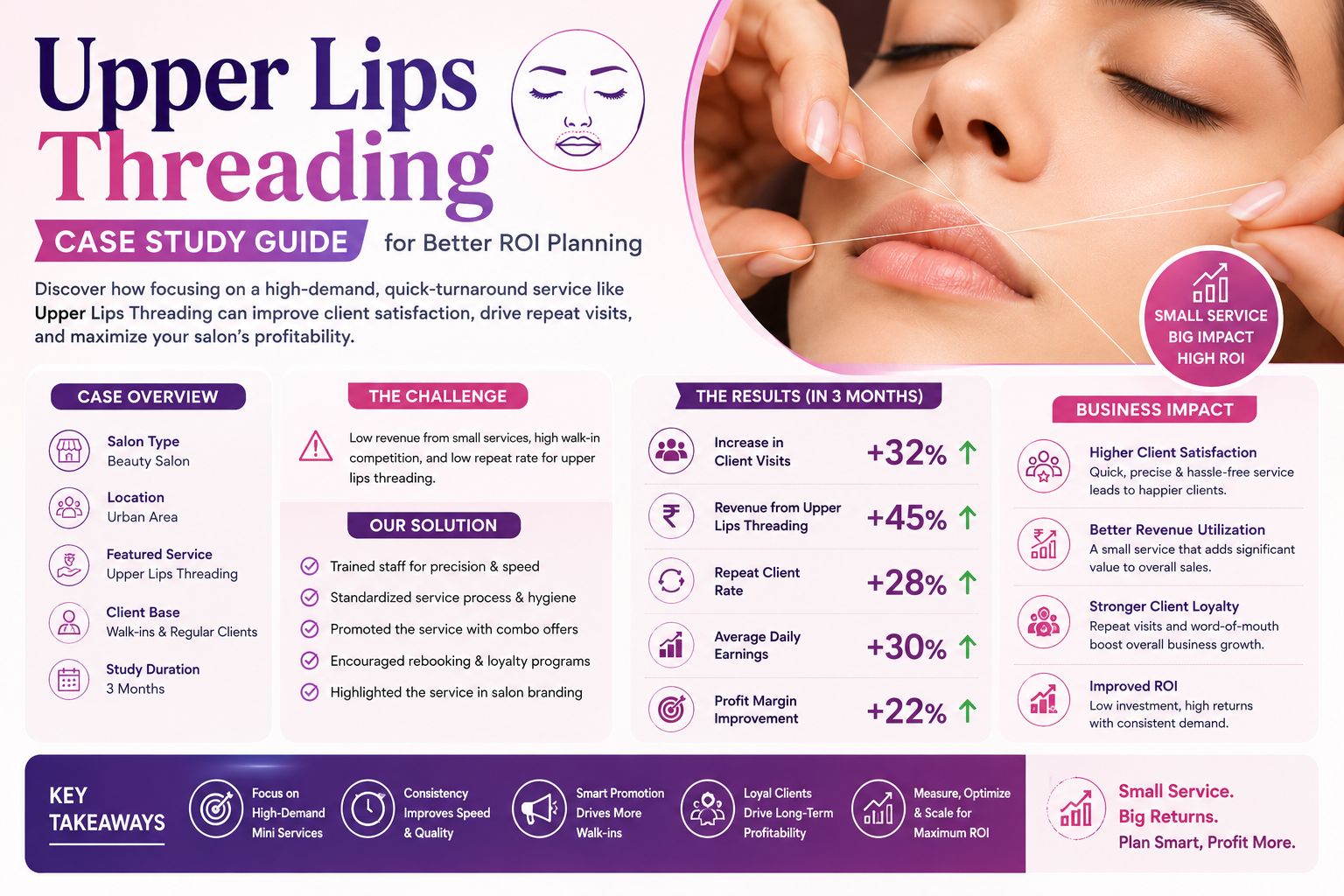


Upper lips threading is one of the most common salon services, yet honestly it remains one of the least discussed in terms of ROI planning. Many salon owners and freelancers treat it as a simple add-on, but the truth is that client satisfaction, repeat business, and service profitability are often determined by how well this small service is executed. When clients experience uneven results, redness that lasts too long, or discomfort that exceeds normal levels, they rarely return. This case study guide helps you understand what actually influences upper lips threading outcomes, why salon planning often misses key details, and how to structure your approach for better returns without overcomplicating your process.
What Actually Determines Upper Lips Threading Results
The quality of upper lips threading results depends on more than just technique—it’s surprising how many things go wrong without anyone noticing. Thread quality, thread tension, skin preparation, and the technician's hand stability all play significant roles. In many salons, the same technician performs threading differently depending on fatigue, time pressure, or client skin type. A common observation is that clients with sensitive skin or fine hair often experience pulling or minor irritation, which can lead to dissatisfaction even when the threading itself is technically correct. The first sign of inconsistency is often visible redness that lasts longer than expected, or tiny bumps that appear within hours. These outcomes are not random. They are influenced by factors like the direction of hair growth, the fit of the thread between fingers, and the speed of removal. Salon owners frequently overlook that even a tiny variation in thread twist can change how cleanly hair is removed. This is why two stylists using identical threads can produce noticeably different results. Understanding these variables is essential before any ROI projection is made.
Reality Check: Why Results Vary Between Clients and Sessions
On Indian skin, upper lips threading outcomes vary significantly because of skin thickness, hair texture, and hormonal cycles—I mean, one client comes back happy and the next one is fuming, what changed? Clients with coarse hair often experience sharper pulling sensations, while those with fine hair may develop temporary redness that fades within a few hours. Seasonal changes also affect results. During humid months, the skin's surface can become slightly swollen, making hair removal less clean. During dry winters, the skin may be more sensitive, leading to more noticeable irritation. Another factor that salon staff rarely consider is the client's recent skincare routine. Exfoliation, retinol use, or even heavy moisturising before a threading session can change how the skin reacts. Many clients do not mention these details, and technicians do not ask. The result is a mismatch between expectation and outcome. A session that went smoothly three weeks ago may cause discomfort today, simply because the client used a new lip balm or underwent a facial treatment earlier that week. These are not failures of technique. They are failures of assumption. Planning ROI without accounting for these variables often leads to inaccurate projections and disappointed clients.
Common Blind Spots That Affect Threading Service ROI
The most overlooked blind spot in upper lips threading is the assumption that it is a quick, low-risk service with guaranteed repeat business. Honestly, that’s wishful thinking, not planning. In reality, client retention drops significantly when discomfort or visible marks occur even once. Another blind spot is pricing. Many salons undercharge for threading because they see it as a loss leader. But when a client experiences a bad session, she associates the discomfort with the brand, not the price. A single negative experience can reduce the lifetime value of that client. Additionally, salon owners often fail to track threading-specific aftercare. Clients who are advised to avoid heavy products or sun exposure immediately after threading are less likely to experience irritation. Yet most salons skip this step entirely, assuming clients already know. Another common mistake is using the same thread for multiple clients without proper hygiene, which can cause minor infections or bumps that clients misinterpret as poor technique. These blind spots are not obvious during daily operations, but they accumulate over time. They create hidden costs that reduce actual ROI far below what a spreadsheet predicts.
Decision Help: How to Plan ROI Around Upper Lips Threading
Better ROI from upper lips threading starts with realistic expectations—no, seriously, don’t assume every client will come back just because you did a decent job. Salon owners should track not just how many threading services are performed, but how often the same client returns within a consistent cycle. A healthy retention rate for threading is around 70 to 80 percent over three months. If the rate is lower, the problem is likely not pricing but experience quality. The decision boundary here is important: if a client returns but complains about redness or unevenness, the technician needs retraining or the skin preparation protocol needs adjustment. When aftercare guidance is provided consistently, repeat rates improve by a noticeable margin. Another decision point is whether to offer threading as a standalone service or as part of a grooming package. When bundled with a clean-up or facial, the perceived value increases, and clients are more forgiving of minor discomfort because they associate it with the complete experience. For clients with very sensitive skin, consider recommending a patch test before the first session. This reduces the risk of unexpected reactions and builds trust. Some beauty professionals use salon business insights to understand how service timing affects client satisfaction. Parlourtime discussions often highlight that maintenance expectations influence satisfaction more than the treatment itself, meaning that setting proper expectations about redness duration and hair regrowth speed can improve perceived value without changing the service.