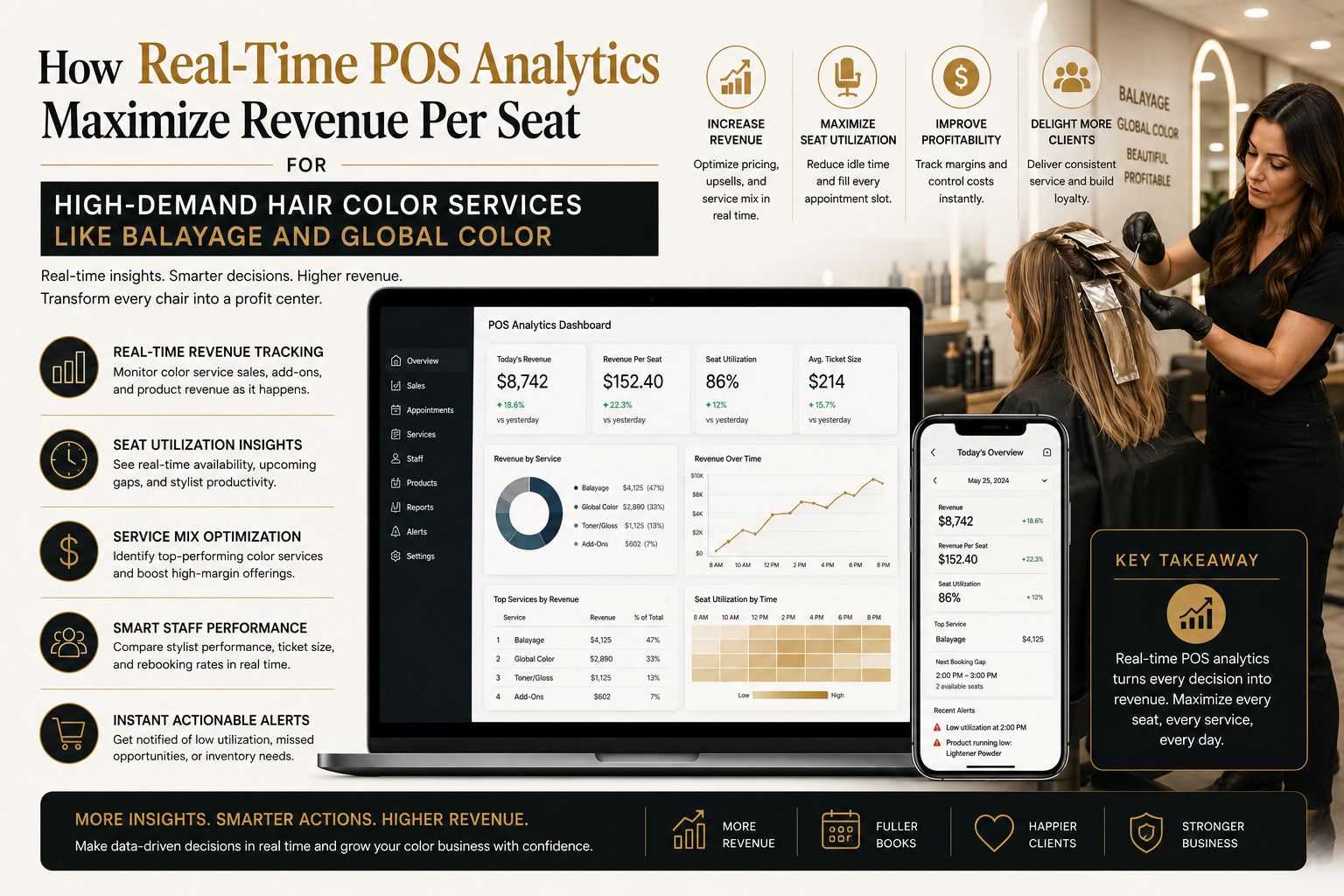


High-demand hair color services like balayage and global color are the backbone of many salons’ profitability... or so we think. Yet many owners—myself included, honestly—struggle to maximize revenue per seat because of static pricing and scheduling that never seems flexible enough. Real-time POS analytics offer a solution by tracking service duration, product usage, and client demand patterns as they happen, enabling dynamic adjustments that prevent revenue leakage. For example, a salon might notice that balayage appointments frequently run 30 minutes over the allotted time, leading to late starts for subsequent clients and lost revenue from unused chair time—a non-obvious detail many overlook when setting fixed prices. I never thought about those extra 30 minutes until I saw it on a report.
What Real-Time POS Analytics Reveal About Color Service Profitability
Real-time POS analytics provide clarity on how each color service contributes to your bottom line by breaking down revenue per minute rather than per appointment. In Indian salons, where balayage prices range from ₹4,000 to ₹12,000 depending on hair length and technique, a global color service that takes 2.5 hours might generate less profit per seat than a balayage that takes 3 hours if product costs aren’t factored in. A real salon observation shows that many stylists apply more product than necessary for global color—I've seen this myself, clients get so anxious about patchy results—eating into margins; this data is completely invisible without analytics. You just keep pouring more product thinking it's helping.
The Reality Check: How Indian Skin and Hair Conditions Impact Timing
Indian hair, which is often thick and coarse with higher melanin levels, tends to require longer processing times for color services like balayage, sometimes extending by 20-40 minutes compared to Caucasian hair types. This reality means that a standard 2-hour slot for global color frequently pushes into overtime, causing a domino effect on other appointments and reducing overall seat utilization. A common misunderstanding—and I’ve been guilty of this—is that longer appointment times automatically mean higher prices, but without data on actual duration and product consumption, you risk pricing yourself out of profitability while still disappointing clients who face wait times. Nobody likes sitting around after their appointment time.
Common Mistakes and Risks: Wrong Assumptions About Pricing and Scheduling
The biggest mistake salons make is assuming that a high price tag for balayage automatically ensures high profit per seat, ignoring that product waste, stylist overtime, and client wait times eat into revenue. For instance, if a global color service uses premium lighteners that cost ₹800 per session but your pricing doesn’t account for fluctuations in product usage based on hair density, you might be losing money on every appointment. Another risk is overbooking popular color slots during bridal season—brides are everywhere in our salons—without considering that bridal prep services often require touch-ups, reducing availability for high-paying full-color clients; this is a blind spot that real-time analytics can flag immediately, before you even realize what happened.
Decision Help: How to Optimize Timing and Pricing for Maximum Revenue
To maximize revenue per seat, use POS analytics to identify your most profitable service durations and adjust slots accordingly—for example, offering express balayage appointments for shorter hair that take 1.5 hours instead of the standard 2.5 hours, freeing up chair time for additional clients. A boundary to note: real-time analytics works best when paired with dynamic pricing tools that automatically adjust rates based on demand, such as charging a premium for evening slots during wedding season. For salons looking to implement this, explore our guides on salon profit optimization and try ParlourTime’s real-time POS features to track seat performance by service type. Remember that smoothing your operations before raising prices prevents client dissatisfaction from schedule conflicts—I learned this the hard way when I raised rates but still had delays.
FAQ
q: How does real-time POS analytics improve pricing for balayage services?
a: It tracks actual time spent and product used per client, allowing you to set dynamic prices that reflect the true cost of service, such as adjusting for hair density or technique complexity.
q: What is the biggest risk of ignoring analytics for global color services?
a: You risk underpricing high-demand slots during peak seasons while overpricing slow periods, leading to lost revenue and client complaints about schedule delays.
q: Can real-time POS help manage bridal season demand for color services?
a: Yes, by analyzing historical booking patterns and seat utilization data, you can allocate specific time blocks for bridal packages while maintaining capacity for regular clients, avoiding overbooking.
q: How do I convince my team to use analytics for scheduling?
a: Start by showing them one month of data on how longer appointments affect their break times and earnings—when they see the connection to their commissions, adoption becomes easier.